Intro
From the Introduction to AI for Students curriculum
TL;DR
AI is about making computers perform tasks that typically require human intelligence, like learning or problem-solving. It's built on data, algorithms, and computational power, and it's already a big part of your daily life. Understanding AI helps you see how it works and where it's headed.
1. The Mental Model
Think of AI as teaching a computer to "think" or "learn" in ways that are similar to how people do. It's not magic, but a set of powerful tools and techniques that allow machines to interpret, reason, and act.
2. The Core Material
Artificial Intelligence (AI) is a broad field focused on developing machines that can mimic human cognitive functions. This includes things like learning from experience, understanding language, recognizing patterns, solving problems, and making decisions.
2.1 What is AI?

Photo by Magda Ehlers on Pexels
At its core, AI aims to create intelligent agents that can perceive their environment and take actions that maximize their chance of achieving specific goals. It's not just about building robots; AI can be software that helps you find a movie or hardware that drives a car.
2.2 Key Pillars of AI
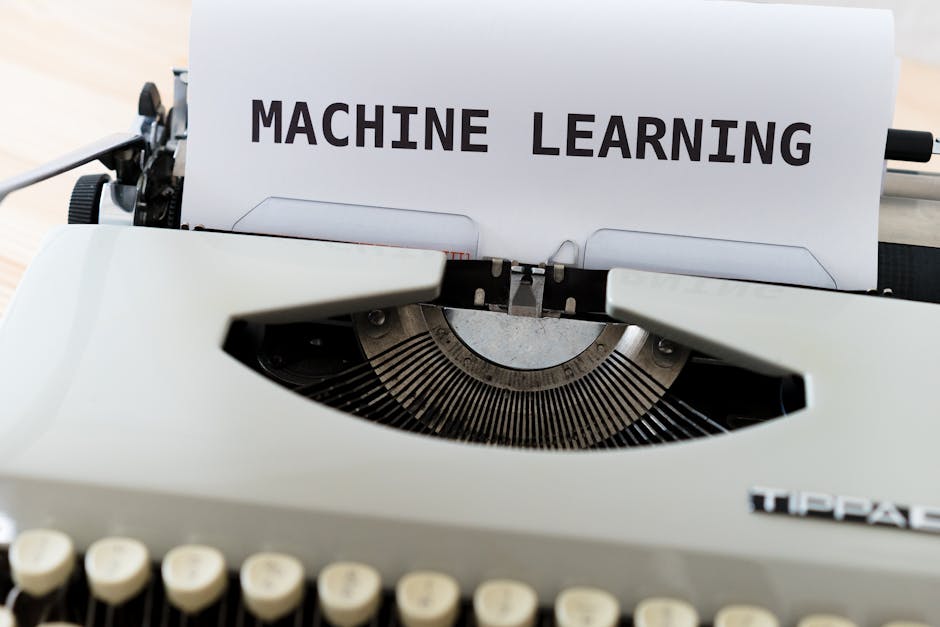
Photo by Markus Winkler on Pexels
AI relies on a few fundamental components:
- Data: AI systems learn from vast amounts of information. The quality and quantity of this data are crucial.
- Algorithms: These are the step-by-step instructions that tell the AI how to process data, learn, and make decisions. Think of them as recipes for intelligence.
- Computational Power: Processing large datasets with complex algorithms requires significant computing resources.
2.3 Branches of AI

Photo by Pavel Danilyuk on Pexels
AI isn't a single thing; it has many specialized areas. Here are some of the most common:
- Machine Learning (ML): This is a subset of AI where systems learn from data without being explicitly programmed. Instead of writing rules for every scenario, you give the machine data and it finds its own rules.
- Deep Learning (DL): A subfield of ML that uses artificial neural networks with multiple layers (hence "deep") to learn complex patterns. It's behind things like facial recognition and speech translation.
- Natural Language Processing (NLP): Focuses on enabling computers to understand, interpret, and generate human language. Think virtual assistants and spam filters.
- Computer Vision (CV): Allows computers to "see" and interpret visual information from the world, like images and videos. Used in self-driving cars and medical imaging.
- Robotics: Involves designing and building robots that can perform tasks autonomously or semi-autonomously.
Here's how these branches relate:
graph TD
    A["Artificial Intelligence (AI)"] --> B["Machine Learning (ML)"]
    A --> C["Natural Language Processing (NLP)"]
    A --> D["Computer Vision (CV)"]
    A --> E["Robotics"]
    B --> F["Deep Learning (DL)"]
2.4 AI in Your Daily Life

Photo by Tara Winstead on Pexels
You're already interacting with AI constantly, even if you don't realize it:
- Recommendations: Netflix suggesting shows, Amazon suggesting products.
- Search Engines: Google or Bing understanding your queries.
- Virtual Assistants: Siri, Alexa, Google Assistant.
- Spam Filters: Automatically sorting out junk mail.
- Facial Recognition: Unlocking your phone or tagging friends in photos.
3. Worked Example
Let's say you want to build a simple AI system that can tell if an email is spam or not.
- Collect Data: You gather thousands of emails, each labeled as either "spam" or "not spam." This is your training data.
- Choose an Algorithm: You might pick a Machine Learning algorithm like a "Support Vector Machine" or a "Naive Bayes Classifier." These algorithms are good at classifying data.
- Train the AI: You feed the labeled emails to the algorithm. The algorithm learns patterns from the text in the emails that correlate with "spam" or "not spam." For example, it might learn that emails containing phrases like "win a lottery" or "urgent action required" are often spam.
- Test and Refine: You then test your trained AI with new, unseen emails. If it makes mistakes, you might adjust the algorithm, gather more data, or try a different approach until its accuracy is good enough.
- Deployment: Once satisfied, your spam filter can now automatically identify and sort incoming emails.
This system isn't "thinking" like a human, but it's performing a task that would otherwise require human intelligence to categorize each email manually.
4. Key Takeaways
- AI is a broad field focused on making machines mimic human intelligence for tasks like learning and problem-solving.
- Machine Learning, Deep Learning, NLP, and Computer Vision are key subfields of AI, each with specific applications.
- AI systems learn from data using algorithms and require significant computational power.
- You encounter AI in many everyday technologies, from recommendations to voice assistants.
- AI isn't about creating conscious beings; it's about building intelligent tools.
- The effectiveness of an AI system heavily depends on the quality and quantity of its training data.
- Understanding the basics of AI helps demystify current technologies and future innovations.
Common Mistakes to Avoid:
- Believing AI is magic or science fiction: It's a field of computer science with practical applications.
- Confusing AI with consciousness: Current AI systems simulate intelligence; they don't possess consciousness or true understanding.
- Thinking all AI is the same: There are many different types and approaches within AI, suited for different tasks.
- Underestimating the importance of data: Poor or biased data will lead to poor or biased AI.
5. Now Try It
Spend 15 minutes observing the technology you use daily. Identify at least three different instances where you suspect AI is at play. For each instance, briefly describe what the AI is doing and which branch of AI (e.g., Machine Learning, NLP, Computer Vision) you think it might belong to.
What success looks like: You should be able to list three technologies and provide a plausible guess for their AI branch, demonstrating your understanding of how AI manifests in real-world applications.
Frequently asked about Intro
More from Introduction to AI for Students
Get the full Introduction to AI for Students curriculum
Clone the complete plan to your dashboard for unlimited AI-generated notes, practice quizzes, and a personalised revision schedule.
Create Free Account