Introduction to Scaled Copies and Scale Factor
From the Scaled copies curriculum
Introduction to Scaled Copies and Scale Factor
TL;DR
A scaled copy is simply a larger or smaller version of an original image, keeping all proportions the same. The scale factor tells you how much larger or smaller the copy is compared to the original. Every measurement in the original gets multiplied by this same scale factor to create the copy.
1. The Mental Model
Think of zooming in or out on a picture on your phone. You're creating a scaled copy. Everything gets bigger or smaller together, so the picture doesn't look squished or stretched.
2. The Core Material
When you make a scaled copy, you're creating a version of an original figure where all corresponding lengths are multiplied by the same amount. This amount is called the scale factor.
2.1 What Makes a Copy "Scaled"?

Photo by Said on Pexels
A copy is scaled if:
1. All angles stay exactly the same.
2. All side lengths are multiplied by the same number (the scale factor).
If any angle changes, or if different sides are multiplied by different numbers, it's not a scaled copy. It's distorted.
2.2 Understanding Scale Factor

Photo by Artem Podrez on Pexels
The scale factor is the number you multiply every length in the original figure by to get the corresponding length in the scaled copy.
- If the scale factor is greater than 1 (e.g., 2, 3.5), the copy will be larger than the original.
- If the scale factor is between 0 and 1 (e.g., 0.5, 1/4), the copy will be smaller than the original.
- If the scale factor is exactly 1, the copy is identical to the original (same size).
You can find the scale factor by picking any corresponding side length from the copy and dividing it by the corresponding side length from the original.
graph TD
    A["Original Figure"] --> B["Choose a Side Length (Original)"]
    C["Scaled Copy"] --> D["Find Corresponding Side Length (Copy)"]
    B --> E{"Divide Copy Length by Original Length"}
    D --> E
    E --> F["Result: Scale Factor"]
2.3 Corresponding Parts
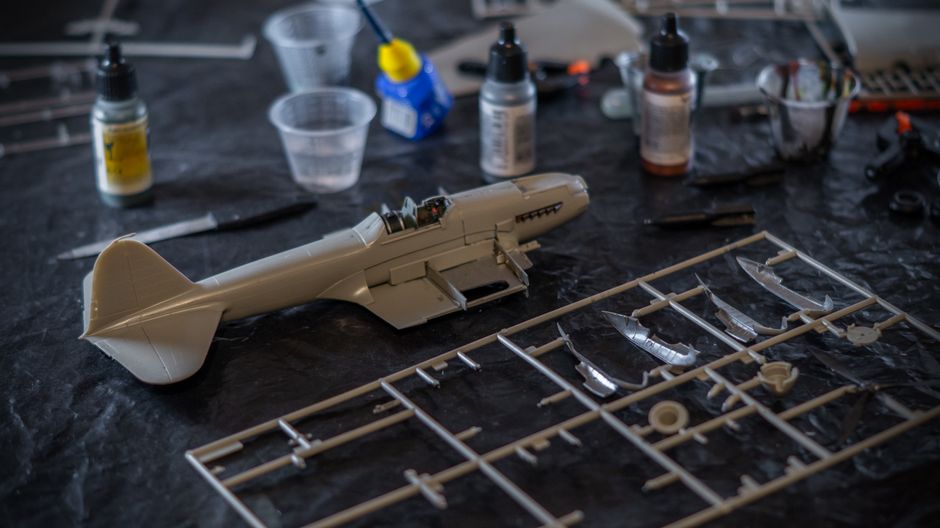
Photo by Matias Luge on Pexels
When dealing with scaled copies, it's crucial to identify corresponding parts. These are sides or angles that are in the same position in both the original and the scaled copy. For example, the longest side in the original corresponds to the longest side in the copy.
3. Worked Example
Let's say you have an original rectangle that is 4 inches wide and 6 inches long. You want to make a scaled copy using a scale factor of 1.5.
-
Original Width: 4 inches
Scaled Copy Width: 4 inches * 1.5 = 6 inches -
Original Length: 6 inches
Scaled Copy Length: 6 inches * 1.5 = 9 inches
So, your scaled copy will be a rectangle that is 6 inches wide and 9 inches long. All angles (which are 90 degrees in a rectangle) remain the same.
Now, imagine you didn't know the scale factor, but you had the original (4x6) and a scaled copy that was 2 inches wide and 3 inches long.
To find the scale factor:
* Using width: 2 inches (copy) / 4 inches (original) = 0.5
* Using length: 3 inches (copy) / 6 inches (original) = 0.5
The scale factor is 0.5, confirming it's a scaled copy and smaller.
4. Key Takeaways
- A scaled copy maintains the same shape as the original but changes its size.
- All angles in a scaled copy are identical to the original's angles.
- All side lengths in a scaled copy are multiplied by the same number, the scale factor.
- A scale factor greater than 1 makes the copy larger; between 0 and 1 makes it smaller.
-
To find the scale factor, divide a length from the copy by its corresponding length from the original.
-
Common Mistakes:
- Changing angles in the scaled copy.
- Multiplying different sides by different factors.
- Adding or subtracting from side lengths instead of multiplying.
- Confusing which figure is the "original" and which is the "copy" when calculating scale factor.
5. Now Try It
Draw a simple triangle with side lengths 3 cm, 4 cm, and 5 cm (this is a right triangle). Then, draw a scaled copy of this triangle using a scale factor of 2/3. Label all side lengths on both your original and scaled copy. Success means all angles in your copy are the same as the original, and all side lengths are correctly scaled by 2/3.
Frequently asked about Introduction to Scaled Copies and Scale Factor
Study this next
Get the full Scaled copies curriculum
Clone the complete plan to your dashboard for unlimited AI-generated notes, practice quizzes, and a personalised revision schedule.
Create Free Account