Introduction to Polymers and PTFE Discovery
From the Polymers curriculum
Introduction to Polymers and PTFE Discovery
TL;DR
Polymers are huge molecules made of many small, repeating units called monomers, like a long chain. We'll explore what makes them special and how they're classified. You'll also learn the fascinating story of how PTFE (Teflon) was accidentally discovered.
1. The Mental Model
Imagine linking together hundreds or thousands of tiny paperclips to form one giant, unique chain. Each paperclip is a monomer, and the whole chain is a polymer. This long chain behaves very differently from individual paperclips.
2. The Core Material
Polymers are essentially macromolecules (big molecules) formed by linking together many smaller molecules. The word "polymer" comes from Greek: "poly" meaning many, and "meros" meaning parts.
What are Monomers and Polymerization?
- Monomer: The small, repeating molecular unit that makes up a polymer. Think of them as the individual building blocks. Examples include ethylene, propylene, or vinyl chloride.
- Polymerization: The chemical process where monomers react to form long polymer chains. This is like the process of linking all those paperclips together.
Types of Polymers
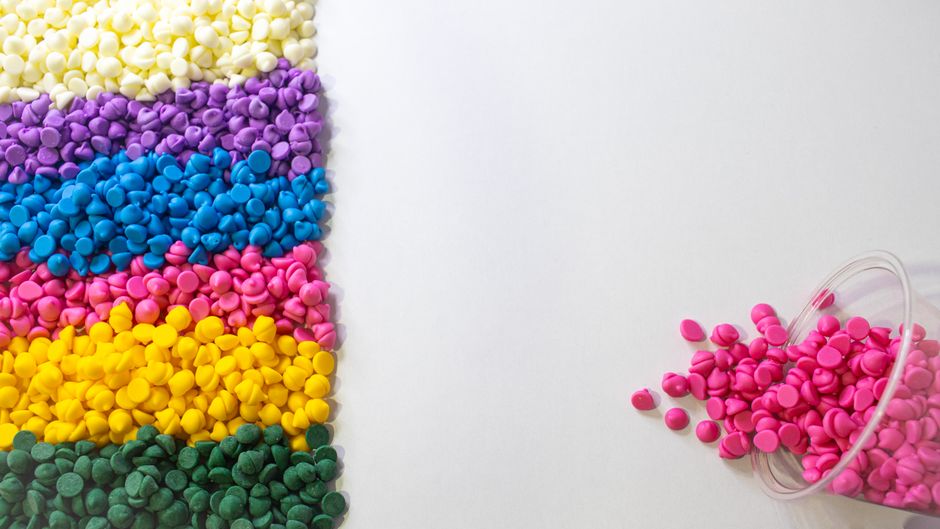
Photo by Jesus Carlon on Pexels
You can classify polymers in many ways, but two common ones are by their origin and by their structure.
By Origin:
- Natural Polymers: These occur in nature. Examples are cellulose (in plants), proteins (in your body), and natural rubber.
- Synthetic Polymers: These are man-made in laboratories or factories. Examples include polyethylene, PVC, nylon, and Teflon (PTFE).
By Structure:
- Linear Polymers: Monomers are joined end-to-end to form a single, long chain. Think of a simple, untangled string.
- Branched Polymers: Linear chains have side branches extending from the main chain. Imagine a tree with many branches.
- Cross-linked Polymers: Polymer chains are connected to each other at various points by covalent bonds, forming a network. This makes them much more rigid and often harder to melt. Think of a fishing net.
graph TD
    A["Polymer Classification"] --> B["By Origin"]
    A --> C["By Structure"]

    B --> B1["Natural Polymers"]
    B --> B2["Synthetic Polymers"]

    C --> C1["Linear Polymers"]
    C --> C2["Branched Polymers"]
    C --> C3["Cross-linked Polymers"]

    B1 --> D1["(Cellulose, Proteins)"]
    B2 --> D2["(Polyethylene, PVC)"]
    C1 --> D3["(HDPE)"]
    C2 --> D4["(LDPE)"]
    C3 --> D5["(Rubber (vulcanized))"]
The Accidental Discovery of PTFE (Teflon)
Photo by Kindel Media on Pexels
The story of Polytetrafluoroethylene (PTFE), better known as Teflon, is a classic example of serendipitous discovery in science.
In 1938, a DuPont chemist named Dr. Roy J. Plunkett was working on developing new refrigerants. He was experimenting with tetrafluoroethylene (TFE) gas, which he had stored in pressurized cylinders. One day, when he opened the valve of a cylinder that he thought was full, no gas came out. Curious, he cut the cylinder open.
Instead of an empty cylinder, he found a white, waxy powder coating the inside. The TFE gas had polymerized spontaneously into a solid polymer: PTFE.
What made this material remarkable was its properties: it was incredibly non-stick, chemically inert (didn't react with much), and had a very high melting point. DuPont recognized its potential, and it was first used during World War II for specialized applications in the atomic bomb project. It wasn't until the 1950s that its non-stick properties found their way into cookware, revolutionizing kitchens worldwide.
3. Worked Example
Let's consider the monomer ethylene (CH₂=CH₂). When ethylene polymerizes, the double bond breaks, and each carbon atom forms a new single bond with another ethylene unit.
Monomer: Ethylene (CH₂=CH₂)
Polymerization process:
Imagine you have many ethylene molecules.
CH₂=CH₂ + CH₂=CH₂ + CH₂=CH₂ + ...
During polymerization, the double bonds "open up," allowing the molecules to link together.
...-CH₂-CH₂-CH₂-CH₂-CH₂-CH₂-...
Resulting Polymer: Polyethylene (PE)
The repeating unit in polyethylene is (-CH₂-CH₂-). If you have 'n' number of these repeating units, the polymer is represented as (-CH₂-CH₂-)n. This is a linear polymer, or potentially branched depending on the specific synthesis conditions.
4. Key Takeaways
- Polymers are large molecules made from many small, repeating units called monomers.
- Polymerization is the process of linking monomers together to form a polymer chain.
- Polymers can be natural (like cellulose) or synthetic (like polyethylene).
- They are classified by structure as linear, branched, or cross-linked, which affects their properties.
- PTFE (Teflon) was discovered accidentally by Dr. Roy J. Plunkett when tetrafluoroethylene gas polymerized spontaneously.
- PTFE's unique non-stick, inert, and high-temperature resistance properties made it incredibly useful.
Common Mistakes to Avoid:
- Don't confuse a monomer with a polymer; monomers are the building blocks, polymers are the final large chains.
- Don't assume all polymers are synthetic; many important ones are natural.
- Don't think of polymerization as just mixing chemicals; it's a specific chemical reaction.
- Don't forget that structure (linear, branched, cross-linked) significantly impacts a polymer's characteristics.
5. Now Try It
Take 15 minutes to research another common synthetic polymer, like Polypropylene (PP) or Polyvinyl Chloride (PVC). Identify its monomer, briefly describe the polymerization process (you don't need detailed chemistry, just the concept of how the monomer units join), and list at least two common uses for the polymer.
What success looks like: You should be able to clearly identify the monomer and understand how it forms the polymer, along with listing practical applications of the resulting material.
Frequently asked about Introduction to Polymers and PTFE Discovery
Study this next
Get the full Polymers curriculum
Clone the complete plan to your dashboard for unlimited AI-generated notes, practice quizzes, and a personalised revision schedule.
Create Free Account