Fundamental Concepts of Electromagnetism
From the electrocinetique curriculum
Fundamental Concepts of Electromagnetism
TL;DR
Electromagnetism explains how electricity and magnetism are related and how they interact to produce forces. It's built on a few fundamental laws that describe charges, fields, and their dynamic interplay. Understanding these basics is key to grasping how everything from motors to radio waves works.
1. The Mental Model
Imagine electricity and magnetism aren't separate things, but two sides of the same coin. They create forces on each other, and these forces can even travel as waves through space.
2. The Core Material
You're probably familiar with electricity (like static shock) and magnetism (like magnets sticking to your fridge). Electromagnetism ties these together.
Electric Charge and Fields

Photo by Ahmet Kerem Derin on Pexels
The most basic idea is electric charge. It's an intrinsic property of matter, just like mass.
* There are two types: positive (+) and negative (-).
* Like charges repel, and opposite charges attract.
* Charge is measured in Coulombs (C). A single electron has a tiny negative charge, about $-1.602 \times 10^{-19}$ C.
When you have a charge, it creates an electric field around it. You can't see this field, but it's a region where another charge would experience a force. Think of it like gravity around a planet. The electric field E is a vector (it has both magnitude and direction) and is measured in Newtons per Coulomb (N/C) or Volts per meter (V/m).
Coulomb's Law quantifies the force between two point charges:
$F = k \frac{|q_1 q_2|}{r^2}$
Where:
* $F$ is the electrostatic force between the charges.
* $k$ is Coulomb's constant ($8.987 \times 10^9 \text{ N} \cdot \text{m}^2/\text{C}^2$).
* $q_1$ and $q_2$ are the magnitudes of the charges.
* $r$ is the distance between the charges.
Notice the $1/r^2$ dependence – the force gets weaker very quickly as charges move apart.
Magnetic Fields and Their Origins
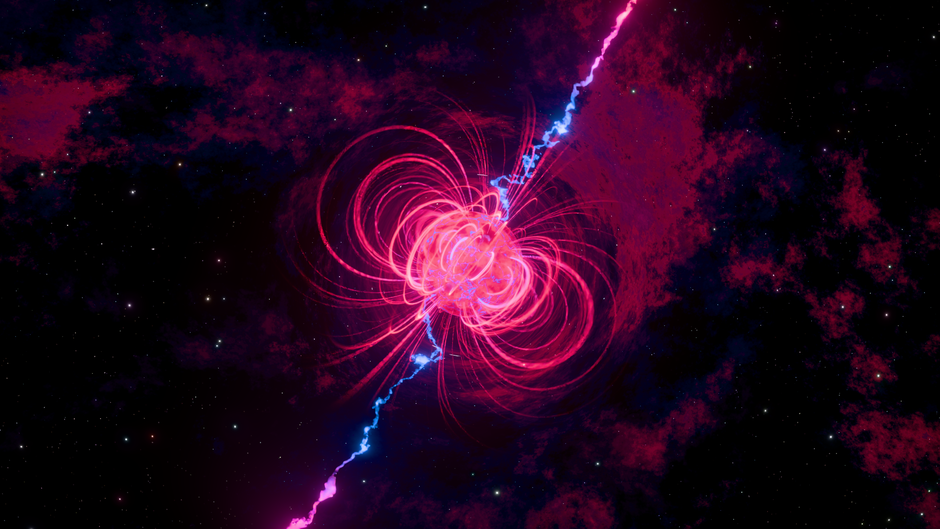
Photo by Nicola Narracci on Pexels
Just like electric charges create electric fields, moving electric charges (currents) create magnetic fields. You can't have a magnetic field without moving charges or changing electric fields.
- Magnetic fields B are also vector quantities and are measured in Teslas (T).
- They don't have "magnetic charges" like electric charges; instead, they always form closed loops (think of a bar magnet having a North and South pole, not just a North pole).
A simple way to visualize the magnetic field around a current-carrying wire is using the right-hand rule: point your right thumb in the direction of conventional current, and your curled fingers show the direction of the magnetic field lines.
Force on a Charge in a Magnetic Field (Lorentz Force)

Photo by Nicola Narracci on Pexels
When a charged particle moves through a magnetic field, it experiences a force. This is the Lorentz force.
$\vec{F} = q(\vec{E} + \vec{v} \times \vec{B})$
- $\vec{F}$ is the total electromagnetic force on the charge.
- $q$ is the charge.
- $\vec{E}$ is the electric field.
- $\vec{v}$ is the velocity of the charge.
- $\vec{B}$ is the magnetic field.
- The $\vec{v} \times \vec{B}$ part is a vector cross product, meaning the force is perpendicular to both the velocity of the charge and the magnetic field direction. Another right-hand rule helps here: point fingers in $\vec{v}$, curl towards $\vec{B}$, and your thumb gives $\vec{F}$.
This force is what makes electric motors work: current (moving charges) in a wire within a magnetic field experiences a force, causing rotation.
The Interconnection: Electromagnetic Induction
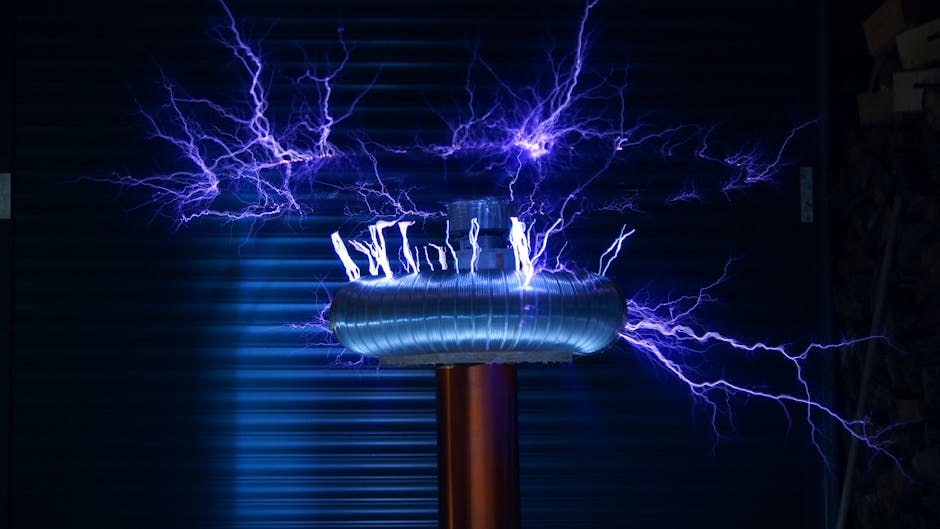
Photo by Killian Eon on Pexels
One of the most important aspects of electromagnetism is electromagnetic induction, described by Faraday's Law. It states that a changing magnetic field can induce an electric current (and thus an electric field).
This is the principle behind generators, transformers, and many other technologies. If you move a magnet near a coil of wire, you'll generate a current in the wire. Conversely, a changing electric field also generates a magnetic field (Maxwell's correction to Ampere's Law).
Here's a diagram summarizing the core relationships:
graph TD
    A["Electric Charge (q)"] -->|Creates| B["Electric Field (E)"]
    A -->|Moving Charge (v)| C["Current (I)"]
    C -->|Creates| D["Magnetic Field (B)"]
    B -->|Exerts Force on (q)| A
    D -->|Exerts Force on (q moving with v)| A
    D -->|Changing Magnetic Field ($\Delta B/\Delta t$)| E["Induced Electric Field (E_induced)"]
    E -->|Drives| C
    E -->|Also Creates| D
Electromagnetic Waves
The ultimate synthesis of these concepts is the idea of electromagnetic waves. When a changing electric field produces a changing magnetic field, and that changing magnetic field then produces a changing electric field, and so on, they self-propagate as a wave. These waves don't need a medium to travel and move at the speed of light in a vacuum. Examples include radio waves, microwaves, visible light, X-rays, and gamma rays.
3. Worked Example
Let's calculate the force on an electron moving through a magnetic field.
Problem: An electron (charge $q = -1.602 \times 10^{-19}$ C) is moving at a speed of $v = 2.0 \times 10^6$ m/s horizontally to the right. It enters a uniform magnetic field of $B = 0.50$ T directed vertically upwards. What is the magnitude and direction of the magnetic force on the electron? (Assume no electric field, so $\vec{E} = 0$).
Solution:
- Identify the relevant formula: We'll use the magnetic part of the Lorentz force: $\vec{F} = q(\vec{v} \times \vec{B})$.
-
Determine the magnitude of the cross product: The magnitude of $\vec{v} \times \vec{B}$ is $vB \sin\theta$, where $\theta$ is the angle between $\vec{v}$ and $\vec{B}$. Here, $\vec{v}$ is right and $\vec{B}$ is up, so they are perpendicular ($\theta = 90^\circ$, and $\sin 90^\circ = 1$).
Magnitude of force: $|F| = |q|vB$
$|F| = (1.602 \times 10^{-19} \text{ C}) \times (2.0 \times 10^6 \text{ m/s}) \times (0.50 \text{ T})$
$|F| = 1.602 \times 10^{-13} \text{ N}$ -
Determine the direction using the right-hand rule for the cross product:
- Point your right fingers in the direction of $\vec{v}$ (right).
- Curl your fingers towards $\vec{B}$ (up).
- Your thumb points out of the page.
- However, since the electron has a negative charge ($q$), the direction of the force is opposite to the direction indicated by the right-hand rule.
- So, the force on the electron is into the page.
Result: The magnetic force on the electron is $1.602 \times 10^{-13}$ N directed into the page.
4. Key Takeaways
- Electric charges create electric fields, and moving charges (currents) create magnetic fields.
- Like charges repel, opposite charges attract, and this force is described by Coulomb's Law.
- Magnetic fields always form closed loops and exert forces on moving charges (Lorentz force).
- A changing magnetic field can induce an electric field and current (Faraday's Law).
- Electromagnetic waves, like light, are self-propagating oscillations of electric and magnetic fields.
- The right-hand rule is a crucial tool for determining directions of fields and forces.
Common Mistakes to Avoid:
- Confusing electric field lines (which can start and end on charges) with magnetic field lines (which always form closed loops).
- Forgetting that the Lorentz force only applies to moving charges in a magnetic field; a stationary charge only experiences an electric force.
- Not accounting for the sign of the charge when using the right-hand rule for the Lorentz force direction.
- Assuming magnetism is separate from electricity; they are intrinsically linked.
5. Now Try It
Imagine you have a straight wire carrying current vertically upwards. Use the right-hand rule to sketch the direction of the magnetic field lines around this wire. Then, consider an electron moving horizontally away from the wire. Use another right-hand rule (and account for the electron's negative charge) to determine the direction of the magnetic force exerted on this electron by the wire's magnetic field. What success looks like: a clear sketch with field line arrows and a stated direction for the force on the electron (e.g., towards, away from, up, down the wire).
Frequently asked about Fundamental Concepts of Electromagnetism
Study this next
Get the full electrocinetique curriculum
Clone the complete plan to your dashboard for unlimited AI-generated notes, practice quizzes, and a personalised revision schedule.
Create Free Account