Genomics and Gene Sequencing
From the Unit 5 Biology IAL EDEXCEL Gene technology curriculum
Genomics and Gene Sequencing
TL;DR
Genomics is the study of an organism's entire genetic material (genome), not just individual genes. Gene sequencing determines the exact order of DNA bases, allowing us to read an organism's genetic blueprint. This technology has revolutionised biology, medicine, and our understanding of life.
1. The Mental Model
Think of a genome as the complete instruction manual for building and operating an organism. Gene sequencing is like reading every single word in that manual in the correct order. Genomics is then understanding how all those words, sentences, and chapters (genes and their regulation) work together.
2. The Core Material
Genomics is a field that looks at the big picture: the whole set of DNA instructions in an organism. Instead of studying one gene at a time, genomics studies all genes, their interactions, and their environment. This gives us a much more complete understanding of how biological systems work.
What is a Genome?

Photo by Google DeepMind on Pexels
A genome is the entire set of DNA (or RNA in some viruses) found in an organism. For humans, it includes all 23 pairs of chromosomes plus the mitochondrial DNA. It contains all the genes, regulatory regions, and non-coding DNA.
What is Gene Sequencing?

Photo by Google DeepMind on Pexels
Gene sequencing (or DNA sequencing) is the process of determining the precise order of nucleotides (A, T, C, G) within a DNA molecule. Knowing this order is like having the exact text of that instruction manual we talked about.
How Does Gene Sequencing Work (Sanger Method)?
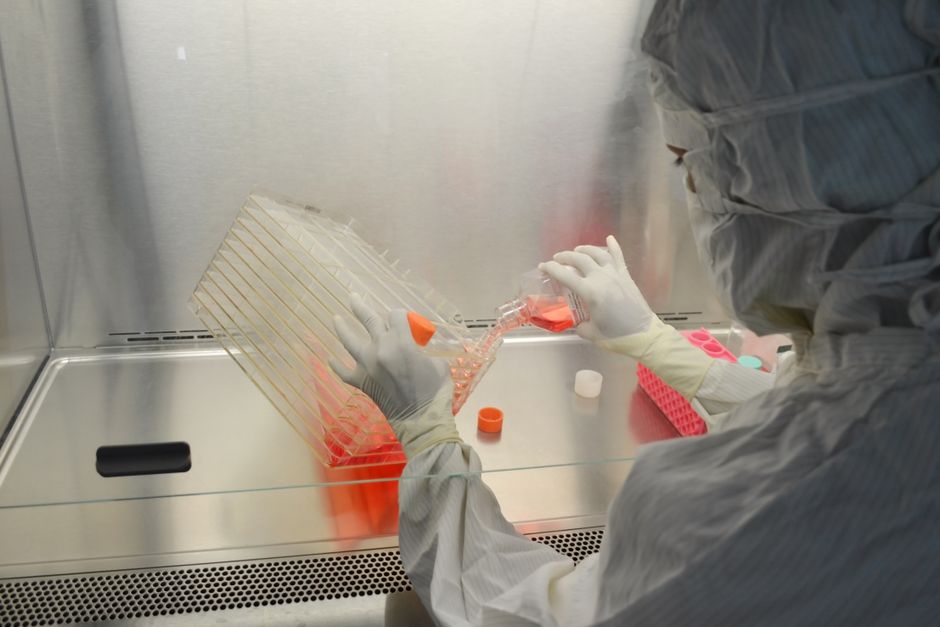
Photo by Satheesh Sankaran on Pexels
The Sanger sequencing method (also known as the chain-termination method or dideoxy sequencing) was the first widely used method and is still important, especially for sequencing individual genes or verifying results from newer methods.
Here's a simplified breakdown:
1. You start with a single-stranded DNA template you want to sequence.
2. You add a primer (a short piece of DNA that binds to a known region of your template).
3. You add DNA polymerase (the enzyme that builds new DNA).
4. You add all four normal deoxynucleotides (dATP, dTTP, dCTP, dGTP).
5. Crucially, you also add a small amount of dideoxynucleotides (ddATP, ddTTP, ddCTP, ddGTP). These are special because they lack the 3'-OH group needed for DNA polymerase to add the next nucleotide. When a dideoxynucleotide is incorporated, DNA synthesis stops.
6. You set up four separate reactions, each with a different fluorescently labelled dideoxynucleotide.
7. The reactions produce DNA fragments of varying lengths, each ending with a specific dideoxynucleotide.
8. These fragments are then separated by size using gel electrophoresis. The fluorescent tags allow a detector to read the sequence of colours, which corresponds to the sequence of bases.
Newer methods, like Next-Generation Sequencing (NGS), sequence millions of DNA fragments simultaneously, making it much faster and cheaper to sequence entire genomes. While the exact chemistry varies, the core idea remains: chop DNA, amplify it, read short fragments, and then use powerful computers to piece those fragments back together.
Applications of Genomics and Gene Sequencing

Photo by Markus Winkler on Pexels
- Medicine: Identifying genetic predispositions to diseases (e.g., certain cancers, cystic fibrosis), developing personalised medicine (tailoring treatments based on an individual's genetic makeup), diagnosing infectious diseases.
- Agriculture: Improving crop yields, disease resistance in plants and animals, developing new varieties.
- Evolutionary Biology: Understanding evolutionary relationships between species, tracking genetic changes over time.
- Forensics: DNA fingerprinting for crime solving and identification.
- Pharmacogenomics: Understanding how an individual's genes affect their response to drugs.
graph TD
    A["Genomics & Gene Sequencing"] --> B["What is a Genome?"]
    A --> C["What is Gene Sequencing?"]

    C --> D["Sanger Sequencing Method"]
    D --> D1["1. DNA Template & Primer"]
    D --> D2["2. DNA Polymerase"]
    D --> D3["3. dNTPs (normal nucleotides)"]
    D --> D4["4. ddNTPs (chain terminators)"]
    D --> D5["5. Four Separate Reactions"]
    D --> D6["6. Electrophoresis & Detection"]

    C --> E["Next-Generation Sequencing (NGS)"]
    E --> E1["Sequences millions of fragments"]
    E --> E2["Faster & Cheaper for whole genomes"]

    A --> F["Applications"]
    F --> F1["Medicine (e.g., Personalised Medicine)"]
    F --> F2["Agriculture (e.g., Crop Improvement)"]
    F --> F3["Evolutionary Biology"]
    F --> F4["Forensics"]
3. Worked Example
Imagine you're trying to sequence a short unknown DNA fragment using Sanger sequencing. You perform the reaction and get the following results from your electrophoresis gel (reading from bottom to top, as smaller fragments travel faster):
Lane 1 (ddATP): fragment ends with A
Lane 2 (ddTTP): fragment ends with T
Lane 3 (ddCTP): fragment ends with C
Lane 4 (ddGTP): fragment ends with G
Let's say the shortest fragment is in Lane 2, then the next shortest is in Lane 4, then Lane 1, then Lane 3, and so on.
Here's how you'd deduce the sequence:
- Shortest fragment: From Lane 2, it ends in T. So, the first base added after the primer was T.
- Next shortest fragment: From Lane 4, it ends in G. So, the second base added was G.
- Next shortest fragment: From Lane 1, it ends in A. So, the third base added was A.
- Next shortest fragment: From Lane 3, it ends in C. So, the fourth base added was C.
If this pattern continues, reading the bases in order from the shortest fragment to the longest, you'd build up the sequence. Let's say the full gel result (bottom to top, reading which lane the band is in) was: T, G, A, C, C, G, T, A.
The newly synthesised strand would be: TGACCGTA.
Therefore, the original template strand (remembering base pairing rules) would be: ACTGGCAT.
(This is a simplified example; actual gels are more complex, and automated sequencing machines read fluorescent signals.)
4. Key Takeaways
- Genomics is the study of an organism's entire genome, including all genes and non-coding DNA.
- Gene sequencing determines the exact order of A, T, C, G bases in a DNA molecule.
- The Sanger method uses dideoxynucleotides to stop DNA synthesis, creating fragments of varying lengths.
- These fragments are separated by size, and their terminal base identifies the sequence.
- Next-Generation Sequencing (NGS) allows for rapid, high-throughput sequencing of entire genomes.
- Genomics has wide-ranging applications in medicine, agriculture, and understanding evolution.
Common Mistakes to Avoid:
- Don't confuse "gene sequencing" (reading the sequence) with "gene cloning" (making copies of a gene).
- Remember that dideoxynucleotides stop synthesis, they don't just get added like normal nucleotides.
- When interpreting Sanger results, always read from the smallest fragment (bottom of the gel) upwards to get the sequence of the newly synthesised strand.
- Don't think genomics only applies to humans; it's used across all life forms.
5. Now Try It
Imagine you've been given a short sequence of newly synthesised DNA fragments from a Sanger sequencing reaction, listed from shortest to longest:
Fragment 1: Primer-G
Fragment 2: Primer-GT
Fragment 3: Primer-GTC
Fragment 4: Primer-GTCA
Fragment 5: Primer-GTCAT
What is the sequence of the original template strand that these fragments were built from? Explain your reasoning in two sentences.
Success looks like correctly identifying the newly synthesised strand and then accurately inferring the original template strand based on complementary base pairing.
Frequently asked about Genomics and Gene Sequencing
Study this next
Get the full Unit 5 Biology IAL EDEXCEL Gene technology curriculum
Clone the complete plan to your dashboard for unlimited AI-generated notes, practice quizzes, and a personalised revision schedule.
Create Free Account