Recombinant DNA Technology and Applications
From the Unit 5 Biology IAL EDEXCEL Gene technology curriculum
Recombinant DNA Technology and Applications
TL;DR
Recombinant DNA technology lets us combine DNA from different sources to create new genetic instructions. We do this by cutting DNA with enzymes, inserting a gene into a carrier (vector), and then getting a host cell to make copies or express the new gene. This powerful tech has applications in medicine, agriculture, and industrial production.
1. The Mental Model
Imagine you're cutting and pasting sentences from different books to write a new story. Recombinant DNA technology is similar: you're taking specific genes (sentences) from one organism's DNA (book) and inserting them into another's, telling that organism to do something new.
2. The Core Material
Recombinant DNA (rDNA) technology, often called genetic engineering, is about manipulating genes. It involves taking a gene of interest from one organism and inserting it into the DNA of another, usually a bacterium or yeast, which then expresses that gene.
2.1 Key Tools: Restriction Enzymes, Ligase, and Vectors
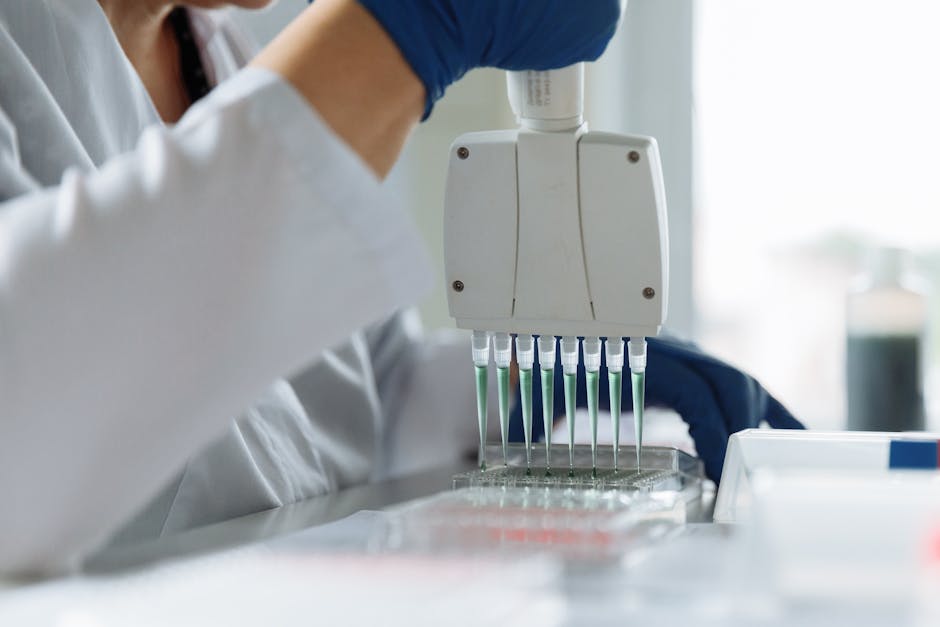
Photo by Thirdman on Pexels
You need a few essential tools to make recombinant DNA:
* Restriction enzymes: These are like molecular scissors. They recognise specific, short DNA sequences and cut the DNA at or near those sites. Many create "sticky ends" – short, single-stranded overhangs that can easily base-pair with complementary sticky ends from other DNA fragments cut with the same enzyme.
* DNA ligase: This is the molecular glue. After you've inserted your gene into the vector, DNA ligase forms phosphodiester bonds to permanently join the DNA fragments together.
* Vectors: These are carrier molecules used to deliver your gene of interest into a host cell. Plasmids (small, circular DNA molecules found in bacteria) are common vectors because they can replicate independently and carry foreign DNA. Viruses can also be used as vectors.
2.2 The Process: Cutting, Ligation, Transformation

Photo by by Natallia on Pexels
The general process of creating recombinant DNA and getting it into a host looks like this:
graph LR
    A["Isolate Target Gene (Donor DNA)"] --> B["Isolate Plasmid (Vector)"]
    B --> C["Cut Plasmid with Restriction Enzyme"]
    A --> D["Cut Target Gene with SAME Restriction Enzyme"]
    C --> E["Mix Cut Plasmid & Target Gene"]
    D --> E
    E --> F["Add DNA Ligase (Ligation)"]
    F --> G["Recombinant Plasmid"]
    G --> H["Introduce Recombinant Plasmid into Host Cell (Transformation)"]
    H --> I["Select Transformed Cells"]
    I --> J["Cell Proliferation / Gene Expression"]
- Isolation: You first isolate the gene you want to transfer (the "target gene" or "insert") and a suitable plasmid vector.
- Cutting: Both the target gene (or the DNA containing it) and the plasmid vector are cut with the same restriction enzyme. This ensures they have complementary sticky ends.
- Ligation: The cut target gene and the cut plasmid are mixed. Their sticky ends base-pair, and then DNA ligase is added to form permanent phosphodiester bonds, creating a recombinant plasmid.
- Transformation: The recombinant plasmid is then introduced into a host cell, typically bacteria, in a process called transformation. Not all cells take up the plasmid.
- Selection: You need to identify which host cells have successfully taken up the recombinant plasmid. Plasmids often contain antibiotic resistance genes, allowing you to grow cells on an antibiotic medium. Only cells with the plasmid survive.
- Gene Expression/Cloning: The transformed host cells are then grown. As they multiply, they make many copies of the recombinant plasmid (gene cloning) and, ideally, express the target gene, producing the desired protein.
2.3 Applications
Recombinant DNA technology has revolutionized many fields:
* Medicine: Production of human insulin for diabetics, growth hormone, vaccines (e.g., HPV vaccine), gene therapy, diagnostic tools.
* Agriculture: Creating crops resistant to pests (e.g., Bt corn), herbicides, or environmental stresses, improving nutritional value (e.g., Golden Rice).
* Industry: Production of enzymes for detergents, biofuels, and bioremediation.
3. Worked Example
Let's say you want to produce human insulin using bacteria.
- Identify and Isolate: You'd isolate the human gene for insulin. You'd also get a bacterial plasmid.
- Restriction Digestion: You use a specific restriction enzyme, say EcoRI, to cut the human DNA flanking the insulin gene and to cut the bacterial plasmid at a single EcoRI recognition site. Both now have complementary EcoRI sticky ends.
- Ligation: You mix the cut human insulin gene with the cut plasmids. The sticky ends anneal, and then DNA ligase joins them, forming a recombinant plasmid containing the human insulin gene.
- Transformation: These recombinant plasmids are introduced into E. coli bacteria.
- Selection: The plasmids typically carry an antibiotic resistance gene (e.g., ampicillin resistance). You grow the bacteria on agar plates containing ampicillin. Only bacteria that successfully took up a plasmid (recombinant or non-recombinant) will survive and grow into colonies. Further screening might be needed to identify colonies with the recombinant plasmid carrying the insulin gene.
- Expression: The selected E. coli are grown in large fermenters. Since the human insulin gene is now part of their genetic material, the bacteria transcribe and translate it, producing human insulin protein. This insulin is then purified and used for treating diabetes.
4. Key Takeaways
- Recombinant DNA technology allows scientists to combine DNA from different organisms.
- Restriction enzymes cut DNA at specific sequences, often creating sticky ends.
- DNA ligase acts as "molecular glue" to join DNA fragments.
- Plasmids are common vectors used to carry foreign DNA into host cells.
- Transformation is the process of introducing recombinant DNA into a host cell.
- This technology is crucial for producing valuable proteins like insulin and developing GMOs.
- Selection markers (like antibiotic resistance) are used to identify cells that have successfully taken up the recombinant DNA.
Common mistakes to avoid:
- Forgetting that both the gene and the vector must be cut with the same restriction enzyme.
- Confusing restriction enzymes (cut DNA) with DNA ligase (joins DNA).
- Thinking that all host cells in a transformation experiment will take up the recombinant DNA; selection is critical.
- Not understanding the purpose of a vector – it's not just random DNA, it's a carrier.
5. Now Try It
Imagine you want to engineer a tomato plant to be resistant to a specific insect pest by introducing a gene from a bacterium (Bt gene) that produces a natural insecticide. Briefly outline the key steps you would take, from isolating the gene to getting the plant to express it. What would success look like at the end?
Frequently asked about Recombinant DNA Technology and Applications
Study this next
Get the full Unit 5 Biology IAL EDEXCEL Gene technology curriculum
Clone the complete plan to your dashboard for unlimited AI-generated notes, practice quizzes, and a personalised revision schedule.
Create Free Account