Foundations of Reading Comprehension
From the Reasoning Through Language Arts curriculum
Foundations of Reading Comprehension
TL;DR
Reading comprehension is your ability to understand, interpret, and remember what you read. It's built on a few core skills that let you connect new information to what you already know. By practicing these skills, you'll become a much more effective reader.
1. The Mental Model
Think of reading comprehension as building a puzzle. Each piece of information in the text is a puzzle piece, and your brain is the table putting them together. The better you are at finding, understanding, and connecting those pieces, the clearer the whole picture becomes.
2. The Core Material
Reading comprehension isn't just about sounding out words; it's about making sense of them and connecting them to form meaning. Here are the key skills you'll develop:
Identifying Main Ideas and Supporting Details

Photo by Kathy Jones on Pexels
Every well-written text has a main idea – the central point the author wants to convey. Supporting details are the facts, examples, explanations, and reasons that back up that main idea. Think of it like a hamburger: the main idea is the patty, and the bun, lettuce, tomato, etc., are the supporting details. Without the details, the main idea is weak; without a main idea, the details are just a random collection of ingredients.
Understanding Vocabulary in Context
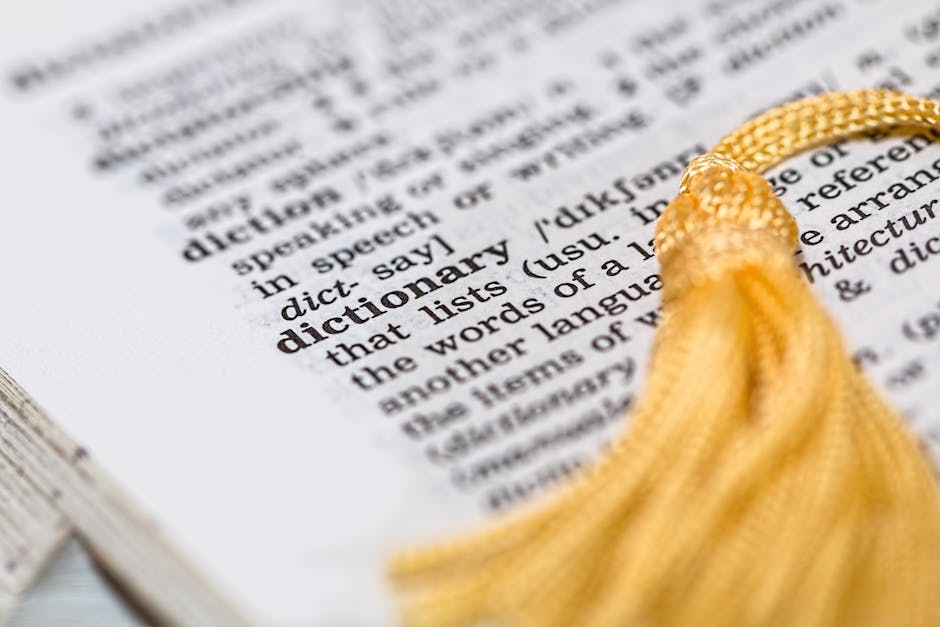
Photo by Pixabay on Pexels
You won't always know every word, and that's okay! Good readers use context clues to figure out what unfamiliar words mean. These clues are hints within the surrounding words or sentences. They can be definitions, synonyms, antonyms, or examples.
Making Inferences
Photo by SHVETS production on Pexels
Authors don't always spell out every single detail. Sometimes, you need to "read between the lines" to understand what's implied but not directly stated. This is called making an inference. It's like being a detective, using the clues given in the text along with your own background knowledge to draw a logical conclusion.
Summarizing
Summarizing means condensing the most important information from a text into a shorter version, using your own words. It shows you've grasped the main idea and key supporting details without getting bogged down in minor points. A good summary is concise and accurate.
Monitoring Comprehension

Photo by Annushka Ahuja on Pexels
This is about being an active reader. It means constantly checking in with yourself as you read: "Am I understanding this? Does this make sense?" If something doesn't click, a good reader stops, rereads, looks up words, or asks questions. It's like having a built-in "check engine" light for your reading.
Here's how these foundational skills connect:
graph TD
    A["Read Text"] --> B{"Identify Main Idea"};
    A --> C{"Understand Vocabulary"};
    A --> D{"Find Supporting Details"};
    B --> E{"Make Inferences"};
    C --> E;
    D --> E;
    E --> F{"Form Overall Understanding"};
    F --> G{"Summarize"};
    G --> H{"Monitor Comprehension"};
    H -- "Confused?" --> A;
    H -- "Understood!" --> I["Achieve Comprehension"];
3. Worked Example
Let's look at a short paragraph and apply these skills:
"The aether was once thought to be a ubiquitous, invisible medium permeating all of space. Scientists in the late 19th century hypothesized its existence to explain how light waves traveled through a vacuum. However, experiments like the Michelson-Morley experiment ultimately failed to detect its presence, leading to its eventual abandonment as a scientific concept."
Main Idea: The aether was a hypothesized medium for light that was later disproven.
Vocabulary in Context:
* ubiquitous: The text says "permeating all of space," suggesting it means "found everywhere" or "widespread."
* permeating: "Ubiquitous... permeating all of space" tells us it means "spreading throughout" or "filling."
* hypothesized: "Scientists... hypothesized its existence to explain" implies they "proposed" or "guessed" it was real.
Inference: We can infer that without the aether, scientists needed a new way to explain how light travels through empty space, which eventually led to new theories like special relativity. The paragraph doesn't state this directly, but the "abandonment" of the aether implies a need for a replacement explanation.
Summary: Scientists once believed in a universal medium called aether to explain light's travel, but experiments failed to confirm it, leading to its rejection.
Monitoring Comprehension: Did you understand what "Michelson-Morley experiment" was about? The paragraph implies it was an experiment designed to find the aether. Even if you don't know the specifics, you can infer its purpose from the context.
4. Key Takeaways
- Actively look for the main idea and the details that support it in every text.
- Use surrounding words and sentences to figure out the meaning of unfamiliar vocabulary.
- Don't be afraid to make logical guesses based on clues when authors imply information.
- Practice condensing information into your own words to check your understanding.
- Continuously ask yourself if you're truly understanding what you're reading.
Common Mistakes to Avoid:
- Reading passively without engaging with the text's meaning.
- Skipping over unfamiliar words without attempting to understand them.
- Confusing your own opinions or background knowledge with what the text actually says.
- Focusing only on minor details instead of the overall message.
5. Now Try It
Find an article online about a topic you're interested in (e.g., a short news article, a blog post, or a section from a Wikipedia page). Read it through once. Then, go back and identify the main idea, highlight 2-3 supporting details, and write down 1-2 words you might not have known and what you think they mean based on context. Finally, write a one-sentence summary of the article.
What success looks like: You should be able to clearly state the article's main point and provide evidence (supporting details) from the text. Your vocabulary guesses should be reasonable, and your summary should accurately capture the article's essence in your own words.
Frequently asked about Foundations of Reading Comprehension
Get the full Reasoning Through Language Arts curriculum
Clone the complete plan to your dashboard for unlimited AI-generated notes, practice quizzes, and a personalised revision schedule.
Create Free Account