Foundations of Language Study
From the language curriculum
Foundations of Language Study
TL;DR
Language study explores how humans acquire, use, and understand language. It's a vast field covering everything from sounds to meaning to how language shapes our thoughts. Understanding these foundations helps you appreciate the complexity and power of human communication.
1. The Mental Model
Think of language as a complex system with different layers, like an onion. You peel back one layer—sounds—to get to another—words—and then sentences, and ultimately, meaning. Each layer builds on the previous one, and they all work together.
2. The Core Material
When you study language, you're looking at several key areas, each focusing on a different aspect of how language works:
Phonetics and Phonology: Sounds of Language
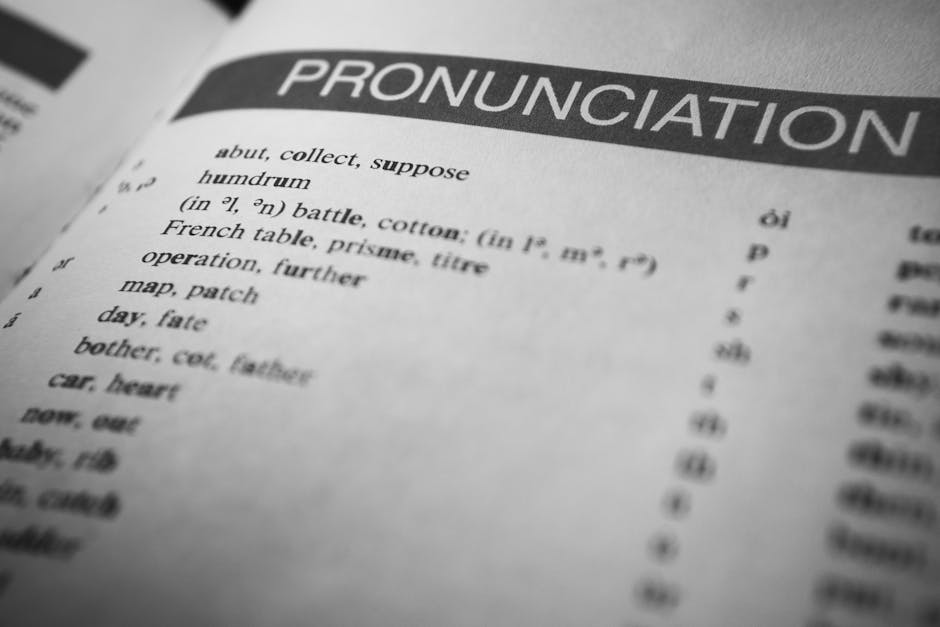
Photo by Nothing Ahead on Pexels
Phonetics is the study of speech sounds themselves—how they're produced by your mouth, how they travel through the air, and how your ear perceives them. Think of it as the physics of speech.
Phonology looks at how these sounds are organized and used in a particular language. For example, why 'p' and 'b' are distinct sounds in English, but the difference might not be as important in another language. It's about the patterns and rules of sounds.
Morphology: Word Structure

Photo by Nothing Ahead on Pexels
Morphology is the study of words and how they're formed. You'll learn about morphemes, which are the smallest units of meaning or grammatical function. A word like "unbreakable" has three morphemes: "un-" (meaning not), "break" (the core meaning), and "-able" (meaning capable of). Some morphemes can stand alone (like "break"), while others ("un-", "-able") must attach to other words.
Syntax: Sentence Structure

Photo by Pixabay on Pexels
Syntax is about how words combine to form phrases, clauses, and sentences. It's the grammar of a language, the set of rules that dictate sentence structure. For instance, in English, we generally say "subject-verb-object" ("She eats apples"), not "apples eats she."
Semantics: Meaning

Photo by Nothing Ahead on Pexels
Semantics is the study of meaning in language. This includes the meaning of individual words, phrases, and sentences. It explores how words relate to the world and to each other. For example, "big" and "large" are synonyms, while "hot" and "cold" are antonyms.
Pragmatics: Language in Context
Pragmatics deals with how context influences meaning. It's about understanding what people mean when they say something, not just what the words themselves literally mean. If someone asks, "Can you pass the salt?" they're not asking about your physical ability, but requesting you to do it.
Here's how these areas relate to each other:
graph TD
    A["Phonetics/Phonology: Sounds"] --> B["Morphology: Words"]
    B --> C["Syntax: Sentences"]
    C --> D["Semantics: Literal Meaning"]
    D --> E["Pragmatics: Meaning in Context"]
3. Worked Example
Let's take the sentence: "The quickly running dog barked loudly."
- Phonetics/Phonology: You could analyze the individual sounds in "dog" (/dɒɡ/) or "barked" (/bɑːrkt/). You'd look at how your tongue, lips, and vocal cords produce these sounds.
- Morphology:
- "The": One morpheme (determiner).
- "quickly": Two morphemes ("quick" + "-ly").
- "running": Two morphemes ("run" + "-ing").
- "dog": One morpheme.
- "barked": Two morphemes ("bark" + "-ed").
- "loudly": Two morphemes ("loud" + "-ly").
- Syntax: This is a well-formed English sentence. You have a noun phrase ("The quickly running dog") acting as the subject, followed by a verb phrase ("barked loudly").
- Semantics: The sentence literally means that an agile canine made a loud vocalization.
- Pragmatics: If someone said this right after you asked what spooked the cat, the pragmatic meaning is providing an explanation for the cat's behavior. The context (the previous question) adds meaning.
4. Key Takeaways
- Language study is structured into distinct but interconnected levels of analysis.
- Phonetics is about the physical sounds, while Phonology is about how languages organize those sounds.
- Morphology focuses on how words are built from smaller units of meaning.
- Syntax governs the rules for combining words into sentences.
- Semantics is the study of literal meaning.
- Pragmatics explores how context influences what we understand from language.
- Avoiding one area of study can lead to an incomplete understanding of language's complexity.
Common mistakes you should avoid:
- Don't confuse phonetics (how sounds are made) with phonology (how sounds function in a system).
- Don't think of grammar (syntax) as just "rules you learned in school"; it's a deeper system of how sentences are built.
- Don't assume words always mean exactly what their dictionary definition says; context is crucial (that's pragmatics).
- Don't skip over morphology; understanding word parts unlocks a lot of vocabulary.
5. Now Try It
Take any simple English sentence you just read (e.g., "Language study explores how humans acquire, use, and understand language.") and try to break it down according to the five core areas. For example, identify a word and its morphemes, think about the sentence structure, and consider any contextual meaning it might have beyond its literal words. Success looks like you being able to point to each component and explain what part of language study it falls under.
Frequently asked about Foundations of Language Study
Get the full language curriculum
Clone the complete plan to your dashboard for unlimited AI-generated notes, practice quizzes, and a personalised revision schedule.
Create Free Account