Contemporary Challenges and Future Directions
From the Consciousness and Cognition curriculum
Contemporary Challenges and Future Directions
TL;DR
Understanding consciousness faces big hurdles like defining it clearly, bridging the gap between brain and mind, and dealing with ethical questions as AI advances. Future research will likely focus on integrating diverse fields and developing new technologies to probe the brain. Navigating these challenges is crucial for unlocking the mysteries of conscious experience.
1. The Mental Model
Think of consciousness research as exploring a vast, uncharted continent. We have some maps (neuroscience, philosophy), but many areas are still unknown. We're trying to figure out what the land is made of, how its features connect, and what impact discovering its secrets will have.
2. The Core Material
You've learned about various theories and approaches to consciousness. Now, let's look at where the field is struggling and where it's headed.
2.1 Defining Consciousness

Photo by Markus Winkler on Pexels
One of the biggest ongoing challenges is simply agreeing on what consciousness is. Is it awareness, subjective experience, self-awareness, or something else entirely? Different definitions lead to different research questions and experimental designs, making it hard to compare findings across studies. Some researchers focus on access consciousness (information being available for processing), while others prioritize phenomenal consciousness (the subjective "what it's like" aspect).
2.2 The Hard Problem of Consciousness
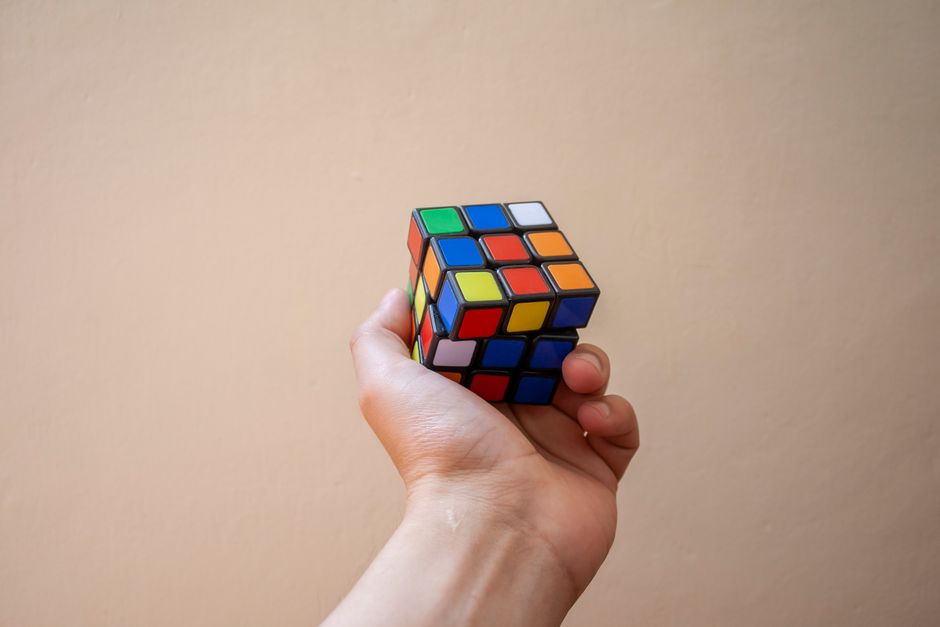
Photo by Arturo A on Pexels
Coined by David Chalmers, "the Hard Problem" refers to explaining why and how physical processes in the brain give rise to subjective experience. We can explain how the brain processes color information (the "Easy Problems"), but not why experiencing "redness" feels a certain way. This qualitative, subjective aspect remains elusive.
2.3 Integrating Disciplines
Photo by Markus Winkler on Pexels
Consciousness research is inherently multidisciplinary, involving philosophy, psychology, neuroscience, computer science, and physics. A major challenge is effectively integrating insights and methodologies from these diverse fields without reducing complex phenomena to simpler, inadequate explanations. For example, how do philosophical arguments about qualia inform neuroscientific experiments?
2.4 Ethical Implications of AI and Artificial Consciousness

Photo by Markus Winkler on Pexels
As AI becomes more sophisticated, questions about machine consciousness become pressing. If AI could genuinely be conscious, what ethical obligations would we have towards it? How would we even test for it? This isn't just science fiction; it forces us to reconsider what "consciousness" means and whether it's tied exclusively to biological systems.
graph TD
    A["Defining Consciousness"] --> B{"Core Challenges"};
    C["Hard Problem (Subjective Experience)"] --> B;
    D["Integrating Disciplines"] --> B;
    E["Ethical AI Questions"] --> B;

    B --> F["Future Directions"];

    F --> G["Multi-modal Brain Imaging"];
    F --> H["Advanced AI Modeling"];
    F --> I["Pharmacological Interventions"];
    F --> J["Cross-species Studies"];
    F --> K["Philosophical Refinements"];
2.5 Future Directions
Research is moving towards:
- Advanced Neuroimaging and Optogenetics: Tools like fMRI, EEG, and optogenetics (using light to control neurons) are becoming more precise, allowing us to map brain activity and manipulate neural circuits with greater accuracy. This helps pinpoint neural correlates of consciousness (NCCs).
- Computational Models: Developing more sophisticated AI and computational models that attempt to simulate or replicate aspects of conscious processing. While not yet creating truly conscious AI, these models can help test theories.
- Pharmacology and Neuromodulation: Exploring how different drugs or brain stimulation techniques (like TMS or tDCS) alter conscious states can provide clues about the underlying mechanisms.
- Cross-species and Developmental Studies: Comparing consciousness in different animals, and studying its development in infants, can reveal fundamental properties.
3. Worked Example
Imagine you're part of a research team investigating the "Hard Problem" using a specific, measurable phenomenon: binocular rivalry. This is when each eye sees a different image (e.g., a red square in the left eye, a blue circle in the right), but you only consciously perceive one at a time, switching back and forth.
Your team's challenge: How do we explain the subjective experience of "seeing red" or "seeing blue" when the physical input to the eyes remains constant?
- Neuroscience Approach: You use fMRI to identify brain regions whose activity correlates with your conscious perception (e.g., activity in visual cortex areas that specifically process red when you report seeing red). You find NCCs – brain activity patterns that consistently go along with a specific conscious experience.
- Computational Modeling: You build an AI model that takes the dual visual input and, using specific algorithms, outputs a "report" of either "red square" or "blue circle" that switches over time, mimicking human perception. The model successfully predicts when you'll perceive one vs. the other.
- Philosophical Critique: A philosopher on your team points out: "While your fMRI shows where brain activity correlates, and your AI model predicts perception, neither actually explains why there's a subjective feeling of redness or blueness. They describe the mechanisms and outcomes, not the inner quality of the experience."
This example highlights the challenge: we can find the neural correlates and build models that behave as if conscious, but the subjective "what it's like" remains the profound mystery.
4. Key Takeaways
- Defining consciousness precisely remains a fundamental hurdle that impacts research design and comparability.
- The "Hard Problem" asks why physical brain processes lead to subjective experience, not just how they do.
- Effective collaboration across fields like neuroscience, philosophy, and AI is crucial but difficult to achieve.
- Advances in AI force us to consider ethical implications and re-evaluate our understanding of consciousness itself.
- Future research will leverage increasingly powerful neuroimaging, AI models, and pharmacological tools.
- Understanding consciousness isn't just academic; it has profound implications for medicine, technology, and our self-understanding.
- Bridging the explanatory gap between physical brain states and subjective experience is the ultimate goal.
Common Mistakes to Avoid:
- Don't confuse identifying neural correlates with solving the Hard Problem; correlation isn't causation or explanation for subjective quality.
- Avoid thinking of consciousness as a single "thing" located in one brain area; it's likely a distributed process.
- Don't assume that building an AI that behaves like it's conscious means it is conscious; this is the difference between simulation and reality.
- Don't dismiss philosophical questions as irrelevant; they help frame the empirical questions neuroscience needs to answer.
5. Now Try It
Spend 15 minutes researching a specific contemporary challenge in consciousness that wasn't deeply covered here, like integrated information theory (IIT) or global neuronal workspace theory (GNWT). For your chosen challenge/theory, identify: (1) its main claim or problem it addresses, (2) one significant criticism leveled against it, and (3) one potential future direction for research stemming from it. What success looks like: You'll have a clear, concise summary of the challenge/theory, its criticism, and a future research path, helping you see how these ideas fit into the broader field.
Frequently asked about Contemporary Challenges and Future Directions
More from Consciousness and Cognition
Get the full Consciousness and Cognition curriculum
Clone the complete plan to your dashboard for unlimited AI-generated notes, practice quizzes, and a personalised revision schedule.
Create Free Account