Introduction to Indian Miniature Painting
From the Painting curriculum
Introduction to Indian Miniature Painting
TL;DR
Indian miniature painting is a vibrant art form known for its small scale, intricate details, and rich storytelling. These paintings often depict scenes from myths, court life, and nature, using specific techniques like opaque watercolors and fine brushes. Understanding their historical context and unique characteristics helps you appreciate their beauty and complexity.
1. The Mental Model
Think of Indian miniature paintings as tiny, jewel-like windows into a rich historical and cultural world. Each one is a carefully crafted narrative, designed to be held and admired up close, revealing layers of detail and meaning.
2. The Core Material
Indian miniature painting is a fascinating art form that flourished from the 16th to the 19th centuries, though its roots go back much further. It's not just one style; it's a broad category with several distinct schools, each with its own characteristics, reflecting the diverse patronage of various royal courts.
What Makes a Miniature Painting?

Photo by İrem Dur on Pexels
The "miniature" part refers to its small scale, making it ideal for books, albums, or personal viewing. Don't let the size fool you; these works are incredibly detailed and complex.
Key characteristics include:
* Intricate Detail: Every element, from facial expressions to textile patterns, is rendered with extreme precision.
* Vibrant Colors: Artists used natural pigments derived from minerals, plants, and sometimes even precious stones, resulting in rich, often opaque colors. Gold and silver were also common.
* Fine Brushwork: Tiny brushes, often made from squirrel hair, allowed for incredibly delicate lines and subtle shading.
* Flat Perspective: Unlike Western art of the same period, miniatures generally don't use linear perspective. Objects are often stacked to show depth, and figures can be arranged in a way that emphasizes narrative over realistic space.
* Emphasis on Narrative: They tell stories – from epics like the Ramayana and Mahabharata, to romantic poetry (like Gita Govinda), portraits of rulers, court scenes, and depictions of nature.
* Lack of Shadow: Shadows are rarely depicted, contributing to their flat yet luminous quality.
Major Schools of Miniature Painting
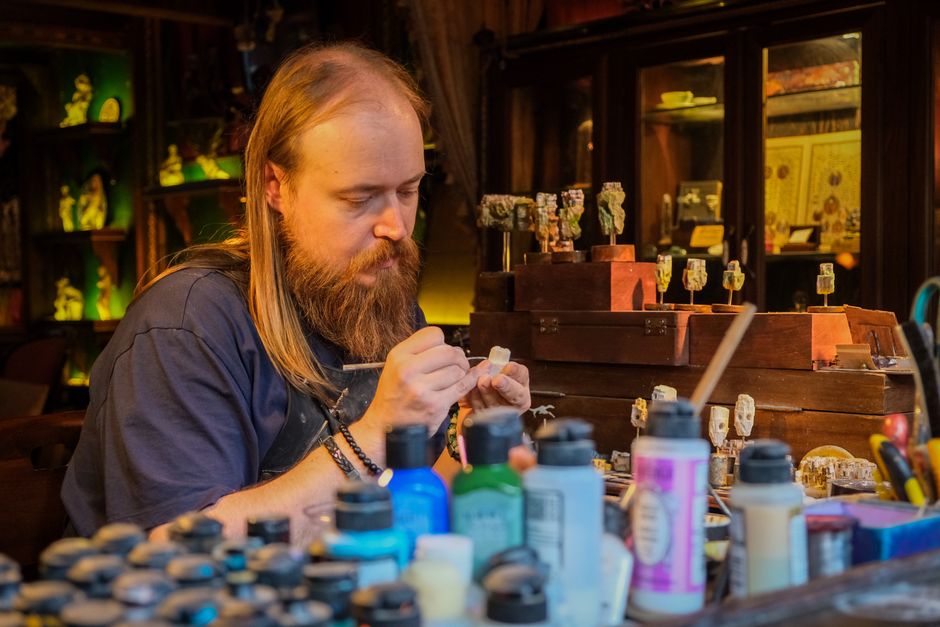
Photo by Lidya Işık on Pexels
While there are many styles, some dominant schools include:
- Mughal School: Known for its realism (especially in portraits), Persian influence, detailed flora and fauna, and historical narrative. It flourished under emperors like Akbar, Jahangir, and Shah Jahan.
- Rajput Schools (e.g., Mewar, Marwar, Kishangarh, Bundi, Kotah): Often more indigenous in style, focusing on Hindu mythology, devotional themes (especially Krishna), and romantic tales. They tend to have bolder colors and stylized figures compared to Mughal art.
- Pahari Schools (e.g., Basohli, Kangra, Guler): From the Himalayan foothills, these schools are known for their lyrical quality, delicate lines, soft colors, and romantic or devotional themes, often with beautiful landscapes.
Here's a simple breakdown of the typical process an artist might follow:
graph TD
    A["Prepare Surface (Paper or Palm Leaf)"] --> B["Sketch Outline (Lightly, often with charcoal)"]
    B --> C["Apply Base Colors (Flat washes)"]
    C --> D["Add Details & Shading (Fine brushwork)"]
    D --> E["Outline & Refine (Darker lines for definition)"]
    E --> F["Apply Gold/Silver (If desired)"]
    F --> G["Burnish (Smooths surface, enhances colors)"]
Materials and Techniques
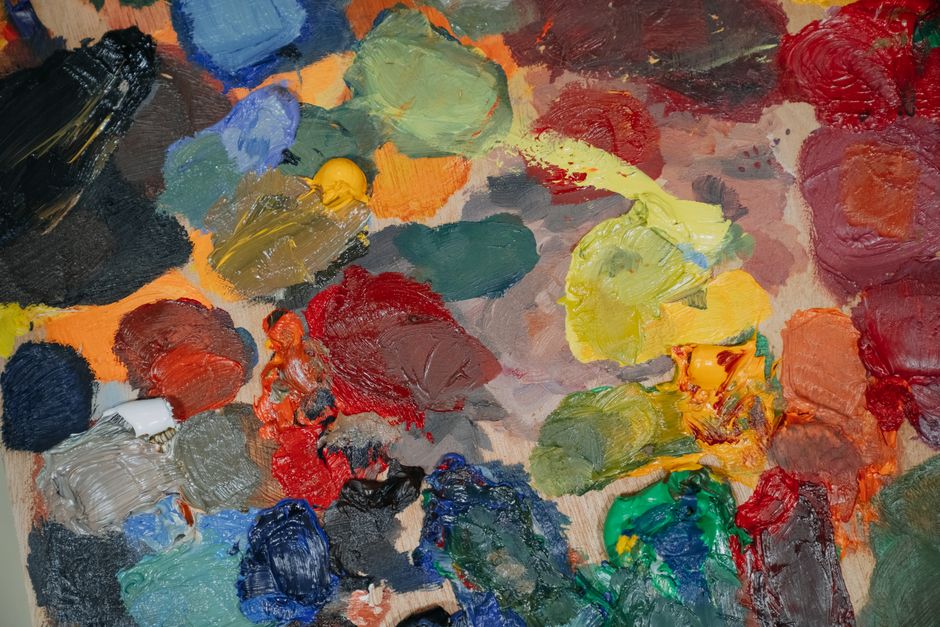
Photo by Huy Nguyễn on Pexels
- Paper: Often handmade, sometimes from plant fibers, and carefully prepared by burnishing (rubbing with a smooth stone) to create a smooth, non-absorbent surface.
- Pigments: Ground minerals (like lapis lazuli for blue), plant extracts (like indigo), lampblack, and sometimes even insect dyes. These were mixed with a binder, typically gum arabic, to create opaque watercolors.
- Brushes: Very fine brushes, traditionally made from squirrel, camel, or even kitten hair, allowing for incredible precision.
3. Worked Example
Let's consider how an artist would approach painting a simple leaf with veins.
- Surface Prep: They'd start with a piece of handmade paper, perhaps pre-sketched with the overall plant.
- Outline: A very faint outline of the leaf would be drawn using a fine charcoal stick or a very light pencil.
- Base Color: A flat wash of green (perhaps malachite pigment mixed with gum arabic) would be applied evenly over the entire leaf shape. There'd be no shading yet.
- Adding Detail (First Pass): Once the base green is dry, the artist would use a slightly darker shade of green or a very diluted black to carefully paint the main veins of the leaf with a delicate, fine-tipped brush.
- Refinement and Highlights: Tiny dots or very thin lines of even darker green or black might be added along the edges of the veins for definition, or a lighter green might be dabbed in tiny spots to suggest texture or subtle highlights, all without creating strong shadows.
- Final Outline: Sometimes a very fine, dark outline would be drawn around the entire leaf to make it stand out crisply against the background. The precision here is key; each vein is distinct, each edge sharp.
4. Key Takeaways
- Indian miniature paintings are small, highly detailed artworks focused on narrative and personal viewing.
- They use vibrant, opaque colors derived from natural pigments and applied with extremely fine brushes.
- Perspective is often flat, prioritizing storytelling and symbolic representation over realistic depth.
- Major schools like Mughal, Rajput, and Pahari each have distinct stylistic characteristics and themes.
- The creation process involves meticulous layering, from initial sketch to base colors, intricate detailing, and burnishing.
- These paintings serve as historical documents, religious texts, and beautiful works of art.
- The absence of deep shadows is a defining characteristic, contributing to their luminous quality.
Common Mistakes to Avoid:
* Don't confuse "miniature" with "simple" – they are incredibly complex and labor-intensive.
* Don't expect Western-style linear perspective or chiaroscuro (strong light and shadow contrasts).
* Avoid thinking of it as a single, uniform style; recognize the diversity between different schools and time periods.
* Don't underestimate the importance of the materials – the handmade paper, natural pigments, and fine brushes are integral to the art form.
5. Now Try It
Choose a simple, natural object like a single flower or a leaf. On a small piece of paper (even just a postcard-sized piece), try to draw it with as much detail as you can, focusing on crisp outlines and filling in areas with flat color, just as you imagine a miniature painter would. Try to avoid any harsh shading or blending; instead, use fine lines to suggest texture and form. Success looks like a precise, clear depiction of your object with distinct edges and vibrant, flat color.
Frequently asked about Introduction to Indian Miniature Painting
Get the full Painting curriculum
Clone the complete plan to your dashboard for unlimited AI-generated notes, practice quizzes, and a personalised revision schedule.
Create Free Account