Alkanes: Structure, Properties, and Reactions
From the Chemistry curriculum
Alkanes: Structure, Properties, and Reactions
TL;DR
Alkanes are simple hydrocarbons made only of carbon and hydrogen, connected by single bonds. Their structure dictates their properties, making them generally unreactive but useful as fuels. You'll learn how their shape affects their physical characteristics and how they undergo combustion and substitution reactions.
1. The Mental Model
Think of alkanes as the simplest, most stable organic molecules. They're like Lego bricks where every piece is perfectly connected, making them sturdy but not very flexible for building complex structures without extreme effort.
2. The Core Material
Alkanes are saturated hydrocarbons, meaning they only contain carbon-carbon single bonds and carbon-hydrogen single bonds. The general formula for an acyclic (non-cyclic) alkane is CnH2n+2, where 'n' is the number of carbon atoms.
2.1 Structure and Nomenclature
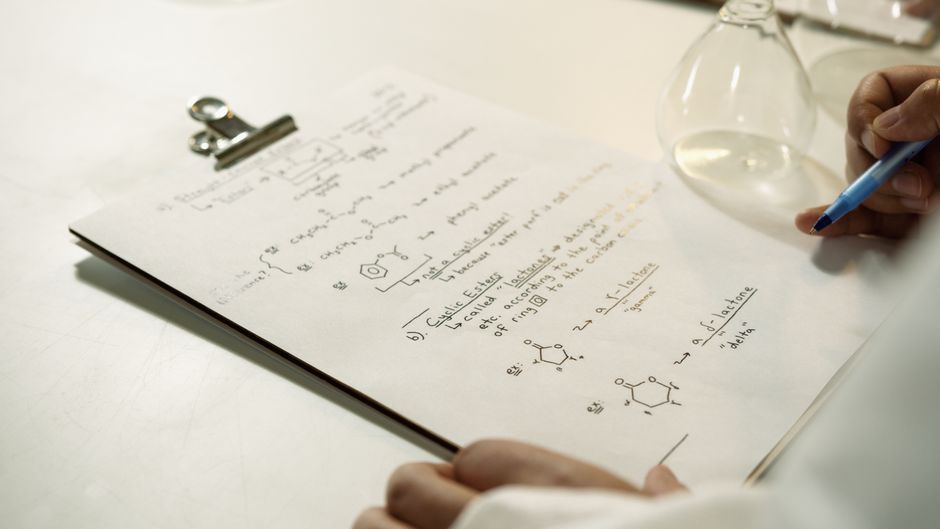
Photo by Artem Podrez on Pexels
Each carbon atom in an alkane forms four single bonds, following the octet rule. These bonds are arranged in a tetrahedral geometry around each carbon. Because of free rotation around single C-C bonds, alkanes can exist in various conformations, though the straight-chain form is often drawn for simplicity.
Naming alkanes follows IUPAC (International Union of Pure and Applied Chemistry) rules:
- Find the longest continuous carbon chain. This is the parent chain.
- Number the carbon atoms in the parent chain so that any branches (alkyl groups) have the lowest possible numbers.
- Name the alkyl groups. These are alkanes with one hydrogen removed (e.g., methane becomes methyl, ethane becomes ethyl).
- List alkyl groups alphabetically, adding prefixes (di-, tri-, tetra-) if there are multiple identical groups.
- Combine the names: (position of branch)-(name of branch)(parent chain name).
For example, a methane molecule is CH4, ethane is C2H6, and propane is C3H8.
graph TD
    A["Alkane Structure Basics"] --> B["Carbon-Carbon Single Bonds (C-C)"];
    A --> C["Carbon-Hydrogen Single Bonds (C-H)"];
    A --> D["Tetrahedral Geometry (around each C)"];
    A --> E["General Formula: CnH2n+2"];
    B --> F["Saturated Hydrocarbon"];
    C --> F;
    F --> G["Low Reactivity"];
2.2 Physical Properties
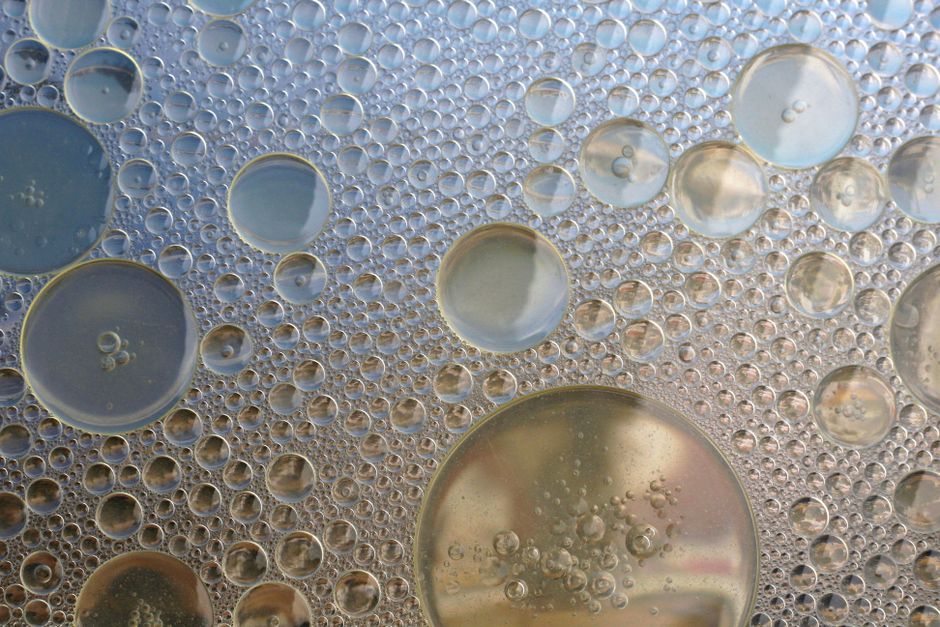
Photo by Landiva Weber on Pexels
The physical properties of alkanes depend on their size and structure:
- Boiling and Melting Points: These generally increase with the number of carbon atoms. Larger molecules have more surface area, leading to stronger London Dispersion Forces (LDFs), which require more energy to overcome. Branching decreases surface area, leading to weaker LDFs and lower boiling points for isomers.
- Solubility: Alkanes are nonpolar molecules. They are insoluble in water (a polar solvent) but soluble in nonpolar solvents (like other alkanes or organic solvents). "Like dissolves like" is the key principle here.
- Density: Alkanes are less dense than water (density < 1 g/mL).
2.3 Chemical Reactions

Photo by Ron Lach on Pexels
Alkanes are relatively unreactive due to their strong C-C and C-H sigma bonds and lack of polar functional groups. However, they do undergo two main types of reactions:
-
Combustion: This is the most important reaction for alkanes, as they are widely used as fuels. Alkanes burn in the presence of oxygen to produce carbon dioxide, water, and a significant amount of heat (exothermic reaction).
- Complete combustion: Alkane + O2 → CO2 + H2O + Energy
- Incomplete combustion (limited O2): Alkane + O2 → CO (carbon monoxide) + C (soot) + H2O + Energy (less energy)
-
Halogenation (Free Radical Substitution): Alkanes react with halogens (like Cl2 or Br2) in the presence of UV light or heat. A hydrogen atom is replaced by a halogen atom. This is a free radical mechanism involving initiation, propagation, and termination steps.
- Example: CH4 + Cl2 --(UV light)--> CH3Cl + HCl (chloromethane)
3. Worked Example
Let's name a branched alkane:
Imagine you have a molecule that looks like this (drawn as a skeletal structure, but I'll describe it):
A central chain of 5 carbons.
On the second carbon from the left, there's a methyl group (-CH3) pointing up.
On the third carbon from the left, there's another methyl group (-CH3) pointing down.
- Longest continuous chain: Count the carbons. The longest straight chain is 5 carbons. A 5-carbon alkane is pentane.
- Numbering: If you number from left to right, the methyl groups are on carbons 2 and 3. If you number from right to left, they'd be on carbons 3 and 4. We want the lowest numbers, so 2 and 3 are correct.
- Alkyl groups: Both branches are methyl groups.
- Multiple groups: Since there are two methyl groups, we use the prefix "di-", so "dimethyl".
- Combine: The full name is 2,3-dimethylpentane.
4. Key Takeaways
- Alkanes are saturated hydrocarbons with only C-C and C-H single bonds.
- Their general formula is CnH2n+2, and they adopt tetrahedral geometry around each carbon.
- Boiling points increase with chain length due to stronger London Dispersion Forces, but decrease with branching.
- Alkanes are nonpolar, insoluble in water, and less dense than water.
- Their primary reactions are complete combustion (producing CO2, H2O, heat) and free radical halogenation.
- Nomenclature involves identifying the longest chain, numbering it for lowest branch numbers, and naming alkyl substituents.
Common Mistakes:
- Forgetting to find the longest continuous carbon chain when naming; sometimes it bends.
- Not numbering the parent chain to give substituents the lowest possible numbers.
- Confusing complete combustion (CO2) with incomplete combustion (CO or C).
- Assuming alkanes are highly reactive; they are quite stable and generally only react under harsh conditions (high heat/UV light for halogenation, presence of oxygen for combustion).
5. Now Try It
Draw the structural formula for 2,2,4-trimethylhexane. Then, write out the balanced chemical equation for its complete combustion.
Success looks like: A clear structural diagram showing a 6-carbon chain with three methyl groups correctly positioned, and a balanced combustion equation where the number of each type of atom (C, H, O) is the same on both sides of the arrow.
Frequently asked about Alkanes: Structure, Properties, and Reactions
More from Chemistry
Get the full Chemistry curriculum
Clone the complete plan to your dashboard for unlimited AI-generated notes, practice quizzes, and a personalised revision schedule.
Create Free Account