Alkenes: Structure, Properties, and Reactions
From the Chemistry curriculum
TL;DR
Alkenes are hydrocarbons featuring at least one carbon-carbon double bond, which makes them more reactive than alkanes. This double bond affects their physical properties and allows them to undergo addition reactions. Understanding their structure helps predict how they'll react.
1. The Mental Model
Think of alkenes as hydrocarbons that are "hungry" for more atoms because of their double bond. That extra bond makes them eager to break it open and grab onto something new, which is why they're so reactive.
2. The Core Material
You're diving into alkenes, which are a really important class of organic molecules. They're defined by having at least one carbon-carbon double bond (C=C). This double bond is a game-changer compared to the single bonds in alkanes.
2.1 Structure and Isomerism

Photo by Jan van der Wolf on Pexels
The C=C double bond means that the two carbons and the atoms directly attached to them lie in a planar (flat) arrangement. There's no free rotation around a double bond like there is with a single bond. This lack of rotation leads to a special type of isomerism called geometric isomerism (also known as cis-trans isomerism).
- cis isomer: Similar groups are on the same side of the double bond.
- trans isomer: Similar groups are on opposite sides of the double bond.
You need different groups attached to each carbon of the double bond for cis-trans isomerism to occur. If either carbon has two identical groups, you won't have cis-trans isomers.
2.2 Physical Properties
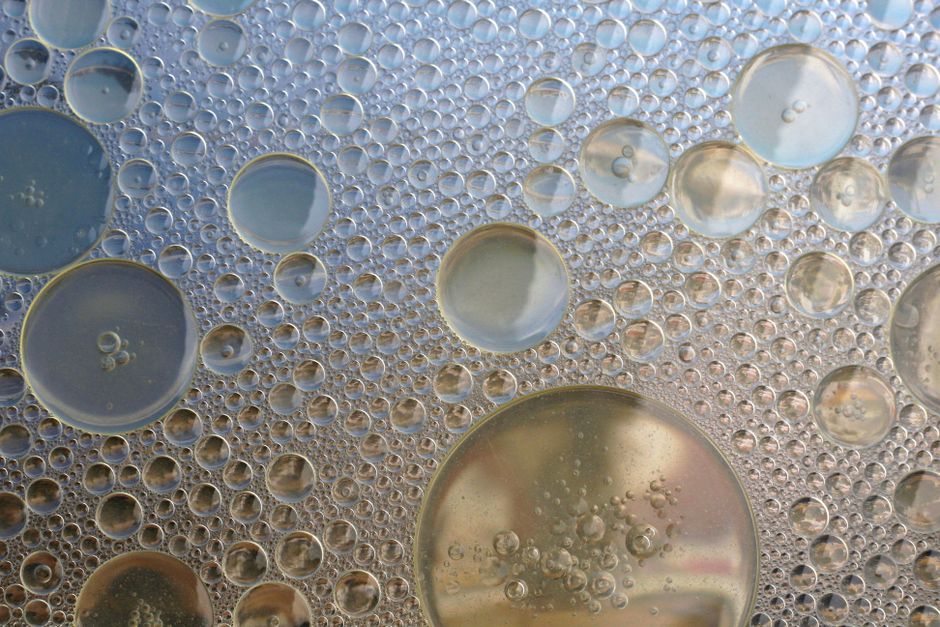
Photo by Landiva Weber on Pexels
Alkenes are nonpolar molecules, so they have weak intermolecular forces (London dispersion forces). This means:
- Their boiling points and melting points are generally low, increasing with molecular size.
- They are insoluble in water but soluble in nonpolar organic solvents.
- They are less dense than water.
2.3 Reactions: Electrophilic Addition
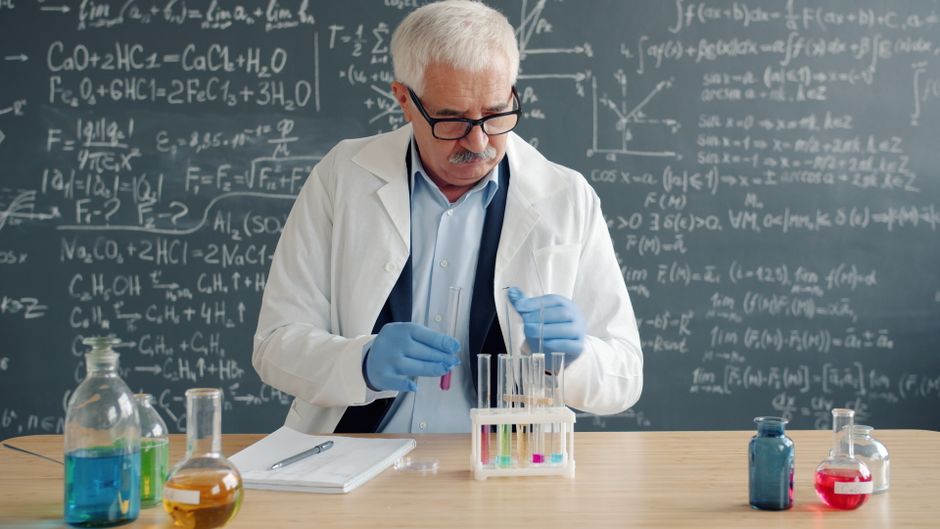
Photo by Vitaly Gariev on Pexels
The defining reaction of alkenes is electrophilic addition. The electron-rich double bond acts as a nucleophile, attracting electron-deficient species called electrophiles. The double bond breaks, and new single bonds form with the electrophile and another species.
Here's a common sequence of how addition reactions proceed:
graph TD
    A["Alkene (C=C)"] --> B{"Electrophile approaches"}
    B --> C["Double bond breaks"]
    C --> D["Carbocation intermediate forms"]
    D --> E{"Nucleophile attacks carbocation"}
    E --> F["New single bonds formed (addition product)"]
Common addition reactions you'll encounter:
- Hydrogenation: Adding H₂ (usually with a catalyst like Ni, Pt, or Pd) to form an alkane.
CH₂=CH₂ + H₂ → CH₃-CH₃ - Halogenation: Adding X₂ (X = Cl, Br) to form a dihaloalkane.
CH₂=CH₂ + Br₂ → BrCH₂-CH₂Br - Hydrohalogenation: Adding HX (X = Cl, Br, I) to form a haloalkane. This follows Markovnikov's Rule: the hydrogen adds to the carbon of the double bond that already has more hydrogens.
CH₃CH=CH₂ + HBr → CH₃CH(Br)CH₃(major product) - Hydration: Adding H₂O (with an acid catalyst like H₂SO₄) to form an alcohol. This also follows Markovnikov's Rule.
CH₃CH=CH₂ + H₂O (H⁺) → CH₃CH(OH)CH₃(major product)
2.4 Oxidation Reactions
Photo by Vitaly Gariev on Pexels
Alkenes can also be oxidized:
- Permanganate Oxidation (Baeyer's Test): Cold, dilute KMnO₄ (purple) reacts with alkenes to form diols (compounds with two -OH groups). The purple KMnO₄ turns brown (MnO₂ precipitate), which is a classic test for unsaturation.
3CH₂=CH₂ + 2KMnO₄ + 4H₂O → 3HOCH₂-CH₂OH + 2MnO₂ + 2KOH
- Combustion: Like all hydrocarbons, alkenes burn in excess oxygen to produce carbon dioxide and water.
C₂H₄ + 3O₂ → 2CO₂ + 2H₂O
3. Worked Example
Let's consider the reaction of propene (CH₃CH=CH₂) with HBr.
- Identify the alkene and electrophile: Propene is the alkene, HBr is the reagent. HBr will dissociate into H⁺ (electrophile) and Br⁻ (nucleophile).
- Apply Markovnikov's Rule: The H⁺ will add to the carbon of the double bond that already has more hydrogens. Between the two carbons of the double bond in propene (CH₃CH=CH₂), the CH₂ has two hydrogens, and the CH has one. So, H⁺ adds to the CH₂.
- Form the carbocation intermediate: Adding H⁺ to the CH₂ creates a secondary carbocation on the middle carbon.
CH₃CH=CH₂ + H⁺ → CH₃C⁺H-CH₃ - Nucleophile attacks: The Br⁻ then attacks the positive carbon of the carbocation.
- Form the product: This yields 2-bromopropane as the major product.
CH₃C⁺H-CH₃ + Br⁻ → CH₃CH(Br)CH₃
So, CH₃CH=CH₂ + HBr → CH₃CH(Br)CH₃.
4. Key Takeaways
- Alkenes contain at least one carbon-carbon double bond (C=C).
- The double bond prevents rotation, leading to cis-trans (geometric) isomerism.
- Alkenes are nonpolar and generally have low melting/boiling points, increasing with size.
- Their primary reaction is electrophilic addition, where the double bond breaks to form two new single bonds.
- Markovnikov's Rule dictates the regioselectivity of H-X and H-OH addition to unsymmetrical alkenes.
- Alkenes decolorize bromine water and cold, dilute potassium permanganate, which are tests for unsaturation.
- They can also be oxidized to diols or combusted.
Common Mistakes to Avoid:
- Forgetting about cis-trans isomerism when drawing alkene structures.
- Not applying Markovnikov's Rule correctly in hydrohalogenation/hydration.
- Treating all double bonds as able to exhibit cis-trans isomerism; remember, each carbon of the double bond must have two different groups.
- Confusing addition reactions with substitution reactions (which are typical of alkanes).
5. Now Try It
Draw all possible constitutional and cis-trans isomers for a molecule with the molecular formula C₄H₈. Then, for each unique alkene isomer, show the product(s) formed when it reacts with H₂O in the presence of an acid catalyst (H⁺). Success means you've correctly identified all distinct isomers and applied Markovnikov's rule where applicable for the hydration products.
Frequently asked about Alkenes: Structure, Properties, and Reactions
Study this next
Get the full Chemistry curriculum
Clone the complete plan to your dashboard for unlimited AI-generated notes, practice quizzes, and a personalised revision schedule.
Save this course free