Introduction to History and Primary Sources
From the Readings in the Philippine History curriculum
TL;DR
History isn't just a list of facts; it's an interpretation of the past based on evidence. You'll learn to critically evaluate primary sources, which are direct accounts or artifacts from the past, to construct your own understanding. This process helps you see how historians build narratives and how biases can shape our view of the past.
1. The Mental Model
Think of history like a detective story. You're the detective, and primary sources are your clues. You gather these clues, analyze them for their truthfulness and perspective, and then piece them together to form a coherent story of what happened.
2. The Core Material
When we study history, especially Philippine history, it's crucial to understand that it's not a fixed, unchangeable story. History is constantly being re-evaluated as new evidence emerges or as we look at old evidence with new questions. Your main task will be to engage with primary sources directly.
What is History?

Photo by Ann H on Pexels
History is the study of the past, but it's more than just memorizing dates and names. It's an ongoing process of inquiry and interpretation. Historians don't just find facts; they analyze evidence, ask questions, and construct narratives to explain why things happened and how they've shaped the present. This means different historians, looking at the same events, might come to different conclusions, especially depending on their perspective and the sources they prioritize.
Primary vs. Secondary Sources

Photo by RDNE Stock project on Pexels
This is fundamental.
* Primary Sources are firsthand accounts or direct evidence from the period you're studying. They were created during the time or by someone directly involved in the event. Think of them as the raw materials of history.
* Secondary Sources are interpretations or analyses of primary sources. They were created after the event by someone who didn't directly experience it. Historians write secondary sources, often using multiple primary sources to build their arguments.
Here's a diagram to help visualize the relationship:
graph TD
    A["Event Happening"] --> B["Someone Experiences/Records It"];
    B --> C("Primary Source Created")
    C --> D("Historian Finds Primary Source");
    D --> E("Historian Analyzes Primary Source");
    E --> F("Historian Writes Secondary Source (Book/Article)");
    F --> G("You Read Secondary Source");
    G --> H("You Understand Interpretation");
    C --> I("You Find Primary Source");
    I --> J("You Analyze Primary Source Directly");
    J --> K("You Form Your Own Interpretation");
    K --> L("You Compare Your View to Others");
Examples of Primary Sources
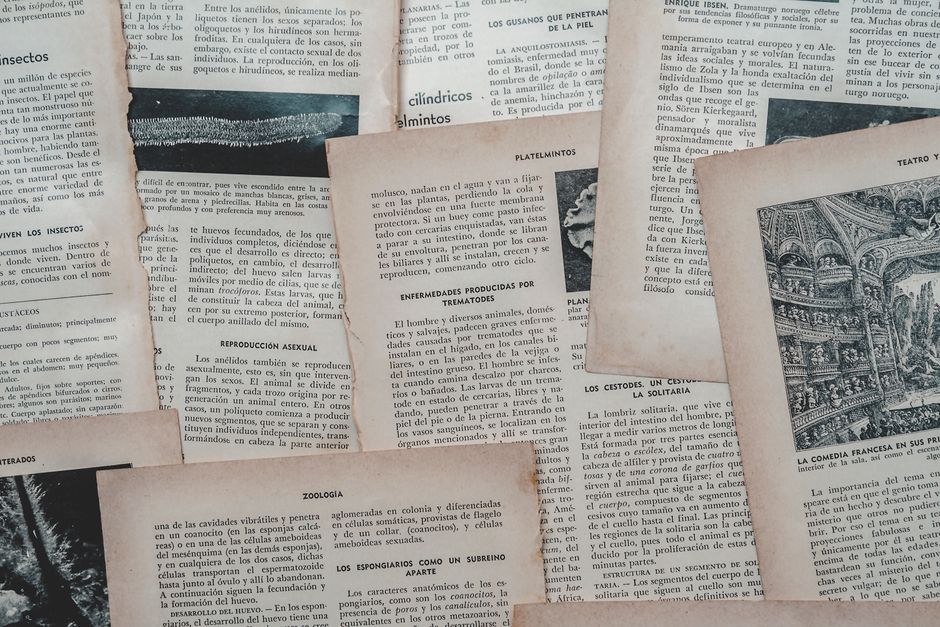
Photo by Arturo Añez. on Pexels
For Philippine history, primary sources can be incredibly diverse:
* Written: Letters, diaries, official government documents (like decrees, treaties), newspaper articles from the time, poems, novels written during the period, church records (births, marriages, deaths), court testimonies, expedition logs (e.g., Pigafetta's account).
* Visual/Audio: Photographs, paintings, maps, political cartoons, early sound recordings (if available).
* Material: Artifacts like tools, pottery, clothing, architectural remains.
Evaluating Primary Sources (Source Criticism)

Photo by Markus Winkler on Pexels
You can't just take a primary source at face value. You need to critically evaluate it. Ask yourself these questions:
- Who created it? What was their background, their position in society, their relationship to the event?
- When was it created? Was it a contemporary account or written much later? Memory fades or changes.
- Why was it created? What was its purpose? To inform? Persuade? Record? Justify?
- What is its audience? Was it for public consumption, a private letter, or an official report?
- What biases might it contain? Everyone has a perspective. What might be missing or emphasized due to the creator's viewpoint? For example, an account by a Spanish friar about the local Filipinos will likely differ significantly from an account by a Filipino native.
- How does it compare to other sources? Do other sources corroborate, contradict, or offer a different angle?
3. Worked Example
Let's look at Antonio Pigafetta's account of the First Circumnavigation of the World, specifically his description of the first Mass in the Philippines (Limasawa, 1521).
Source Snippet (paraphrased): "On Easter Sunday, the first Mass was said on the island of Mazaua [Limasawa]... Many native islanders attended... Magellan had a cross planted on the highest hill, and all present adored it. He explained to the natives that this cross was a sign of their emperor, and if any Spanish ship came, they should show it and be safe."
Analysis Questions:
- Who created it? Pigafetta, an Italian scholar and explorer who sailed with Magellan. He was a European, a Catholic, and part of the expedition.
- When was it created? He kept a detailed journal during the voyage itself. This makes it a contemporaneous account.
- Why was it created? To record the journey, its discoveries, and the encounters with new peoples for a European audience, likely for patrons and future navigators. It serves as a chronicle and a justification for the expedition's activities.
- Audience? Likely European nobility, scholars, and future explorers.
- Biases? Pigafetta clearly views events through a European, Catholic lens. He emphasizes the "adoration" of the cross and Magellan's "explanation" of its significance, framing the interaction from the perspective of the colonizers. He doesn't deeply explore the native islanders' understanding or reactions beyond their presence. He might have simplified or misinterpreted native customs.
- Comparison? We have no direct native accounts from Limasawa at that exact moment. Later Filipino historians might challenge the interpretation of the natives' "adoration" and whether they truly understood the full implications of the Mass or the cross planting. Some historians also debate the exact location of the first Mass based on other geographic details in Pigafetta's text and other sources.
This example shows how even a primary source requires careful questioning to understand its context and potential limitations, preventing us from taking it as the sole, absolute truth.
4. Key Takeaways
- History is an interpretation of the past, not just a collection of facts, and it's constantly evolving.
- Primary sources are direct evidence from the past; secondary sources are interpretations of those primary sources.
- You must actively engage with primary sources to form your own understanding of historical events.
- Critically evaluate every primary source by asking about its creator, context, purpose, and potential biases.
- No single primary source tells the complete story; you need to compare multiple sources for a fuller picture.
- Understanding historical context is vital for interpreting the meaning and significance of sources.
Common Mistakes to Avoid:
- Treating primary sources as absolute truth: Always question and analyze, never just accept.
- Confusing primary and secondary sources: Knowing the difference is fundamental to historical analysis.
- Ignoring the author's bias or perspective: Everyone has one; it shapes the information presented.
- Judging past actions by present-day moral standards without understanding their context: Try to understand the historical environment, not just apply modern judgments.
5. Now Try It
Find a short primary source related to early Philippine history (e.g., a short excerpt from Pigafetta, an early Spanish decree about the Philippines, or a quote from a Filipino revolutionary document). Read it carefully. Then, write a paragraph (approx. 150 words) answering these questions: Who created this source? When and why was it created? What can you learn from it about the historical period? What are some potential biases or limitations of this source that you should consider?
Success looks like: You've identified the source's basic information and critically discussed its perspective and potential limitations, showing you understand that primary sources are not just facts but require interpretation.
Frequently asked about Introduction to History and Primary Sources
Study this next
Get the full Readings in the Philippine History curriculum
Clone the complete plan to your dashboard for unlimited AI-generated notes, practice quizzes, and a personalised revision schedule.
Save this course free