Chemistry of Life
From the AP Biology curriculum
TL;DR
Life depends on the unique properties of water, which are shaped by its polar nature. Carbon's ability to form four strong bonds allows for the vast diversity of organic molecules. These organic molecules are grouped into four major classes, each essential for life's structure and function.
1. The Mental Model
Think of life as a complex machine built from a limited set of LEGO bricks. Water is the lubricant and the solvent, allowing everything to move and interact. Carbon is the main building block, forming the backbone of all the major parts, which are then categorized into a few basic types.
2. The Core Material
You know that all living things are made of chemicals. To understand biology, you first need to understand some basic chemistry. We'll focus on the essential chemical principles that make life possible.
Water: The Solvent of Life
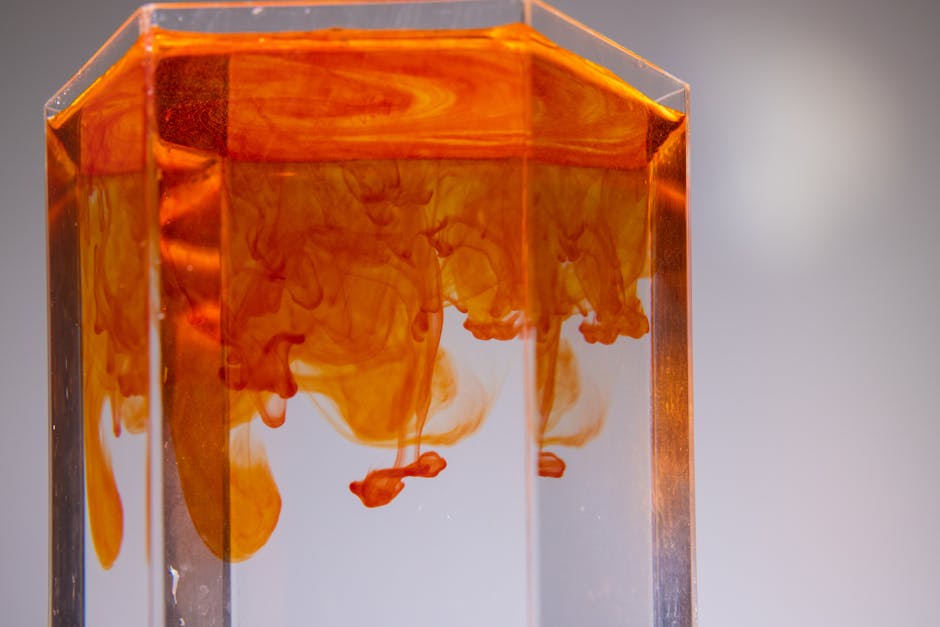
Photo by Jill Burrow on Pexels
Water (H₂O) is probably the most important molecule for life. Its unique properties stem from its polarity. Oxygen is more electronegative than hydrogen, meaning it pulls electrons closer to itself. This creates a slight negative charge on the oxygen and slight positive charges on the hydrogens.
Because of its polarity, water molecules are attracted to each other through hydrogen bonds. These weak attractions are constantly forming and breaking, giving water several critical properties:
- Cohesion and Adhesion: Water molecules stick to each other (cohesion) and to other polar surfaces (adhesion). This is why water forms drops and moves up plants.
- High Specific Heat: Water can absorb a lot of heat without a large change in temperature, helping organisms maintain stable internal temperatures.
- High Heat of Vaporization: A lot of energy is needed to turn liquid water into gas, which helps organisms cool down through evaporation.
- Density of Ice: Unlike most substances, solid water (ice) is less dense than liquid water, so ice floats. This insulates aquatic environments.
- Excellent Solvent: Water dissolves many polar and ionic substances, allowing for chemical reactions to occur.
Carbon: The Backbone of Organic Molecules

Photo by Tara Winstead on Pexels
Carbon is the star of organic chemistry (the chemistry of life). It's incredibly versatile because it has four valence electrons, meaning it can form four covalent bonds with other atoms. This allows carbon to form:
- Long chains
- Branched structures
- Rings
These diverse structures form the backbones of the large, complex molecules found in living organisms.
Functional Groups

Photo by Katerina Holmes on Pexels
While carbon skeletons provide the basic structure, specific clusters of atoms called functional groups attach to these skeletons and give organic molecules their unique chemical properties. Examples include:
- Hydroxyl (-OH): Makes molecules polar and soluble in water (alcohols).
- Carboxyl (-COOH): Acts as an acid, donating H+ ions (fatty acids, amino acids).
- Amino (-NH₂): Acts as a base, accepting H+ ions (amino acids).
- Phosphate (-PO₄): Carries energy and is part of nucleic acids (ATP, DNA).
- Methyl (-CH₃): Often nonpolar, can affect gene expression.
The Four Major Classes of Organic Molecules (Macromolecules)

Photo by Artem Podrez on Pexels
Most large biological molecules are polymers, which are long chains built from repeating smaller units called monomers. Polymers are built by dehydration synthesis (removing water) and broken down by hydrolysis (adding water).
Here's how these macromolecules are generally structured and why they're important:
graph TD
    A["Monomers (Building Blocks)"] --> B{Dehydration Synthesis};
    B --> C["Polymer (Macromolecule)"]
    C --> D{Hydrolysis};
    D --> A;

    subgraph Four Major Macromolecules
        M1["Monosaccharides"] --> P1["Carbohydrates (Polysaccharides)"]
        M2["Amino Acids"] --> P2["Proteins (Polypeptides)"]
        M3["Nucleotides"] --> P3["Nucleic Acids (DNA/RNA)"]
        M4["Fatty Acids + Glycerol"] --> P4["Lipids (e.g., Triglycerides)"]
    end
-
Carbohydrates:
- Monomer: Monosaccharides (simple sugars like glucose, fructose).
- Polymer: Polysaccharides (starch, glycogen, cellulose, chitin).
- Function: Primary energy source, structural support (cellulose in plants, chitin in insects).
-
Lipids:
- Monomer: No true monomer. Often fatty acids and glycerol.
- Structure: Diverse, characterized by being mostly nonpolar (hydrophobic).
- Types: Fats (triglycerides), phospholipids, steroids.
- Function: Long-term energy storage, cell membrane structure (phospholipids), hormones (steroids), insulation.
-
Proteins:
- Monomer: Amino acids (20 different types).
- Polymer: Polypeptides (proteins).
- Structure: Complex 3D structures (primary, secondary, tertiary, quaternary levels) determine function.
- Function: Enzymes (catalyze reactions), structural support, transport, defense, hormones, movement. Proteins are incredibly diverse in function.
-
Nucleic Acids:
- Monomer: Nucleotides (composed of a sugar, a phosphate group, and a nitrogenous base).
- Polymer: DNA (deoxyribonucleic acid) and RNA (ribonucleic acid).
- Function: Store and transmit genetic information (DNA), protein synthesis (RNA).
3. Worked Example
Let's look at how water's properties impact a real biological process: the movement of water from a plant's roots to its leaves.
Imagine a tall tree. How does water get to the very top? It's not pumped like blood. Instead, it relies on a combination of water's properties:
- Cohesion: Water molecules stick together through hydrogen bonds, forming a continuous column from the roots to the leaves.
- Adhesion: Water molecules stick to the inner walls of the plant's xylem vessels (the tubes that transport water), helping to counteract gravity.
- Transpiration: Water evaporates from the leaves (a process called transpiration). As water exits the leaves, it pulls on the adjacent water molecules due to cohesion. This "pull" is transmitted down the continuous column of water, drawing more water up from the roots.
This entire process, known as the cohesion-tension theory, wouldn't work without the strong hydrogen bonding between water molecules.
4. Key Takeaways
- Water's polarity and resulting hydrogen bonds give it unique properties crucial for life, such as cohesion, high specific heat, and solvent abilities.
- Carbon's ability to form four covalent bonds allows for the complex and diverse organic molecules essential for living systems.
- Functional groups attach to carbon skeletons and determine the specific chemical properties and reactivity of organic molecules.
- Living organisms are built from four main classes of macromolecules: carbohydrates, lipids, proteins, and nucleic acids.
- Macromolecules are typically polymers built from monomer units via dehydration synthesis and broken down by hydrolysis.
Common Mistakes to Avoid:
- Don't confuse dehydration synthesis (building polymers by removing water) with hydrolysis (breaking polymers by adding water).
- Remember that lipids are diverse and don't have a true monomer like the other three macromolecule classes.
- Don't underestimate the importance of protein shape; a protein's 3D structure is critical for its function.
- Don't think of hydrogen bonds as covalent bonds; they are much weaker attractions between polar molecules.
5. Now Try It
Take a common food item you've eaten recently (e.g., a piece of bread, a handful of nuts, or a serving of chicken). Break down its main nutritional components. For each component (e.g., carbohydrates, fats, proteins), identify which major class of organic molecule it belongs to and what its primary function would be in your body. Your success will be when you can clearly link the food's components to at least two of the four macromolecule classes and explain their role in your body using the terms you just learned.
Frequently asked about Chemistry of Life
Study this next
Get the full AP Biology curriculum
Clone the complete plan to your dashboard for unlimited AI-generated notes, practice quizzes, and a personalised revision schedule.
Save this course free