Fundamentals of Notation and Rhythm
From the Theory music curriculum
TL;DR
Music notation is a visual language that tells you what to play and how, using symbols for pitch, duration, and silence. Rhythm organizes sounds over time, built from different note lengths and rests. Understanding these basics lets you read and perform music accurately.
1. The Mental Model
Think of music notation as a blueprint for sound. It shows you exactly where to place your fingers (or voice) and for how long. Rhythm is the pulse and structure that makes music move forward.
2. The Core Material
Music notation uses a system of lines and symbols to represent musical ideas. You'll primarily deal with pitch (how high or low a note is) and rhythm (when and for how long a note plays).
2.1. The Staff and Clefs

Photo by Pixabay on Pexels
The staff (or stave) is the foundation: five horizontal lines and four spaces. Each line and space represents a different pitch. A clef tells you which pitches those lines and spaces represent. The most common clefs are:
- Treble Clef (G Clef): Usually for higher-pitched instruments and voices (like guitar, flute, right hand of piano). The curly part of the clef circles the G above middle C.
- Bass Clef (F Clef): Usually for lower-pitched instruments and voices (like bass guitar, cello, left hand of piano). The two dots surround the F below middle C.
2.2. Notes and Rests: Duration
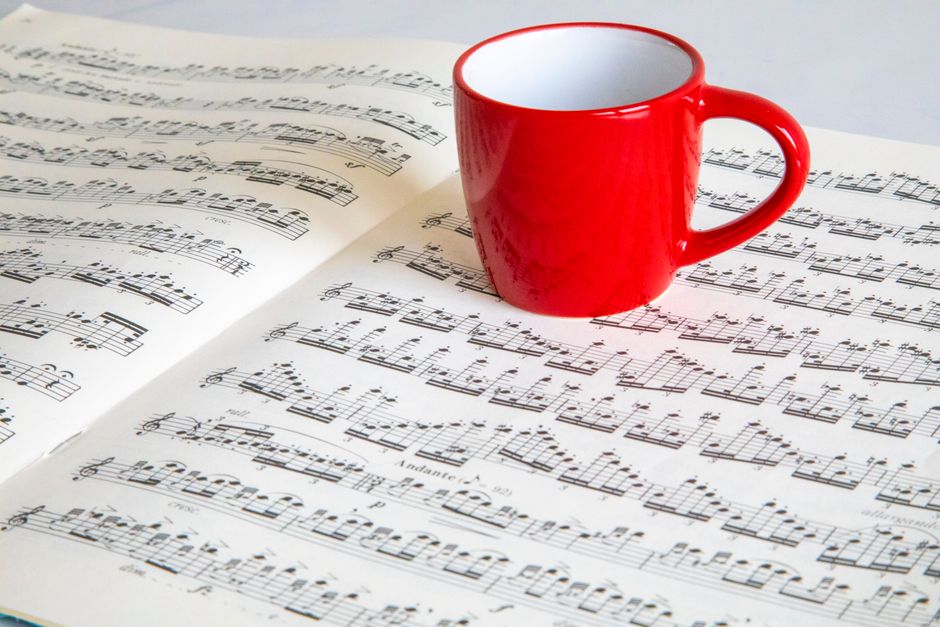
Photo by Jean-Paul Wright on Pexels
Notes tell you to play a sound, and rests tell you to be silent. Both have specific durations that relate to each other. Here's a basic breakdown:
- Whole Note/Rest: The longest common duration.
- Half Note/Rest: Half the duration of a whole note/rest.
- Quarter Note/Rest: Half the duration of a half note/rest (or a quarter of a whole note/rest).
- Eighth Note/Rest: Half the duration of a quarter note/rest.
- Sixteenth Note/Rest: Half the duration of an eighth note/rest.
You can also extend durations with a dot. A dot after a note or rest increases its duration by half of its original value. For example, a dotted half note is a half note plus a quarter note.
2.3. Time Signatures
Photo by Sebastian Rivera on Pexels
A time signature tells you how many beats are in each measure (or bar) and what kind of note gets one beat. It's written as two numbers stacked like a fraction at the beginning of a piece of music.
- The top number tells you how many beats are in each measure.
- The bottom number tells you what kind of note gets one beat.
4means a quarter note gets one beat.2means a half note gets one beat.8means an eighth note gets one beat.
Common time signatures:
- 4/4 (Common Time): Four quarter-note beats per measure. This is the most common time signature.
- 3/4 (Waltz Time): Three quarter-note beats per measure.
- 2/4 (March Time): Two quarter-note beats per measure.
graph TD
    A["Music Notation (Visual Language)"] --> B["Pitch (High/Low)"]
    A --> C["Rhythm (Duration/Timing)"]

    B --> B1["Staff (5 lines, 4 spaces)"]
    B --> B2["Clefs (e.g., Treble, Bass)"]

    C --> C1["Notes (Sound)"]
    C --> C2["Rests (Silence)"]
    C --> C3["Time Signature (Beats per Measure)"]
    C --> C4["Tempo (Speed)"]

    C1 --> C1a["Whole Note"]
    C1 --> C1b["Half Note"]
    C1 --> C1c["Quarter Note"]
    C1 --> C1d["Eighth Note"]
    C1 --> C1e["Sixteenth Note"]

    C3 --> C3a["Top Number (Beats per measure)"]
    C3 --> C3b["Bottom Number (Note that gets one beat)"]
3. Worked Example
Let's look at a simple rhythm in 4/4 time.
Imagine a measure in 4/4 time. This means there are four beats, and a quarter note gets one beat.
- If you have a whole note in this measure, it would last for all four beats. (1 whole note = 4 quarter notes)
- If you have two half notes, each half note would last for two beats. (1 half note = 2 quarter notes; 2 half notes = 4 quarter notes total)
- If you have four quarter notes, each quarter note would last for one beat.
- If you have eight eighth notes, each eighth note would last for half a beat. (2 eighth notes = 1 quarter note; 8 eighth notes = 4 quarter notes total)
So, a measure in 4/4 could contain:
* One whole note
* Two half notes
* Four quarter notes
* Eight eighth notes
* Any combination that adds up to four quarter-note beats (e.g., a half note and two quarter notes)
4. Key Takeaways
- The staff and clefs define the pitches for each line and space.
- Notes represent sounds, while rests represent silence, both with specific durations.
- A whole note is the longest common duration; half, quarter, eighth, and sixteenth notes are progressively shorter.
- A dot after a note or rest adds half of its original value to its duration.
- Time signatures tell you how many beats are in each measure and which note value represents one beat.
- 4/4 time is the most common, meaning four quarter-note beats per measure.
- Always count the beats in a measure to ensure the rhythm adds up correctly according to the time signature.
Common Mistakes to Avoid

Photo by KATRIN BOLOVTSOVA on Pexels
- Forgetting that a dot adds half the note's value, not just making it 1.5 times.
- Confusing the top and bottom numbers of a time signature.
- Not understanding that rests have durations just like notes.
- Not realizing that the value of notes (e.g., "quarter note") is relative to the whole note, not necessarily the beat.
5. Now Try It
Take a piece of sheet music you've never seen before (a children's song or simple melody is perfect). Identify the clef, time signature, and the first four notes and rests. For each of those notes/rests, determine its specific duration in terms of beats (e.g., "this is a quarter note, so it gets one beat").
Success looks like correctly identifying the clef, time signature, and then accurately stating the duration of each of the first four rhythmic elements.
Frequently asked about Fundamentals of Notation and Rhythm
Study this next
Get the full Theory music curriculum
Clone the complete plan to your dashboard for unlimited AI-generated notes, practice quizzes, and a personalised revision schedule.
Save this course free