Prime Numbers and Prime Factorization
From the typically covers Primes, Highest Common Factor (HCF), and Lowest Common Multiple (LCM). curriculum
TL;DR
Prime numbers are special whole numbers greater than 1 that you can only divide evenly by 1 and themselves. Prime factorization is breaking down any whole number into a product of only prime numbers. This process is super useful for finding things like HCF and LCM later on.
1. The Mental Model
Think of prime numbers as the fundamental building blocks for all other whole numbers (except 0 and 1). Prime factorization is like figuring out the exact "recipe" of these prime building blocks needed to make a specific number.
2. The Core Material
What's a Prime Number?
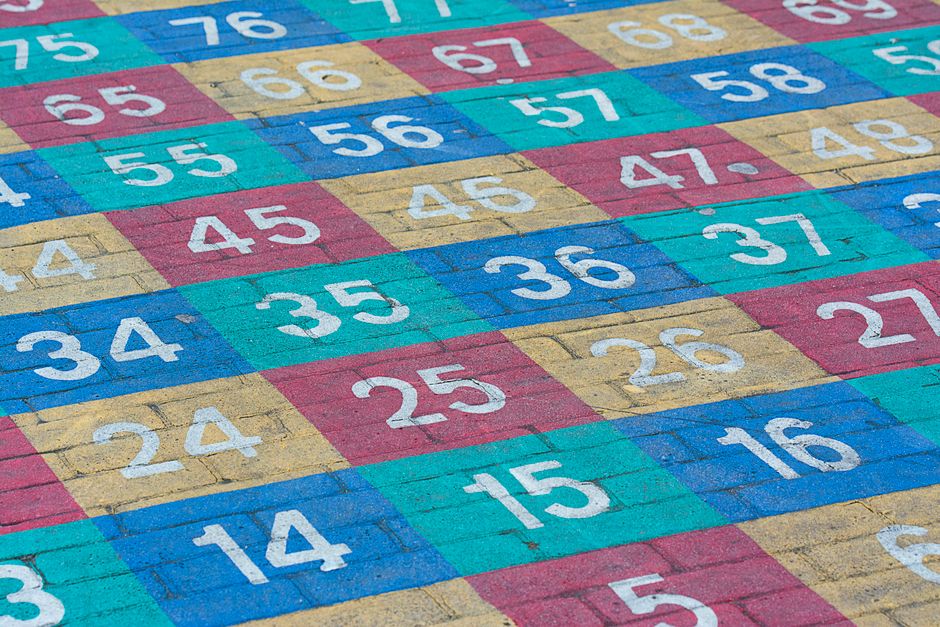
Photo by Jan van der Wolf on Pexels
A prime number is a whole number greater than 1 that has exactly two positive divisors: 1 and itself.
* Examples: 2, 3, 5, 7, 11, 13, 17, 19, 23...
* Why not 1? 1 only has one divisor (itself), not two.
* Why not 4? You can divide 4 by 1, 2, and 4. That's three divisors, so it's not prime. Numbers that aren't prime (and are greater than 1) are called composite numbers.
What is Prime Factorization?

Photo by Ann H on Pexels
Prime factorization is the process of finding which prime numbers multiply together to make a given composite number. Every composite number has a unique prime factorization (this is called the Fundamental Theorem of Arithmetic!).
You can use a "factor tree" or division to find these prime factors.
How to do Prime Factorization (using a factor tree)

Photo by Mai Đạo on Pexels
- Start with the number you want to factor.
- Find any two numbers that multiply to give you that number (don't worry if they're prime yet).
- Draw branches down from your original number to these two factors.
- If a factor is prime, circle it. You're done with that branch.
- If a factor is composite, repeat steps 2-4 for that number until all branches end in circled prime numbers.
- The prime factorization is the product of all the circled prime numbers.
Here's how that process looks:
graph TD
    A["Start with N"] --> B{"Is N prime?"}
    B -- "Yes" --> C("N is a prime factor (done)")
    B -- "No" --> D{"Find two factors: N = F1 x F2"}
    D --> E["Factor F1"]
    D --> F["Factor F2"]
    E --> B1{"Is F1 prime?"}
    F --> B2{"Is F2 prime?"}
    B1 -- "Yes" --> C1("F1 is prime (circle it)")
    B1 -- "No" --> D1{"Find factors for F1"}
    B2 -- "Yes" --> C2("F2 is prime (circle it)")
    B2 -- "No" --> D2{"Find factors for F2"}
    D1 --> E1(["...continue factoring..."])
    D2 --> E2(["...until all factors are prime"])
    C1 & C2 & E1 & E2 --> G("Collect all circled prime factors")
    G --> H("Write N as product of these primes")
Example: Prime Factorization of 30

Photo by Bernice Chan on Pexels
Let's break down 30:
- You could start with 2 x 15.
- 2 is prime (circle it!).
- 15 is not prime. Break 15 down into 3 x 5.
- 3 is prime (circle it!).
- 5 is prime (circle it!).
- So, the prime factors are 2, 3, and 5.
- Prime factorization of 30 is 2 × 3 × 5.
What if you started differently? Like 3 x 10?
* 3 is prime (circle it!).
* 10 is not prime. Break 10 down into 2 x 5.
* 2 is prime (circle it!).
* 5 is prime (circle it!).
* Still 2, 3, and 5! The order doesn't matter, just the primes themselves.
3. Worked Example
Let's find the prime factorization of 72.
- Start with 72.
- You know 72 is even, so it's divisible by 2: 72 = 2 × 36.
- 2 is prime (circle it).
- Now factor 36. It's even: 36 = 2 × 18.
- 2 is prime (circle it).
- Now factor 18. It's even: 18 = 2 × 9.
- 2 is prime (circle it).
- Now factor 9. It's not even, try 3: 9 = 3 × 3.
- 3 is prime (circle it).
- 3 is prime (circle it).
So, the circled prime factors are 2, 2, 2, 3, 3.
The prime factorization of 72 is 2 × 2 × 2 × 3 × 3.
You can also write this using exponents: 2³ × 3².
4. Key Takeaways
- A prime number is a whole number greater than 1 divisible only by 1 and itself.
- A composite number is a whole number greater than 1 that is not prime.
- The number 1 is neither prime nor composite.
- Every composite number can be written as a unique product of prime numbers.
- Factor trees are a visual way to break a number down into its prime factors.
Common Mistakes to Avoid:
- Forgetting that 1 is not a prime number.
- Stopping factorization too early, leaving composite numbers in your final product.
- Thinking that prime factors have to be different; a number can have repeated prime factors (like 72 has three 2s).
- Accidentally including numbers that aren't prime in your final factorization.
5. Now Try It
Find the prime factorization of 120. Draw a factor tree to help you, and then write out the final prime factorization using exponents. What does success look like? You should have 120 expressed as a product of only prime numbers, and it should be unique no matter which initial factors you picked.
Frequently asked about Prime Numbers and Prime Factorization
Study this next
Get the full typically covers Primes, Highest Common Factor (HCF), and Lowest Common Multiple (LCM). curriculum
Clone the complete plan to your dashboard for unlimited AI-generated notes, practice quizzes, and a personalised revision schedule.
Save this course free