Prime Numbers and Prime Factorization
From the typically covers Primes, Highest Common Factor (HCF), and Lowest Common Multiple (LCM). curriculum
TL;DR
Prime numbers are special whole numbers greater than 1 that you can only divide evenly by 1 and themselves. Prime factorization is breaking down any whole number into a unique set of prime numbers that multiply together to make it. This process is super useful for understanding other number properties like HCF and LCM.
1. The Mental Model
Think of prime numbers as the fundamental "building blocks" of all other whole numbers. Just like you can build any structure with LEGO bricks, you can build any whole number (greater than 1) by multiplying prime numbers together.
2. The Core Material
What are Prime Numbers?
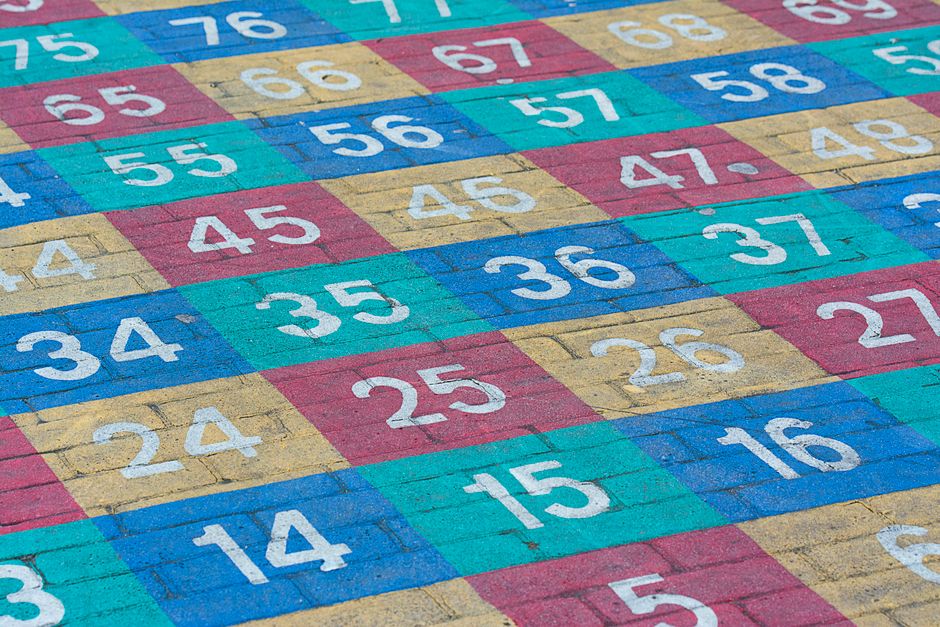
Photo by Jan van der Wolf on Pexels
A prime number is a whole number greater than 1 that has exactly two positive divisors (numbers that divide it evenly): 1 and itself.
- Examples of prime numbers: 2, 3, 5, 7, 11, 13, 17, 19, 23...
- Examples of numbers that are NOT prime:
- 1 (It only has one divisor: 1)
- 4 (Divisors are 1, 2, 4)
- 6 (Divisors are 1, 2, 3, 6)
What is Prime Factorization?

Photo by Ann H on Pexels
Prime factorization is the process of finding which prime numbers multiply together to make a given whole number. Every whole number greater than 1 has one unique set of prime factors. This is called the Fundamental Theorem of Arithmetic.
You can use a "factor tree" or division method to find prime factors. Let's look at the factor tree method.
graph TD
    A["Start with number (e.g., 20)"] --> B{"Find two factors"}
    B --> C["Factor 1 (e.g., 2)"]
    B --> D["Factor 2 (e.g., 10)"]
    C -- "Is it prime?" --> E{Yes};
    D -- "Is it prime?" --> F{No};
    F --> G{"Find two factors for Factor 2"}
    G --> H["Factor 2a (e.g., 2)"]
    G --> I["Factor 2b (e.g., 5)"]
    H -- "Is it prime?" --> J{Yes};
    I -- "Is it prime?" --> K{Yes};
    E -- "Circle it" --> L["Prime Factor (2)"]
    J -- "Circle it" --> M["Prime Factor (2)"]
    K -- "Circle it" --> N["Prime Factor (5)"]
    L & M & N --> P["Prime Factors are 2, 2, 5"]
    P --> Q{"Multiply circled primes: 2 * 2 * 5 = 20"}
When you write out the prime factorization, you often use exponents for repeated factors. For example, 2 * 2 * 5 is written as 2² * 5.
Why is this useful?

Photo by Ann H on Pexels
Prime factorization is the basis for understanding other important concepts like:
* Finding the Highest Common Factor (HCF): The largest number that divides two or more numbers without leaving a remainder.
* Finding the Lowest Common Multiple (LCM): The smallest positive number that is a multiple of two or more numbers.
3. Worked Example
Let's find the prime factorization of 72.
- Start with 72. Find two factors, for example, 8 and 9.
- 72 = 8 * 9
- Break down 8 into its prime factors.
- 8 = 2 * 4
- 4 = 2 * 2
- So, 8 = 2 * 2 * 2 (or 2³)
- Break down 9 into its prime factors.
- 9 = 3 * 3 (or 3²)
- Combine all the prime factors:
- 72 = (2 * 2 * 2) * (3 * 3)
- 72 = 2³ * 3²
To check your answer, multiply them back: 2 * 2 * 2 * 3 * 3 = 8 * 9 = 72.
4. Key Takeaways
- A prime number is a whole number greater than 1 with only two divisors: 1 and itself.
- 1 is not a prime number. 2 is the smallest and only even prime number.
- Prime factorization is breaking down a number into its unique prime "building blocks."
- Every whole number greater than 1 has a unique prime factorization.
- You can use a factor tree or division to find prime factors.
- Writing prime factors with exponents (e.g., 2³ instead of 2 * 2 * 2) is a common notation.
Common mistakes to avoid:
- Forgetting that 1 is not a prime number.
- Including non-prime numbers in your final prime factorization (e.g., saying 4 is a prime factor of 20).
- Not breaking down factors completely until they are all prime.
- Incorrectly multiplying factors when checking your work.
5. Now Try It
Find the prime factorization of 120. List all the prime factors and write the final answer using exponents. You'll know you're successful if you can multiply your prime factors back together and get 120, and all the factors you used are prime numbers.
Frequently asked about Prime Numbers and Prime Factorization
Study this next
Get the full typically covers Primes, Highest Common Factor (HCF), and Lowest Common Multiple (LCM). curriculum
Clone the complete plan to your dashboard for unlimited AI-generated notes, practice quizzes, and a personalised revision schedule.
Save this course free