Foundations of Artificial Intelligence
From the msai curriculum
Foundations of Artificial Intelligence
TL;DR
AI is about making machines think and act intelligently, often by learning from data or following rules. It combines ideas from computer science, math, psychology, and philosophy. Understanding its core concepts helps you grasp how modern AI systems work and their limitations.
1. The Mental Model
Think of AI as building intelligent agents that can perceive their environment, make decisions, and take actions to achieve goals. It's like teaching a computer to solve problems, recognize patterns, and even learn from experience, much like humans do.
2. The Core Material
AI isn't one thing; it's a field with many approaches. At its heart, AI aims to replicate or assist intelligent behavior.
2.1 What is Intelligence?

Photo by Ann H on Pexels
Before we talk about artificial intelligence, let's briefly consider what we mean by "intelligence" in this context. It generally refers to abilities like:
- Problem-solving: Finding solutions to complex situations.
- Learning: Adapting behavior based on new information or experience.
- Reasoning: Drawing conclusions from premises.
- Perception: Interpreting sensory input (like images or sounds).
- Language understanding: Comprehending and generating human language.
2.2 Types of AI
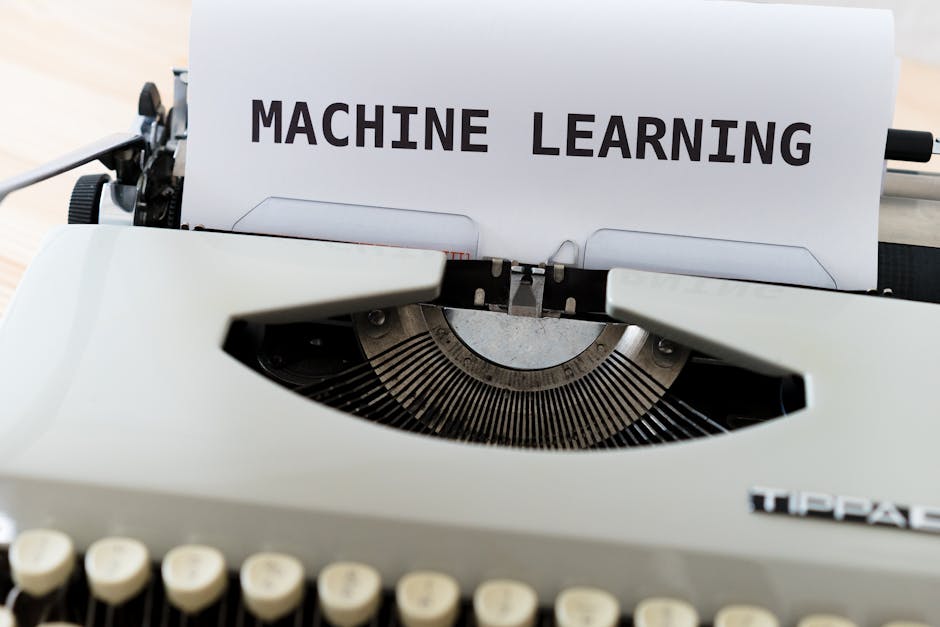
Photo by Markus Winkler on Pexels
You'll often hear about different "types" or "philosophies" of AI:
- Strong AI (Artificial General Intelligence - AGI): This is AI that can perform any intellectual task that a human being can. It's truly intelligent, conscious, and self-aware. This is largely theoretical and often discussed in science fiction.
- Weak AI (Artificial Narrow Intelligence - ANI): This AI is designed and trained for a specific task. Most of the AI you interact with daily (like Siri, recommendation systems, or self-driving cars) falls into this category. It performs its specific task very well but lacks broader cognitive abilities.
2.3 Key AI Paradigms
Photo by Markus Winkler on Pexels
Historically and currently, AI systems are often built using different fundamental approaches:
- Rule-Based Systems (Symbolic AI): These systems operate based on predefined rules and logical inferences. Think of them as giant "if-then-else" statements.
- Pros: Transparent, easy to understand how decisions are made.
- Cons: Hard to scale, brittle (don't handle exceptions well), can't learn.
- Machine Learning (ML): This is where systems learn from data without being explicitly programmed. You feed them lots of examples, and they figure out patterns.
- Pros: Can handle complex patterns, adapts to new data, scales well.
- Cons: Can be a "black box" (hard to understand why a decision was made), requires lots of data.
- Sub-fields of ML:
- Supervised Learning: Learning from labeled data (input-output pairs). E.g., predicting house prices given features and past prices.
- Unsupervised Learning: Finding patterns in unlabeled data. E.g., grouping customers into segments.
- Reinforcement Learning: Learning through trial and error, getting rewards for good actions. E.g., teaching a robot to walk.
- Deep Learning (DL): A sub-field of ML that uses neural networks with many layers (hence "deep"). It's particularly effective for complex tasks like image recognition and natural language processing.
2.4 The AI Development Cycle

Photo by Jakub Zerdzicki on Pexels
No matter the paradigm, developing an AI system often follows a cycle:
graph TD
    A["Define Problem & Goal"] --> B["Gather & Prepare Data"];
    B --> C["Choose Algorithm/Model"];
    C --> D["Train Model"];
    D --> E["Evaluate Performance"];
    E -- "Satisfactory?" --> F{{"Deploy/Integrate"}};
    E -- "Not Satisfactory?" --> A;
    F --> G["Monitor & Maintain"];
    G --> B;
- Define Problem & Goal: What problem are you trying to solve? What does success look like?
- Gather & Prepare Data: Collect relevant data and clean it. This is often the most time-consuming step.
- Choose Algorithm/Model: Select an appropriate AI technique (e.g., decision tree, neural network, rule engine).
- Train Model: Let the algorithm learn from the data.
- Evaluate Performance: Test how well the model performs on new, unseen data.
- Deploy/Integrate: Put the working AI system into use.
- Monitor & Maintain: Ensure it continues to perform well and update it as needed.
3. Worked Example
Let's consider a simple rule-based AI for a smart home thermostat.
Goal: Control room temperature based on user preferences and current conditions.
Rules:
IF current_temp < target_temp - 2 THEN turn_on_heaterIF current_temp > target_temp + 2 THEN turn_on_acIF current_temp >= target_temp - 1 AND current_temp <= target_temp + 1 THEN do_nothingIF time_of_day == "morning" AND day_of_week IN ("Mon", "Tue", "Wed", "Thu", "Fri") THEN target_temp = 22IF time_of_day == "night" OR day_of_week IN ("Sat", "Sun") THEN target_temp = 20
Scenario:
- Current time: Tuesday, 8:00 AM
- Current temperature: 18°C
Process:
- The system checks Rule 4: "IF time_of_day == "morning" AND day_of_week IN ("Mon", "Tue", "Wed", "Thu", "Fri")". Both conditions are true.
- It sets
target_tempto 22°C. - Next, it checks the heating/cooling rules based on the new
target_temp(22°C) andcurrent_temp(18°C). - Rule 1:
current_temp(18) <target_temp(22) - 2 (20). This is true (18 < 20). - Action: The system
turn_on_heater.
This is a very basic AI. A machine learning approach would learn optimal heating/cooling patterns based on historical data, user feedback, and external factors like weather forecasts, rather than relying on manually defined rules.
4. Key Takeaways
- AI isn't a single technology but a broad field focused on enabling machines to perform tasks requiring intelligence.
- The primary distinction is often between "Weak AI" (task-specific, current reality) and "Strong AI" (human-level general intelligence, theoretical).
- Rule-based systems use explicit logic, while machine learning systems learn patterns from data.
- Deep learning is a powerful subset of machine learning using neural networks, excelling in areas like perception.
- The AI development process is iterative, involving problem definition, data, model choice, training, and evaluation.
Common mistakes to avoid:
- Confusing current AI capabilities (Weak AI) with theoretical human-level intelligence (Strong AI).
- Underestimating the importance of data quality and preparation in machine learning projects.
- Assuming that a sophisticated algorithm can compensate for a poorly defined problem or insufficient data.
- Overlooking the ethical implications and potential biases in AI systems.
5. Now Try It
Think of a simple, everyday task you perform, like deciding what clothes to wear in the morning or choosing a route to work. Break down the decision-making process into a series of "if-then" rules. Write down at least 5-7 rules that would guide an AI system to perform that task. What inputs would it need (e.g., temperature, traffic reports)?
What success looks like: You'll have a list of clear, logical rules that, if followed, would reliably lead to a reasonable decision for your chosen task, highlighting how even complex human decisions can sometimes be simplified into an AI-like structure.
Frequently asked about Foundations of Artificial Intelligence
Study this next
Get the full msai curriculum
Clone the complete plan to your dashboard for unlimited AI-generated notes, practice quizzes, and a personalised revision schedule.
Create Free Account