Genetic Risk and Population Dynamics
From the genetic curriculum
Genetic Risk and Population Dynamics
TL;DR
You'll learn how genetic variations influence disease susceptibility and how these variations spread or diminish within populations over time. We'll explore factors like natural selection, genetic drift, and gene flow that shape the genetic makeup of groups. Understanding these dynamics is crucial for predicting disease patterns and developing public health strategies.
1. The Mental Model
Think of a population's genes as a big, evolving recipe book. Each ingredient (gene variant) contributes to individual traits, including disease risk. This recipe book is constantly being edited by environmental pressures and random chance, changing which ingredients are common or rare.
2. The Core Material
Genetic risk isn't about a single gene "causing" a disease; it's often about how different gene variations (alleles) increase or decrease your likelihood of developing a condition. These variations can be single nucleotide polymorphisms (SNPs), larger deletions/insertions, or copy number variations.
The frequency of these risk-associated alleles within a population is what we call allele frequency. This frequency isn't static; it changes over generations due to several key population dynamics:
Natural Selection

Photo by Cátia Matos on Pexels
This is when certain genetic variations provide an advantage or disadvantage in a specific environment. Individuals with advantageous traits are more likely to survive and reproduce, passing on those beneficial alleles, making them more common over time. Conversely, disadvantageous alleles become less common.
Genetic Drift
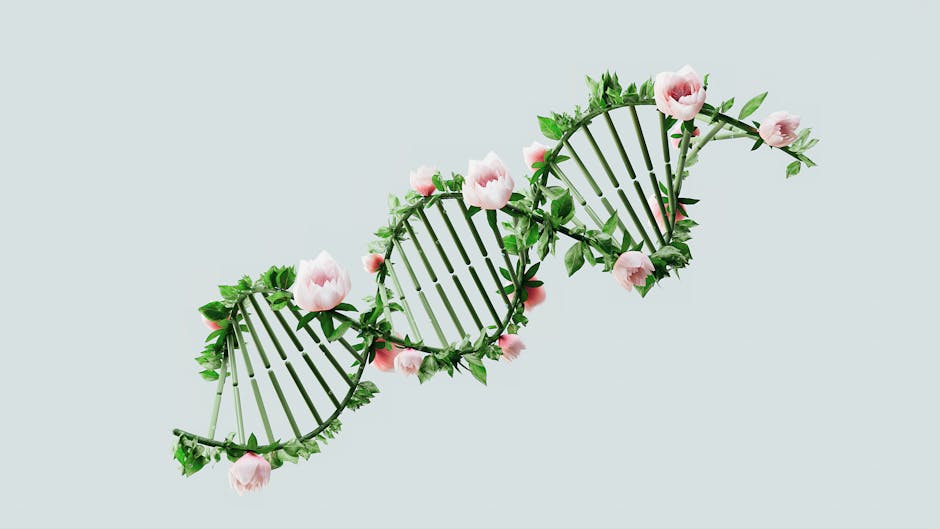
Photo by Google DeepMind on Pexels
This refers to random fluctuations in allele frequencies, especially pronounced in small populations. Imagine a small group of people separating from a larger population; by chance, certain alleles might be more or less common in this new, smaller group than in the original one. This is often called the founder effect.
Gene Flow

Photo by hejpetrpepa Pepa on Pexels
This is the movement of genes between populations, typically through migration and interbreeding. When individuals from one population move to another and reproduce, they introduce their alleles into the new population's gene pool, altering its allele frequencies.
Mutation
Mutations are the ultimate source of new genetic variations. While most are neutral or harmful, occasionally a mutation can be beneficial, providing raw material for natural selection to act upon.
The Interplay of Factors

Photo by Landiva Weber on Pexels
These forces don't act in isolation. For instance, a beneficial mutation might arise, be amplified by natural selection, but then its spread could be affected by gene flow if individuals migrate to a different environment where the mutation isn't as advantageous.
graph TD
    A["Genetic Variation (Alleles)"] --> B["Individual Phenotype (Traits/Disease Risk)"]
    B --> C["Survival & Reproduction"]

    C -- "Advantageous" --> D["Natural Selection"]
    C -- "Random Chance (Small Pop)" --> E["Genetic Drift"]

    D --> F["Change in Allele Frequency"]
    E --> F

    G["Migration/Interbreeding"] --> H["Gene Flow"]
    H --> F

    I["Random Change in DNA"] --> J["Mutation (New Alleles)"]
    J --> F

    F -- "Across Generations" --> A
3. Worked Example
Let's consider a hypothetical population with an allele 'A' that confers resistance to a common, deadly disease, and allele 'a' that doesn't. Initially, allele 'A' is rare, say 5% (0.05) of all alleles in the population.
A severe outbreak of the disease occurs. Individuals with at least one 'A' allele (genotypes AA or Aa) have a 90% survival rate, while those with 'aa' only have a 10% survival rate.
After one generation:
- Selection Pressure: Individuals with 'A' alleles are much more likely to survive and reproduce.
- Reproduction: The survivors pass on their genes. Since 'A' carriers are more numerous among survivors, the proportion of 'A' alleles in the next generation's gene pool will increase significantly.
- New Allele Frequency: Suppose in the next generation, allele 'A' now represents 30% (0.30) of all alleles. This dramatic increase is due to strong positive natural selection favoring the 'A' allele in the face of the disease. If the disease persists, this trend would continue, making 'A' even more common.
4. Key Takeaways
- Genetic risk isn't just about presence/absence of a gene, but the frequency of specific alleles in a population.
- Natural selection favors alleles that improve survival and reproduction, making them more common.
- Genetic drift causes random changes in allele frequencies, especially impactful in small populations.
- Gene flow through migration can introduce or remove alleles from a population, changing its genetic makeup.
- Mutations are the ultimate source of new genetic variations, fueling evolutionary change.
- These forces act together to shape a population's genetic landscape and its susceptibility to diseases.
Avoid these common mistakes:
* Thinking genetic risk means guaranteed disease: It often means increased probability, not certainty.
* Ignoring population size for genetic drift: Drift's effect is much stronger in small populations.
* Believing all mutations are bad: Many are neutral, and some are beneficial, providing raw material for evolution.
* Separating population dynamics: Remember that selection, drift, and gene flow often occur simultaneously.
5. Now Try It
Imagine a small, isolated island population where a rare genetic condition suddenly appears at a higher frequency than in the mainland population it originated from. What population dynamic is most likely responsible for this initial increase, and why? How might gene flow then affect the frequency of this condition if the islanders start regularly intermarrying with mainlanders? What would success look like in your explanation?
Success looks like: You correctly identify the initial dynamic, explain why it's impactful in small populations, and describe how gene flow would alter the allele frequency of the condition in subsequent generations.
Frequently asked about Genetic Risk and Population Dynamics
More from genetic
Get the full genetic curriculum
Clone the complete plan to your dashboard for unlimited AI-generated notes, practice quizzes, and a personalised revision schedule.
Create Free Account