Foundations of Microbiology
From the Microbiology curriculum
Foundations of Microbiology
TL;DR
Microbiology is the study of microscopic life forms, including bacteria, viruses, fungi, and protozoa, which are too small to see with the naked eye. These tiny organisms are incredibly diverse and play crucial roles in nearly all aspects of life, from human health to global ecosystems. Understanding them is fundamental to medicine, biotechnology, and environmental science.
1. The Mental Model
Think of microbiology as uncovering a hidden world. Just like explorers mapped continents, you're learning about the invisible inhabitants that shape our world in profound ways, from making us sick to decomposing waste and even creating the oxygen we breathe.
2. The Core Material
Microbiology explores organisms that are typically less than 1 millimeter in size. We generally categorize them into several major groups.
A. Major Groups of Microbes

Photo by Monstera Production on Pexels
- Bacteria: Single-celled organisms without a membrane-bound nucleus (prokaryotes). They're incredibly diverse and found everywhere.
- Archaea: Also single-celled prokaryotes, often found in extreme environments like hot springs or salt flats. They look similar to bacteria but have distinct genetic and biochemical differences.
- Fungi: Eukaryotes (have a nucleus) that can be single-celled (yeasts) or multicellular (molds, mushrooms). They're important decomposers and also include pathogens.
- Protozoa: Single-celled eukaryotes that often behave like tiny animals, moving and consuming other microbes. They're often found in water.
- Algae: Photosynthetic eukaryotes, some single-celled, others multicellular. They produce oxygen and are a base for many aquatic food chains.
- Viruses: Acellular entities, meaning they aren't true cells. They are essentially genetic material (DNA or RNA) enclosed in a protein coat and can only reproduce by hijacking host cells.
B. Microorganisms and Disease
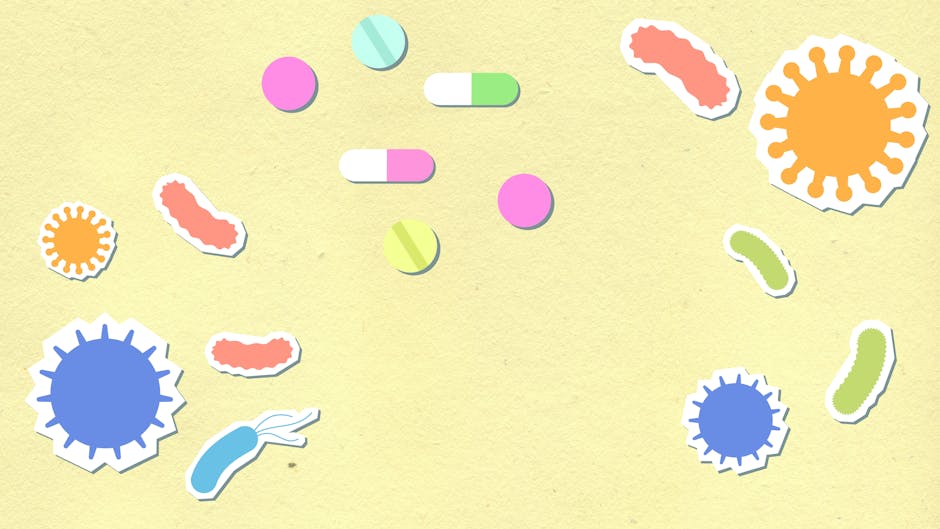
Photo by Monstera Production on Pexels
While many microbes are beneficial or harmless, some are pathogens, meaning they can cause disease. Understanding how these pathogens infect, reproduce, and spread is central to medicine. We use techniques like culturing (growing microbes in a lab) and microscopy (using microscopes to see them) to identify and study them.
C. Importance of Microbes
Photo by Monstera Production on Pexels
Microbes aren't just about disease. They're essential for:
* Nutrient Cycling: Decomposing dead organic matter, cycling nitrogen and carbon.
* Food Production: Fermenting dairy (cheese, yogurt), baking bread, brewing alcohol.
* Biotechnology: Producing antibiotics, hormones, and cleaning up pollutants (bioremediation).
* Human Health: Our gut microbiome helps digest food and trains our immune system.
Here's a simple hierarchy of microbial life based on cellular structure:
graph TD
    A["Microorganisms (invisible to naked eye)"] --> B["Acellular (no cell structure)"]
    A --> C["Cellular (have cells)"]

    B --> D["Viruses"]

    C --> E["Prokaryotes (no nucleus)"]
    C --> F["Eukaryotes (with nucleus)"]

    E --> G["Bacteria"]
    E --> H["Archaea"]

    F --> I["Fungi (yeasts, molds)"]
    F --> J["Protozoa"]
    F --> K["Algae (some single-celled)"]
3. Worked Example
Imagine you're trying to figure out what's causing a mysterious illness in a patient. You take a sample (like a swab from their throat).
- Microscopy: You immediately put a drop on a slide and view it under a microscope. You see tiny rod-shaped organisms moving around. This tells you it's likely a bacterium (prokaryote, cellular, motile).
- Culturing: You then grow the sample on different nutrient agar plates. After 24 hours, you see distinct colonies growing. Some are white and circular, others are yellow and irregular.
- Gram Stain: You take a sample from the white colony, stain it using the Gram stain method, and look again under the microscope. You see purple-stained rods. This indicates a Gram-positive bacterium, narrowing down your possibilities significantly. If they were pink/red, they'd be Gram-negative.
This step-by-step process helps identify the specific microbe so doctors can choose the right treatment.
4. Key Takeaways
- Microorganisms are a diverse group including bacteria, archaea, fungi, protozoa, algae, and viruses.
- The primary distinction between cellular microbes is whether they are prokaryotic (no nucleus) or eukaryotic (with a nucleus).
- Many microbes are essential for life and industry, while some are pathogens causing diseases.
- Microscopy and culturing are fundamental techniques used to study and identify microbes.
- Viruses are unique as they are acellular and require a host cell to replicate.
- Our understanding of microbes impacts medicine, environmental science, agriculture, and food production.
- The human body hosts a vast and important microbiome.
Common Mistakes to Avoid:
- Don't assume all microbes are "germs" that cause disease; most are beneficial or harmless.
- Don't confuse viruses with bacteria; they are fundamentally different in structure and how they reproduce.
- Don't forget that Archaea are distinct from Bacteria, despite both being prokaryotes.
- Don't underestimate the sheer diversity and adaptability of microbial life.
5. Now Try It
Spend 15 minutes researching a specific beneficial microbe you've never heard of before. Find out what it is, where it lives, and what positive role it plays in either an ecosystem or in human society (e.g., in food production, medicine, or environmental cleanup). Success looks like you summarizing in one short paragraph how this microbe contributes to life on Earth without causing harm.
Frequently asked about Foundations of Microbiology
Get the full Microbiology curriculum
Clone the complete plan to your dashboard for unlimited AI-generated notes, practice quizzes, and a personalised revision schedule.
Create Free Account