Foundations of Creative Writing & Journaling
From the creative writing curriculum
TL;DR
Creative writing lets you build new worlds and share unique perspectives, while journaling helps you explore your inner world and develop your voice. Both practices strengthen your writing skills, from observation to crafting compelling narratives. Start by regularly putting words on the page, focusing on process over perfection.
1. The Mental Model
Creative writing is about crafting stories and ideas that move, entertain, or inform. Journaling is a personal space for reflection and practice. Together, they form a powerful feedback loop to improve your ability to express yourself effectively.
2. The Core Material
Creative writing isn't just about making things up; it's about seeing, feeling, and translating that into words. Journaling is your personal gym for this. You're building muscles for observation, imagination, and expression.
Capturing Ideas & Observations

Photo by Polina Tankilevitch on Pexels
Before you can write creatively, you need material. Your experiences, thoughts, and the world around you are your raw data. Journaling is phenomenal for this.
- Sensory Details: Pay attention to what you see, hear, smell, taste, and touch. How does the wind feel? What does old paper smell like?
- Emotions & Thoughts: Explore your reactions to events, your opinions, your dreams. What makes you angry? What brings you joy?
- Dialogue & Character Snippets: Overhear a funny conversation? Notice someone's unique habit? Jot it down.
Developing Your Voice

Photo by DS stories on Pexels
Your "voice" is what makes your writing uniquely yours. It's your style, your personality shining through the words. Journaling, especially "freewriting," helps you find it. Freewriting means writing continuously for a set time (say, 10-15 minutes) without stopping, editing, or worrying about grammar. Just write whatever comes to mind. This unlocks unconscious thoughts and helps you discover your natural rhythm.
Understanding Narrative Structure (the basics)
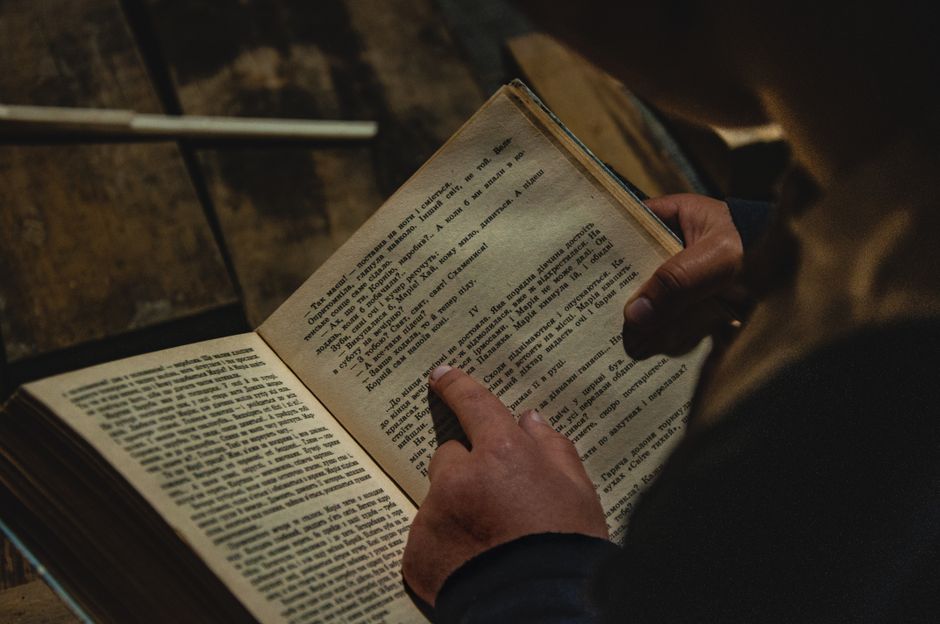
Photo by Roman Tymochko on Pexels
Even in short pieces, there's usually a sense of beginning, middle, and end. This isn't a rigid formula, but a helpful guide. Good stories often involve:
- A beginning (setup): Introduce characters, setting, and hint at a problem or goal.
- A middle (rising action/conflict): Develop the problem, characters face challenges.
- An end (resolution): The problem is resolved (or not), characters change.
It looks like this:
graph TD
    A["Idea/Spark (Observation, Emotion)"] --> B["Brainstorming/Freewriting"]
    B --> C{"What's the core of the story?"}
    C -- "Character/Setting" --> D["Drafting (Beginning)"]
    D --> E["Drafting (Middle - Conflict)"]
    E --> F["Drafting (End - Resolution)"]
    F --> G["Review & Refine (Voice, Details)"]
    G --> H["Finished Piece / New Idea"]
The Power of "Show, Don't Tell"

Photo by Brett Sayles on Pexels
This is a cornerstone of creative writing. Instead of telling your reader something (e.g., "She was sad"), show them through actions, descriptions, and dialogue (e.g., "Her shoulders slumped, and a single tear traced a path down her cheek"). Journaling can be a great place to practice describing your own feelings in a "showing" way.
3. Worked Example
Let's say you're observing a park bench for your journal.
Initial Journal Entry (telling):
"The park was nice. An old man sat on a bench. He looked lonely. It was a cold day."
Revised Journal Entry (showing, expanding details):
"The metallic screech of gulls cut through the crisp air. On the chipped green bench, an old man sat, shoulders hunched, his tweed cap pulled low. His gaze seemed fixed on nothing in particular, just the grey path ahead. A half-eaten sandwich, wrapped in wax paper, lay beside him, untouched. Each breath Ghosted into a cloud and vanished."
This revised entry uses sensory details (screech, crisp air, chipped green bench), actions (shoulders hunched, cap pulled low, breath ghosted), and specific objects (tweed cap, wax paper, half-eaten sandwich) to show the scene and the man's potential loneliness, rather than just stating it.
4. Key Takeaways
- Journaling is a low-stakes way to practice writing and capture raw ideas.
- Observing your surroundings and inner thoughts provides rich material for stories.
- Your unique "voice" develops through consistent, uninhibited writing.
- Understanding basic narrative structure helps guide your creative pieces.
- Always aim to "show" readers what's happening, using senses and actions, rather than just "telling" them.
- Regular practice, even just 10-15 minutes a day, is crucial for growth.
Common Mistakes to Avoid:
- Waiting for inspiration; just start writing.
- Over-editing while drafting, which stifles flow.
- Neglecting to observe the world around you.
- Thinking every word you write has to be perfect.
- Only writing when you have a complete idea instead of exploring fragments.
5. Now Try It
Spend 15 minutes freewriting in your journal. Choose a recent strong emotion you felt (joy, frustration, fear, curiosity) and write about the situation that caused it. Don't worry about grammar, spelling, or making sense; just keep your pen moving, exploring the details and your reactions. Success looks like having a page full of unfiltered thoughts and observations related to that emotion, potentially revealing new insights or descriptive phrases you can use later.
Frequently asked about Foundations of Creative Writing & Journaling
Study this next
Get the full creative writing curriculum
Clone the complete plan to your dashboard for unlimited AI-generated notes, practice quizzes, and a personalised revision schedule.
Save this course free