Experimental Methods and Revision
From the photosynthesis\\ curriculum
TL;DR
Understanding experimental methods in photosynthesis helps you design effective investigations and critically evaluate results. You'll learn how to control variables, measure key processes, and interpret data to draw valid conclusions. This note covers common experimental setups and helps you revise essential concepts.
1. The Mental Model
Think of experimental methods as your toolkit for asking and answering questions about photosynthesis. You're trying to figure out "what if I change X, what happens to Y?" by carefully setting up a test and observing the results.
2. The Core Material
When experimenting with photosynthesis, your goal is usually to investigate how different factors affect the rate of the process. The core idea is to change only one independent variable (the thing you're testing) while keeping all other factors constant (controlled variables). You then measure the dependent variable (the rate of photosynthesis).
Measuring the Rate of Photosynthesis
You can't directly "see" photosynthesis happening, but you can measure its inputs or outputs:
- Oxygen Production: Photosynthesis produces oxygen. You can measure the volume of oxygen gas collected from aquatic plants (like Elodea), or count the number of oxygen bubbles produced per minute.
- Carbon Dioxide Uptake: Plants take in CO2. You can measure the change in CO2 concentration in an enclosed system (e.g., using a CO2 sensor or indicator solution like bicarbonate indicator).
- Glucose Production: While harder to measure directly over short experiments, glucose is the main product. You might infer its production by measuring biomass increase over longer periods, or indirectly by starch formation in leaves.
Key Factors Affecting Photosynthesis
These are your common independent variables:
- Light Intensity: Often varied by changing the distance of a light source from the plant, or using light filters.
- Carbon Dioxide Concentration: Can be varied by adding sodium hydrogen carbonate to water for aquatic plants, or enclosing land plants with known CO2 levels.
- Temperature: Controlled using water baths or temperature-controlled rooms.
- Wavelength/Colour of Light: Using different coloured filters.
Designing a Good Experiment
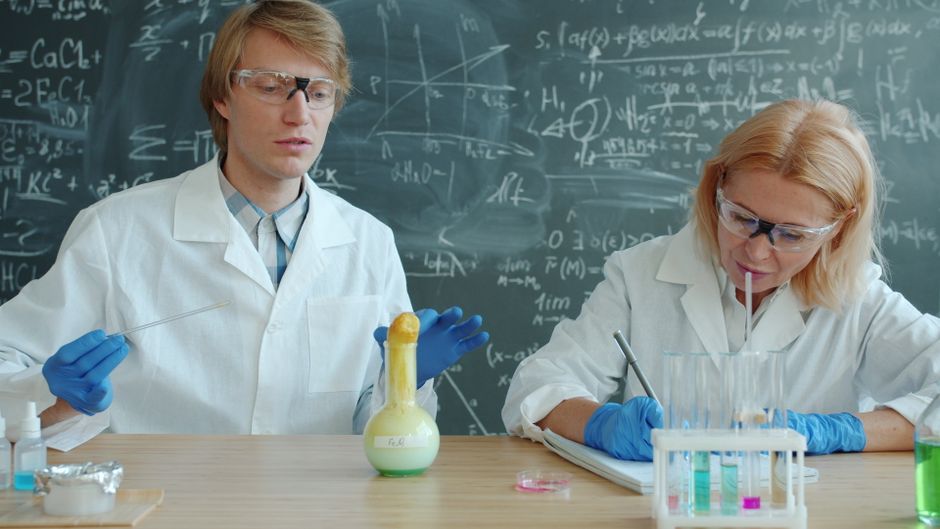
Photo by Vitaly Gariev on Pexels
A good experiment is valid (measures what it's supposed to) and reliable (gives consistent results).
graph TD
    A["Identify Question/Hypothesis"] --> B["Choose Independent Variable (IV)"]
    B --> C["Identify Dependent Variable (DV)"]
    C --> D["Identify & Control Variables"]
    D --> E["Select Method for IV & DV"]
    E --> F["Design Data Collection Table"]
    F --> G["Perform Experiment & Collect Data"]
    G --> H["Analyze Results & Draw Conclusion"]
Controlled Variables: These are absolutely crucial. If you're testing light intensity, you must keep temperature, CO2 concentration, and water availability the same for all your experimental setups. Otherwise, you won't know if the change you observe is due to light intensity or something else.
Repeatability: To ensure reliability, you should repeat your measurements multiple times at each level of your independent variable and calculate an average. This helps reduce the impact of random errors.
Controls: Sometimes you'll include a "control" setup where the independent variable is absent or at a baseline level (e.g., a plant in the dark when testing light). This shows what happens without the factor you're investigating, confirming your variable is indeed having an effect.
Revision Tip
For revision, map out different experimental setups for each factor. What would you change? What would you measure? What would you keep the same?
3. Worked Example
Let's design an experiment to investigate the effect of light intensity on the rate of photosynthesis in Elodea (pondweed).
Question: How does light intensity affect the rate of oxygen production in Elodea?
Hypothesis: As light intensity increases, the rate of oxygen production (and thus photosynthesis) will increase up to a certain point, after which it will plateau or be limited by another factor.
Independent Variable: Light intensity (distance of a lamp from the Elodea).
Dependent Variable: Number of oxygen bubbles produced per minute.
Controlled Variables:
* Temperature: Use a water bath to keep the beaker at a constant temperature (e.g., 25°C).
* CO2 concentration: Add a fixed amount of sodium hydrogen carbonate solution to the water.
* Amount of Elodea: Use the same length/mass of Elodea stem in each beaker.
* Time for acclimation: Allow the plant to adjust to each light intensity for 5 minutes before counting bubbles.
Procedure Outline:
1. Set up multiple beakers with Elodea submerged in water containing sodium hydrogen carbonate.
2. Place a lamp at a specific distance (e.g., 10cm) from the first beaker.
3. Place a transparent screen between the lamp and beaker to absorb some heat, but maintain light intensity.
4. Wait 5 minutes for the plant to adjust.
5. Count the number of oxygen bubbles produced in 1 minute.
6. Repeat this count 3 times for the 10cm distance and calculate the average.
7. Repeat steps 2-6 for different distances (e.g., 20cm, 30cm, 40cm, 50cm), which changes light intensity (remember intensity is proportional to 1/distance²).
8. Record all results in a table.
Expected Results: As the lamp moves further away, light intensity decreases, and the bubble count per minute should decrease. If the lamp is very close, the rate might be high but eventually plateau if CO2 or temperature become limiting.
4. Key Takeaways
- Experiments test how one factor (independent variable) affects another (dependent variable) while controlling all others.
- The rate of photosynthesis can be measured by oxygen production, CO2 uptake, or indirectly by glucose/starch production.
- Always control variables like temperature, CO2 concentration, and water availability to ensure your results are valid.
- Repeat measurements to improve reliability and identify potential anomalies.
- A control experiment (e.g., plant in the dark) helps confirm that the factor you're testing is indeed causing the observed effect.
- Light intensity, CO2 concentration, and temperature are the main limiting factors you'll investigate.
- When designing, think about how to quantify both your independent and dependent variables.
Common Mistakes to Avoid:
* Changing more than one variable at a time – this makes it impossible to know which factor caused the change.
* Not controlling temperature – a common oversight, as lamps produce heat.
* Forgetting to repeat measurements – leads to unreliable data.
* Not allowing plants to acclimate to new conditions before taking readings.
* Assuming all plants of the same species are identical – try to use similar-sized samples.
5. Now Try It
You want to investigate how temperature affects the rate of photosynthesis in Elodea, using oxygen bubble production as your measure.
Your task:
1. Identify your independent and dependent variables.
2. List at least three key variables you would need to control.
3. Briefly describe how you would set up the experiment to vary temperature and how you'd measure the dependent variable.
Success looks like: A clear identification of variables, a logical list of controlled factors, and a practical description of how to change temperature (e.g., using different temperature water baths) and how to measure bubbles.
Frequently asked about Experimental Methods and Revision
Study this next
Get the full photosynthesis\\ curriculum
Clone the complete plan to your dashboard for unlimited AI-generated notes, practice quizzes, and a personalised revision schedule.
Save this course free