The Political and Social Dynamics of Matriarchy and Female Power
From the Study about History Matrichiarcal, Matrilineal, unit of reproduction, etc curriculum
TL;DR
Matriarchy, as a system of female dominance, is debated in its historical existence, often confused with matriliny which describes inheritance through the mother's line. True matriarchal societies where women hold primary political and social power are rare, with many examples being more about elevated female status than outright dominance. Understanding the nuances between these terms is crucial for studying past and present societies.
1. The Mental Model
Think of it like this: "Matrilineal" describes how property or lineage flows through mothers. "Matriarchy" implies women are in charge, holding the main power in society. They're related but distinct concepts, like how a family name is inherited versus who makes the decisions in the family.
2. The Core Material
When we talk about "matriarchy" and "female power," it's important to clarify what we mean, as these terms are often misunderstood and debated in historical and anthropological studies.
Defining Matriarchy vs. Matriliny
Matriarchy literally means "rule by mothers" or "rule by women." In its purest sense, it refers to a social system where women hold primary power positions: political leadership, moral authority, and control over resources. The existence of historically true matriarchies (societies where women consistently held dominant political and social power over men) is highly debated among scholars. Many argue that while societies with high female status or significant female influence existed, fully matriarchal societies, mirroring patriarchal structures but with women at the top, are not well-documented.
Matriliny, on the other hand, is a system of descent and inheritance traced through the mother's line. In matrilineal societies, children belong to their mother's clan or lineage, and property or titles may pass from mother to daughter, or from a man to his sister's son. Crucially, matrilineal societies are not necessarily matriarchal. While women in matrilineal societies often have significant status, influence, and control over resources within their lineage, the ultimate political authority might still rest with men (e.g., a mother's brother often holds authority over her children).
Understanding "Female Power"

Photo by Vika Glitter on Pexels
"Female power" is a broader concept. It can exist in many forms, even in patriarchal or patrilineal societies. It might manifest as:
- Economic power: Women controlling specific resources, crafts, or markets.
- Social influence: Women holding significant sway over community decisions, rituals, or social norms.
- Spiritual authority: Women serving as priestesses, shamans, or spiritual leaders.
- Decision-making roles: Women having a voice in family or community councils, even if not formal political leaders.
These forms of female power don't automatically constitute a matriarchy. A society can be patriarchal in its formal political structure but still have strong women wielding considerable influence in other spheres.
Units of Reproduction and Social Organization
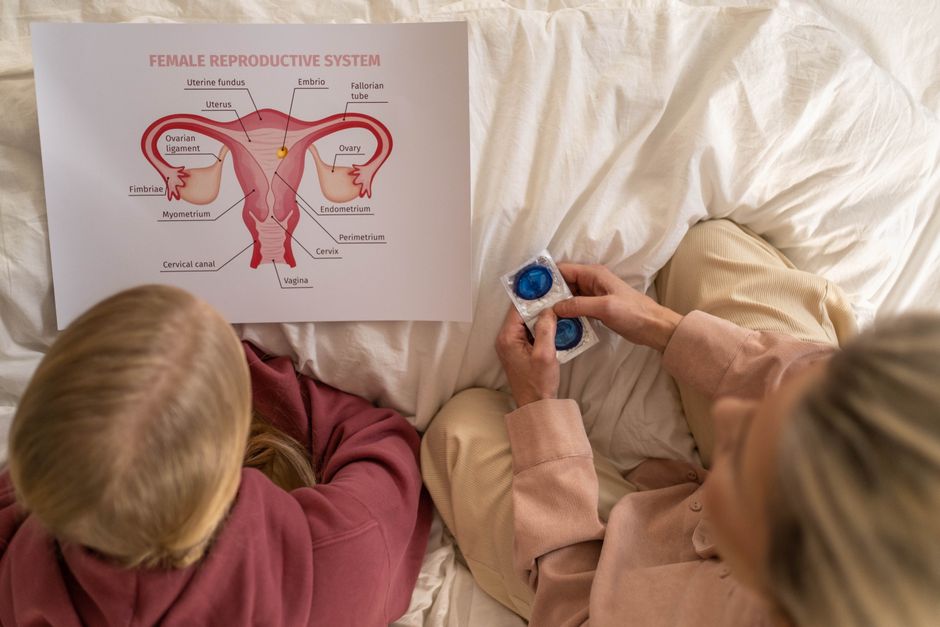
Photo by cottonbro studio on Pexels
The "unit of reproduction" in a social context refers to the basic social group responsible for creating and raising new generations. In many societies, this is the nuclear family (parents and children). However, in matrilineal societies, the extended family or the mother's lineage often plays a more central role. For example, a woman's brother might be more involved in her children's upbringing and discipline than her husband, as the children belong to the brother's lineage. This reflects how social organization adapts to different kinship and inheritance systems.
graph TD
    A["Social Systems"] --> B["Matriarchy"]
    A --> C["Patriarchy"]
    A --> D["Egalitarian"]

    B --> B1["Women hold primary political & social power"]
    B1 -- "Existence debated" --> B2["Rare/Hypothetical"]

    C --> C1["Men hold primary political & social power"]
    C1 --> C2["Common Historical/Present Form"]

    D --> D1["Power shared more equally"]

    E["Kinship & Inheritance Systems"] --> F["Matrilineal"]
    E --> G["Patrilineal"]
    E --> H["Bilineal/Cognatic"]

    F --> F1["Descent through Mother's line"]
    F1 -- "Not always" --> F2["Matriarchal"]
    F1 -- "Can have" --> F3["High Female Status/Influence"]
    F1 -- "Often, Male Authority (e.g., mother's brother)" --> F4["Patrilineal Political Structure"]

    G --> G1["Descent through Father's line"]
    G1 -- "Often coincides with" --> C1

    H --> H1["Descent through both parents"]

    F3 --> J["Diverse Forms of Female Power"]
    B2 --> J
Challenges in Studying Matriarchy

Photo by Pixabay on Pexels
- Historical Bias: Most historical records were written by men, often reflecting their perspectives and downplaying female roles.
- Archaeological Interpretation: It's hard to infer social power structures directly from material remains. A high number of female figurines, for instance, might indicate a reverence for fertility or goddesses, not necessarily political rule by women.
- Ethnocentric Views: Researchers can project their own societal norms onto past or other cultures, leading to misinterpretations.
3. Worked Example
Consider the Minangkabau people of West Sumatra, Indonesia. They are one of the largest matrilineal societies in the world.
- Descent: Children belong to their mother's clan, and land inheritance passes from mother to daughter. This means women control communal ancestral lands.
- Household: The ancestral house belongs to the women of the lineage, and men typically move to their wives' houses after marriage.
- "Female Power": Minangkabau women have significant economic power due to land ownership and influence within the household. They play crucial roles in decision-making regarding family matters and resource management.
- Political Structure: However, formal political and religious leadership roles (like village chiefs or religious leaders) are traditionally held by men. While women's voices are respected and sought in councils, the ultimate public authority often rests with male elders or lineage heads (e.g., the mamak, a mother's brother).
So, while the Minangkabau demonstrate strong female economic power and a clear matrilineal system, they are not a true matriarchy in the sense of women holding formal, supreme political power over men. It's a complex system where women hold considerable influence and authority in specific spheres, particularly those tied to lineage and land.
4. Key Takeaways
- Matriarchy implies women hold primary political and social power, a concept whose historical existence is heavily debated.
- Matriliny refers to tracing descent and inheritance through the mother's line, which does not automatically mean women hold political power.
- Many societies exhibit strong "female power" in economic, social, or spiritual realms without being matriarchal.
- The unit of reproduction in matrilineal societies often involves the extended maternal lineage, impacting family dynamics.
- Understanding the difference between these terms is essential to avoid oversimplifying complex social structures.
- Studying female roles requires careful interpretation, avoiding assumptions based on modern societal norms.
Common mistakes:
- Assuming matrilineal societies are automatically matriarchal.
- Confusing high female status or influence with actual political dominance.
- Projecting modern Western ideas of "power" onto historical or non-Western cultures without context.
- Interpreting archaeological findings (like goddess figures) as definitive proof of matriarchy without additional evidence.
5. Now Try It
For 15 minutes, research another historical or anthropological example (like the Mosuo of China or an Amazonian tribe) that is sometimes referred to as "matriarchal" or "matrilineal." Describe its key characteristics in terms of descent, inheritance, and actual power distribution between genders. Then, based on what you've learned here, explain whether you would classify it as a true matriarchy, a matrilineal society, or simply a society with significant female power, and why. Success looks like you clearly differentiating between these concepts using specific details from your chosen example.
Try it yourself: Work done and power
Frequently asked about The Political and Social Dynamics of Matriarchy and Female Power
Study this next
Get the full Study about History Matrichiarcal, Matrilineal, unit of reproduction, etc curriculum
Clone the complete plan to your dashboard for unlimited AI-generated notes, practice quizzes, and a personalised revision schedule.
Save this course free