Firms, Markets & Competitive Behavior
TL;DR
This note covers how firms make decisions on pricing and production, interact within different market structures, and the implications of perfect and imperfect competition, with a special focus on market power and welfare. We'll explore how firms maximize profits, the role of competition in shaping outcomes, and the challenges posed by market failures. Understanding these concepts helps explain real-world economic phenomena and policy interventions.
1. The Mental Model
Think of firms as problem-solvers trying to make the most profit possible by deciding how much to produce and what price to charge, all while keeping an eye on their costs and how other firms are behaving in the market. Markets are like arenas where these firms compete, sometimes fiercely and sometimes with a lot of control over the game.
2. The Core Material
Firm Behavior: Production and Pricing Decisions (Units 7 & 10 Focus)
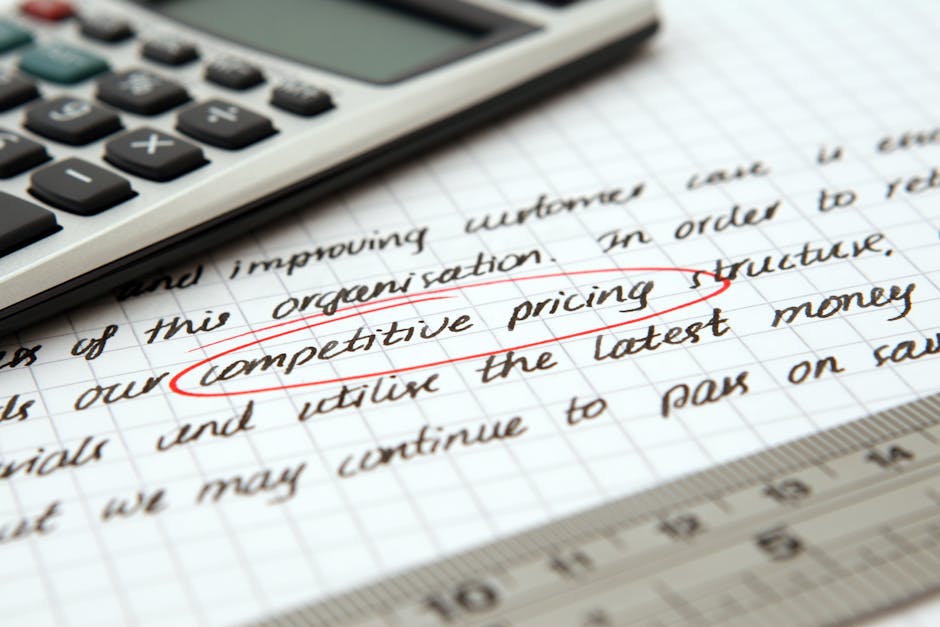
Photo by Pixabay on Pexels
A firm's main goal is to maximize profit, which is total revenue minus total cost.
Total Revenue (TR) = Price (P) × Quantity (Q)
Total Cost (TC) = Fixed Costs (FC) + Variable Costs (VC)
Profit = TR - TC
Firms face a demand curve, which shows how many units consumers will buy at different prices. This curve is usually downward-sloping: to sell more, firms generally have to lower their price.
The cost function describes how total cost changes with the quantity produced.
Marginal Cost (MC) is the cost of producing one additional unit.
Average Cost (AC) is total cost divided by the number of units produced.
To maximize profit, a firm will produce up to the point where Marginal Revenue (MR) = Marginal Cost (MC). Marginal Revenue is the additional revenue from selling one more unit. For a perfectly competitive firm, MR = Price, but for a firm with market power (like a monopolist), MR is less than the price because selling more means lowering the price for all units.
Economies of scale occur when increasing production leads to lower average costs. This can give larger firms a cost advantage.
Market Power and Competition (Units 7 & 10 Focus)

Photo by energepic.com on Pexels
Market power is a firm's ability to set a price above marginal cost.
* Perfect Competition (Unit 8): Many buyers and sellers, identical products, free entry and exit, perfect information. Firms are price-takers. In the long run, economic profits are zero, and P = MC.
* Monopoly (Unit 7): A single seller, unique product, high barriers to entry. The monopolist is a price-setter and faces the entire market demand curve. They produce where MR = MC, but charge a price above MC. This leads to deadweight loss, a loss of total surplus (consumer + producer surplus) compared to perfect competition, indicating inefficiency.
* Monopolistic Competition (Unit 7): Many firms, differentiated products, free entry and exit. Firms have some market power due to product differentiation, but competition limits their long-run profits to zero. They also produce where P > MC.
* Oligopoly (Unit 7): A few dominant firms. Their decisions are interdependent, often leading to strategic interactions (like game theory, Unit 4). Collusion (forming a cartel) to act like a monopolist is possible but often unstable due to incentives to cheat.
Price Elasticity of Demand (PED) measures how responsive quantity demanded is to a change in price.
* If PED > 1 (elastic), a price decrease increases total revenue.
* If PED < 1 (inelastic), a price decrease decreases total revenue.
* Firms with market power choose a price in the elastic portion of their demand curve.
Market Failures and Public Policy (Units 10 & 12 Focus)
Market failure occurs when markets allocate resources inefficiently.
* Externalities (Unit 12): Costs or benefits imposed on third parties not involved in the transaction (e.g., pollution is a negative externality).
* Public Goods (Unit 12): Non-rivalrous (one person's consumption doesn't diminish another's) and non-excludable (difficult to prevent people from consuming them even if they don't pay). Free riders are a problem.
* Asymmetric Information (Unit 12): One party in a transaction has more or better information than the other (e.g., adverse selection, moral hazard).
* Market Power (Unit 10): Monopolies and oligopolies restrict output and charge higher prices than competitive markets, leading to deadweight loss.
Governments intervene to correct market failures through:
* Regulation: Price caps, quantity controls.
* Taxation/Subsidies: To internalize externalities.
* Antitrust Policy: To prevent monopolies and promote competition.
* Provision of Public Goods: By the government itself.
Here's a flow of how a firm with market power decides its production and pricing:
graph TD
    A["Firm wants to maximize Profit"] --> B{Identify Demand Curve & Cost Structure};
    B --> C["Calculate Marginal Revenue (MR)"];
    B --> D["Calculate Marginal Cost (MC)"];
    C --> E{Find Quantity where MR = MC};
    D --> E;
    E --> F["Set Production Quantity (Q*)"];
    F --> G["Find Price (P*) from Demand Curve at Q*"];
    G --> H["Calculate Profit = (P* x Q*) - Total Cost(Q*)"];
Labor Markets (Unit 9)

Photo by AlphaTradeZone on Pexels
Firms demand labor to produce goods and services. The demand for labor is a derived demand, meaning it depends on the demand for the firm's output.
* Firms hire labor up to the point where the Marginal Revenue Product of Labor (MRPL) equals the wage. MRPL is the additional revenue generated by hiring one more worker.
* Labor supply comes from individuals making a choice between work and leisure, influenced by wages and non-wage benefits.
3. Worked Example
Let's say a monopolist firm, "GizmoCorp," faces the following demand curve for its new gadget:
P = 100 - 2Q (where P is price and Q is quantity)
Its total cost function is:
TC = 10Q + 50
First, let's find the total revenue (TR) function:
TR = P × Q = (100 - 2Q) × Q = 100Q - 2Q²
Next, we need marginal revenue (MR) and marginal cost (MC).
MR is the derivative of TR with respect to Q: MR = 100 - 4Q
MC is the derivative of TC with respect to Q: MC = 10
To maximize profit, GizmoCorp sets MR = MC:
100 - 4Q = 10
90 = 4Q
Q = 90 / 4 = 22.5 units
Now, plug this optimal quantity (Q) back into the demand curve to find the price (P):
P = 100 - 2(22.5)
P = 100 - 45
P = $55
Finally, calculate the profit:
Profit = TR - TC
Profit = (100 * 22.5 - 2 * 22.5²) - (10 * 22.5 + 50)
Profit = (2250 - 1012.5) - (225 + 50)
Profit = 1237.5 - 275
Profit = $962.5
So, GizmoCorp will produce 22.5 units, sell them for $55 each, and make a profit of $962.5. Notice that the price ($55) is significantly higher than the marginal cost ($10), indicating market power.
4. Key Takeaways
- Firms maximize profit by producing where Marginal Revenue (MR) equals Marginal Cost (MC).
- Market structure (perfect competition, monopoly, oligopoly, monopolistic competition) dictates a firm's market power and pricing strategy.
- Perfectly competitive firms are price-takers, earning zero economic profit in the long run, and producing at P=MC.
- Monopolists are price-setters, producing where P > MC, leading to deadweight loss due to underproduction.
- Market failures like externalities, public goods, and asymmetric information justify government intervention to improve efficiency and welfare.
- The price elasticity of demand is crucial for firms with market power to decide optimal pricing.
- Labor demand is derived from product demand, with firms hiring up to where MRPL equals the wage.
Common Mistakes to Avoid:
- Confusing average cost with marginal cost, especially when determining optimal output.
- Assuming MR always equals price; this is only true for perfectly competitive firms.
- Forgetting to use the demand curve to find the price after determining the optimal quantity for a firm with market power.
- Ignoring the long-run implications of entry and exit in competitive and monopolistically competitive markets.
- Thinking market power is inherently "bad" without considering the potential benefits of innovation or economies of scale that might arise from it.
5. Now Try It
Imagine you are the CEO of "EcoClean," a company that has developed a new, highly effective, and patented cleaning solution, giving you a temporary monopoly. You've estimated your demand curve to be P = 20 - 0.5Q, and your total cost function is TC = 2Q + 10. For a 15-minute exercise, calculate the profit-maximizing quantity, price, and the resulting profit for EcoClean. What are the marginal cost and marginal revenue at this quantity? What does the relationship between price and marginal cost tell you about EcoClean's market power?
Frequently asked about Firms, Markets & Competitive Behavior
More from https://books.core-econ.org/the-economy/microeconomics/0-3-contents.html Please create exam prep material from this website based on all units 1-12 but put main focus on units 7 & 10 as half of the exam weightage is based on those specific units
Get the full https://books.core-econ.org/the-economy/microeconomics/0-3-contents.html Please create exam prep material from this website based on all units 1-12 but put main focus on units 7 & 10 as half of the exam weightage is based on those specific units curriculum
Clone the complete plan to your dashboard for unlimited AI-generated notes, practice quizzes, and a personalised revision schedule.
Save this course free