```json
From the netherlands curriculum
TL;DR
Learning Dutch starts with understanding its relationship to English, grasping basic grammar like word order and verb conjugation, and practicing everyday vocabulary and pronunciation. Focus on common phrases and sentence structures to quickly build conversational skills. Don't be afraid to make mistakes; they're part of the learning process.
1. The Mental Model
Think of Dutch as English's close cousin. Many words look and sound similar, and sentence structures often share parallels, making it a relatively accessible language for English speakers. It's like learning a slightly different dialect of something you already know.
2. The Core Material
Dutch is a West Germanic language, just like English and German. This shared ancestry means you'll find a lot of cognates (words with a common origin) and similar grammatical structures.
2.1 Pronunciation - The "G" and Diphthongs
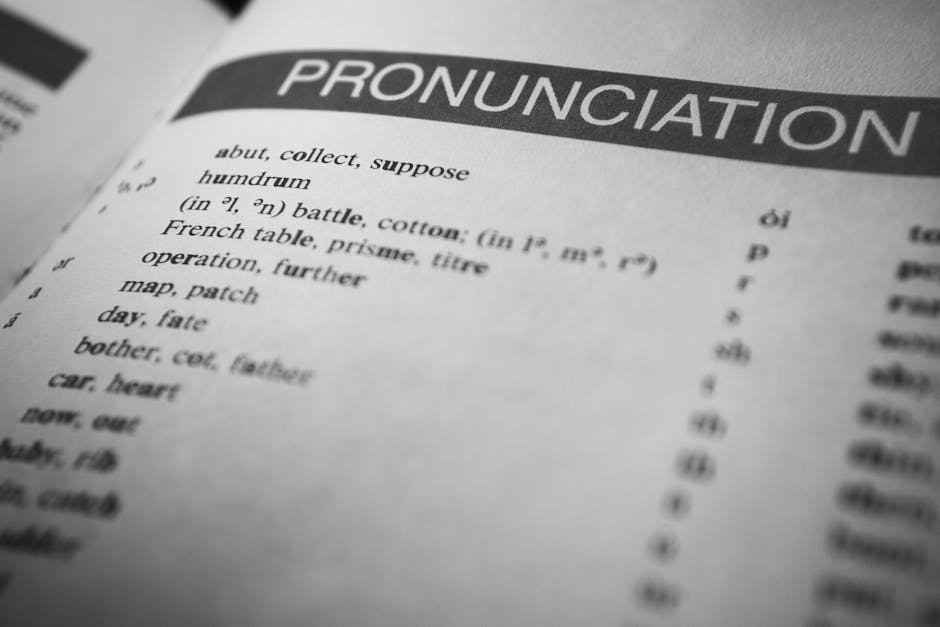
Photo by Nothing Ahead on Pexels
Dutch pronunciation can be tricky initially, especially the "g" sound (like clearing your throat) and various diphthongs (combinations of two vowel sounds).
- "G" and "Ch": This sound is often voiceless and guttural, similar to the "ch" in Scottish "loch." In the south of the Netherlands and in Belgium (Flanders), it's often softer.
- "Ui": Sounds like "ow" in "cow," but with a slightly tighter mouth (e.g., huis - house).
- "Ij" / "Ei": Sounds like "ay" in "say" (e.g., ijs - ice, ei - egg).
- "Ou" / "Au": Sounds like "ow" in "know" (e.g., oud - old, auto - car).
2.2 Basic Greetings and Phrases

Photo by Ann Hannes on Pexels
Start with essentials!
- Hallo - Hello
- Goedendag - Good day (formal)
- Goedemorgen - Good morning
- Goedenavond - Good evening
- Goedenacht - Good night
- Tot ziens! - Goodbye! (Lit. "Until we see each other again!")
- Alsjeblieft - Please / Here you are (informal)
- Alstublieft - Please / Here you are (formal)
- Dank je wel - Thank you (informal)
- Dank u wel - Thank you (formal)
- Ja - Yes
- Nee - No
- Spreekt u Engels? - Do you speak English? (formal)
- Ik begrijp het niet - I don't understand it
- Hoe gaat het? - How are you?
- Het gaat goed, dank je - I'm fine, thank you (informal)
2.3 Word Order - The V2 Rule

Photo by Markus Winkler on Pexels
Dutch generally follows the V2 (Verb-second) rule in main clauses. This means the conjugated verb almost always comes in the second position of the sentence.
graph TD
    Start --> A["Statement or Question Start (Subject or other info)"]
    A --> B["Conjugated Verb (ALWAYS second)"]
    B --> C["Subject (if not first)"]
    C --> D["Other Sentence Elements (Objects, Adverbs, etc.)"]
    D --> E["Non-conjugated Verb (if any, at end)"]
Examples:
- Ik spreek Nederlands. (I speak Dutch.) - Subject (Ik) + Verb (spreek) + Object (Nederlands).
- Vandaag spreek ik Nederlands. (Today I speak Dutch.) - Adverb (Vandaag) + Verb (spreek) + Subject (ik) + Object (Nederlands).
- Waarom spreek je Nederlands? (Why do you speak Dutch?) - Question word (Waarom) + Verb (spreek) + Subject (je) + Object (Nederlands).
2.4 Verb Conjugation - Regular Verbs (Present Tense)

Photo by Brett Jordan on Pexels
For regular verbs, the pattern is pretty straightforward. You take the infinitive, drop the -en, and add the appropriate ending.
Let's use the verb werken (to work):
| Pronoun | Ending | Example | English |
|---|---|---|---|
| Ik | - | Ik werk. | I work. |
| Jij | -t | Jij werkt. | You work. |
| Hij/Zij/Het | -t | Hij werkt. | He/She/It works. |
| Wij | -en | Wij werken. | We work. |
| Jullie | -en | Jullie werken. | You (plural) work. |
| Zij | -en | Zij werken. | They work. |
| U | -t | U werkt. | You (formal) work. |
Important Note: For "ik," the ending is just the stem. If the stem ends in -d or -t, you don't add another -t for "jij," "hij," etc. (e.g., ik vind, jij vindt is incorrect, it's jij vind). Wait, no, that's not quite right. If the stem ends in -d, then "jij/hij/zij/het" will add a -t. E.g., Ik vind (I find), Jij vindt (You find). The rule is: if the stem already has a -t, then you don't add another -t (e.g., ik praat, jij praat). My apologies, the previous sentence was a common mistake to avoid.
2.5 Nouns and Articles
Dutch has two definite articles: de and het.
* De is used for common gender nouns (most nouns, including all plural nouns).
* Het is used for neuter gender nouns (fewer nouns, often smaller things or diminutives).
There's no easy rule to know which to use, so it's best to learn the article with the noun.
* de man (the man)
* de vrouw (the woman)
* het kind (the child)
* de boeken (the books - plural always uses 'de')
The indefinite article is een (a/an).
* een man
* een vrouw
* een kind
3. Worked Example
Let's build a simple conversation using the concepts above.
Scenario: You've just arrived in Amsterdam and want to ask for directions to the Rijksmuseum.
-
Greeting: You approach someone and start politely.
- You: "Hallo! Goedendag!" (Hello! Good day!)
- Stranger: "Goedendag!" (Good day!)
-
Asking if they speak English: Since your Dutch is basic, you want to check.
- You: "Sorry, spreekt u Engels?" (Sorry, do you speak English?)
- Stranger: "Ja, een beetje." (Yes, a little.) - Or they might switch to full English.
-
Asking for directions (simplified): Let's assume they only speak a little English and you need to try in Dutch.
- You: "Waar is het Rijksmuseum, alsjeblieft?" (Where is the Rijksmuseum, please?)
Waar(where)is(is)het Rijksmuseum(the Rijksmuseum), alsjeblieft?(please)- Notice the V2 rule:
isis the second element.
- Stranger: "Het is daar, rechtdoor." (It is there, straight ahead.)
- You: "Dank u wel! Tot ziens!" (Thank you! Goodbye!)
- You: "Waar is het Rijksmuseum, alsjeblieft?" (Where is the Rijksmuseum, please?)
This example shows how even with limited vocabulary, combining greetings, V2 word order, and basic questions can help you communicate.
4. Key Takeaways
- Dutch shares many similarities with English, making it relatively easier to learn.
- Master the "g" sound and common diphthongs early for better pronunciation.
- The V2 rule (verb in the second position) is crucial for correct sentence structure in main clauses.
- Learn nouns with their definite article (de or het) as there's no simple rule.
- Regular verb conjugation in the present tense is quite consistent and follows a clear pattern.
- Don't be afraid to use basic phrases; most Dutch people appreciate the effort, even if they switch to English.
- Active listening and trying to mimic native speakers will greatly improve your accent.
5. Now Try It
Spend 15 minutes practicing self-introductions. Imagine you're meeting someone new. Write down:
1. How you'd say "Hello."
2. How you'd introduce yourself ("My name is [Your Name]"). Hint: "Mijn naam is..."
3. How you'd say "I speak a little Dutch" ("Ik spreek een beetje Nederlands").
4. How you'd ask, "How are you?"
5. How you'd say "Thank you, goodbye."
Then, say these sentences out loud, paying attention to the "g" sound and the "ij/ei" sound if your name or location includes them. Success looks like being able to fluently (though perhaps slowly) say these five sentences without hesitation.
Frequently asked about ```json
More from netherlands
Get the full netherlands curriculum
Clone the complete plan to your dashboard for unlimited AI-generated notes, practice quizzes, and a personalised revision schedule.
Save this course free