Introduction to French & Basic Greetings
From the Basic French curriculum
TL;DR
Learning French starts with understanding its place in the world and mastering a few essential greetings. You'll quickly be able to say hello, goodbye, and introduce yourself politely. These fundamental phrases are your key to starting conversations and making a great first impression.
1. The Mental Model
Think of learning a language like building a house. You start with the foundation: understanding what the language is, where it's used, and then you add the essential first bricks—basic greetings—to create your entryway into communication.
2. The Core Material
French is a beautiful Romance language, meaning it evolved from Vulgar Latin, just like Spanish, Italian, Portuguese, and Romanian. It's spoken by over 300 million people worldwide, not just in France, but also in Canada, Belgium, Switzerland, many countries in Africa, and more. It's an official language of the United Nations and a significant language in diplomacy, culture, and business.
When you're first meeting someone in French, politeness is key. There are formal and informal ways to greet people, and choosing the right one depends on your relationship with the person and the context.
Basic Greetings
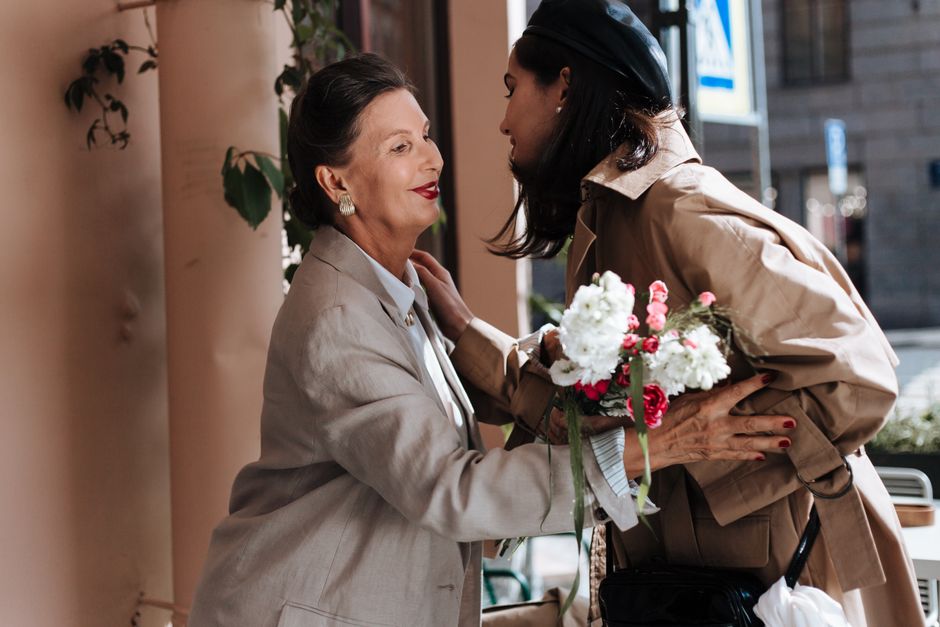
Photo by cottonbro studio on Pexels
Here are the most common ways to say hello and goodbye:
- Bonjour (bon-ZHOOR): This is the most versatile greeting. It means "hello" and "good day." You can use it formally or informally during the day.
- Bonsoir (bon-SWAHR): "Good evening." Use this when it starts getting dark.
- Salut (sah-LOO): This is an informal "hi" or "bye." Only use it with friends, family, or people your age you know well.
- Au revoir (oh ruh-VWAHR): The standard way to say "goodbye."
- À bientôt (ah byan-TOH): "See you soon." Useful when you expect to see the person again relatively quickly.
Introducing Yourself
Once you've said hello, you might want to introduce yourself.
- Je m'appelle... (zhuh mah-PELL): "My name is..." This is how you state your name.
- Enchanté(e) (ahn-shahn-TAY): "Nice to meet you." If you're male, you'd usually write
enchanté; if you're female,enchantée, but they sound the same. - Comment allez-vous ? (koh-mahn tah-lay-VOO): "How are you?" (formal).
- Comment vas-tu ? (koh-mahn vah-TOO): "How are you?" (informal).
- Ça va ? (sah VAH): A very common, casual way to ask "How are you?" or "Is it going well?"
- Très bien, merci. (treh byan, mehr-SEE): "Very well, thank you."
- Et vous ? (ay VOO): "And you?" (formal).
- Et toi ? (ay TWAH): "And you?" (informal).
Here's a flowchart showing the basic greeting process:
graph TD
    A["You encounter someone"] --> B{Time of day / Relationship?};
    B -- Day / Formal or Unknown --> C["Say: Bonjour"];
    B -- Evening / Formal or Unknown --> D["Say: Bonsoir"];
    B -- Any time / Informal / Friend --> E["Say: Salut"];
    C --> F{Want to introduce yourself?};
    D --> F;
    E --> F;
    F -- Yes --> G["Say: Je m'appelle [Your Name]"];
    F -- Yes --> H["Say: Enchanté(e)"];
    G --> I{Want to ask how they are?};
    H --> I;
    I -- Yes / Formal or Unknown --> J["Say: Comment allez-vous ?"];
    I -- Yes / Informal / Friend --> K["Say: Comment vas-tu ? or Ça va ?"];
    J --> L["They respond, then say: Et vous ?"];
    K --> M["They respond, then say: Et toi ?"];
    L --> N["Conversation continues..."];
    M --> N;
    F -- No --> O["Proceed to: Ending the conversation"];
    O --> P["Say: Au revoir or À bientôt"];
    P --> Q["End Interaction"];
Pronunciation Tips
Photo by Nothing Ahead on Pexels
French pronunciation can be tricky because many letters aren't pronounced, especially at the end of words. The key is to listen and mimic.
- R: Often sounds like a guttural 'h' sound from the back of your throat, not a rolled 'r'.
- U: Make an 'ee' sound, then round your lips as if to say 'oo'.
- Nasals: Sounds like 'an', 'en', 'in', 'on' are pronounced through your nose. Try saying the vowel, then close your soft palate (the back part of the roof of your mouth) to let air escape through your nose.
3. Worked Example
Let's imagine you're meeting a new French tutor for the first time. You want to be polite and introduce yourself.
You: Bonjour ! Je m'appelle Alex. Enchanté !
(bon-ZHOOR! zhuh mah-PELL ah-LEX. ahn-shahn-TAY!)
Translation: "Hello! My name is Alex. Nice to meet you!"
Tutor: Bonjour Alex ! Comment allez-vous ?
(bon-ZHOOR ah-LEX! koh-mahn tah-lay-VOO?)
Translation: "Hello Alex! How are you?"
You: Très bien, merci. Et vous ?
(treh byan, mehr-SEE. ay VOO?)
Translation: "Very well, thank you. And you?"
Tutor: Je vais bien, merci !
(zhuh vay byan, mehr-SEE!)
Translation: "I'm doing well, thank you!"
Later, when you're leaving:
You: Au revoir ! À bientôt !
(oh ruh-VWAHR! ah byan-TOH!)
Translation: "Goodbye! See you soon!"
This simple exchange covers your basic greetings and introductions using formal language suitable for a first meeting.
4. Key Takeaways
- "Bonjour" is your universal "hello" during the day; use "Bonsoir" in the evening.
- "Salut" is only for informal situations with people you know well.
- Use "Je m'appelle..." to introduce yourself and "Enchanté(e)" to say "nice to meet you."
- "Comment allez-vous?" is the formal "How are you?"; "Ça va?" is a very common informal alternative.
- Always be polite; French culture values good manners, especially in initial interactions.
- Don't worry too much about perfect pronunciation at first; focus on communication.
Common Mistakes to Avoid:
- Using "Salut" with strangers or in formal settings, as it can be seen as rude.
- Forgetting to say "Bonjour" or "Bonsoir" when entering a shop or starting a conversation.
- Not adding "merci" (thank you) when appropriate, as politeness is highly valued.
- Confusing formal "vous" with informal "tu" when asking "how are you" or "and you."
5. Now Try It
Practice these greetings! Spend 15 minutes saying each phrase out loud, focusing on your pronunciation. Try having a mock conversation with yourself or a friend, imagining different scenarios (meeting a new teacher, greeting a friend, leaving a shop).
What to do:
1. Say "Bonjour," "Bonsoir," and "Salut" at least five times each.
2. Practice "Je m'appelle [Your Name]" and "Enchanté(e)."
3. Have a short imaginary dialogue where you greet someone, introduce yourself, ask how they are, respond, and then say goodbye.
What success looks like: You can confidently say all the basic greetings and introductions without hesitation, choosing the correct formality for "hello," "how are you," and "and you" in a simple dialogue.
Frequently asked about Introduction to French & Basic Greetings
Study this next
Get the full Basic French curriculum
Clone the complete plan to your dashboard for unlimited AI-generated notes, practice quizzes, and a personalised revision schedule.
Save this course free