Medieval History
From the History curriculum
TL;DR
Medieval history covers the period in European history between the fall of the Western Roman Empire and the Renaissance, typically from around 500 to 1500 CE. It's often divided into Early, High, and Late Middle Ages, each with distinct social, political, and cultural characteristics. Understanding this era helps you grasp the foundations of modern Europe.
1. The Mental Model
Think of medieval history as a long bridge connecting the ancient world to the modern one. It wasn't a static, "dark" age, but a dynamic period of adaptation, transformation, and the emergence of new societies, ideas, and powers from the ashes of old empires.
2. The Core Material
The medieval period in Europe, also known as the Middle Ages, is generally understood to span about a thousand years. This era saw massive changes in governance, religion, economy, and everyday life.
The Fall of Rome and the Early Middle Ages (c. 500-1000 CE)
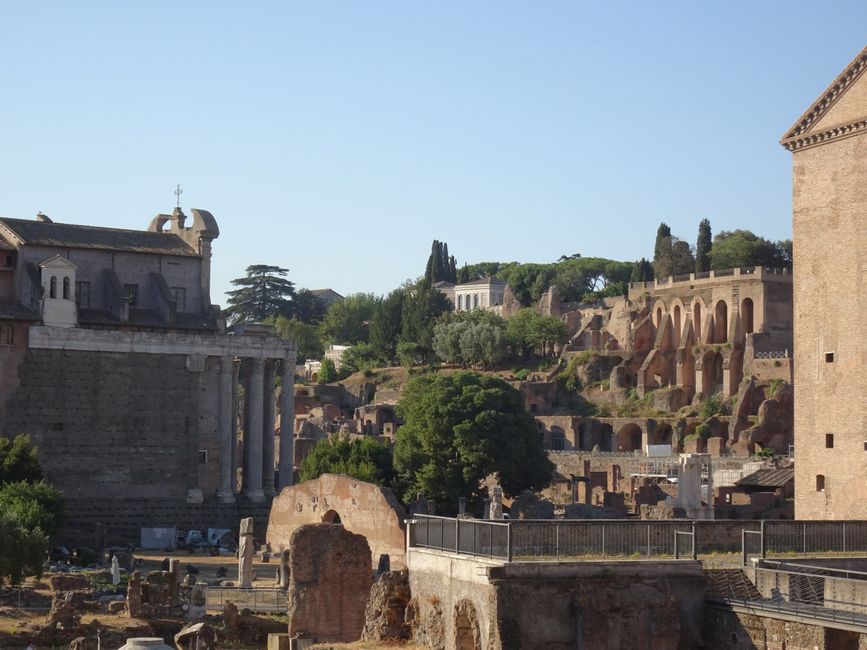
Photo by Lajos Kristóf Kántor on Pexels
The traditional start of the Middle Ages is 476 CE, with the deposition of the last Western Roman Emperor. This didn't mean an immediate collapse of all Roman culture, but a gradual fragmentation. Various Germanic tribes (Visigoths, Ostrogoths, Vandals, Franks, Anglo-Saxons) established new kingdoms across former Roman territories.
- Political Structure: Decentralized power. Instead of a vast empire, you had smaller, often warring, kingdoms. The Frankish kingdom under Charlemagne briefly unified much of Western Europe, leading to the "Carolingian Renaissance" in the 8th-9th centuries, but this empire soon fractured.
- Religion: Christianity became the dominant unifying force. The Catholic Church grew immensely in power and influence, providing social structure, education, and political legitimacy in a fragmented world. Monasteries became centers of learning and preservation.
- Economy: Largely agrarian. Trade declined significantly compared to Roman times. Manorialism, a system where peasants (serfs) worked the land for a lord in exchange for protection, became widespread.
The High Middle Ages (c. 1000-1300 CE)
This period saw a recovery and flourishing of European society. Population grew, agriculture improved, and new social and political structures solidified.
- Feudalism: This was the dominant social and political system. It was a hierarchical system where lords granted land (fiefs) to vassals in exchange for military service and loyalty. At the top was the king, then powerful nobles, then knights, and finally the vast majority of peasants.
graph TD
    King["King (Ultimate Landowner)"] --> |Grants land to| Nobles["Nobles (Dukes, Counts)"]
    Nobles --> |Grants land to| Knights["Knights (Vassals)"]
    Knights --> |Receives loyalty & service from| Peasants["Peasants/Serfs (Work the land)"]
    Peasants --> |Provides food & labor to| Knights
    Knights --> |Provides military service & loyalty to| Nobles
    Nobles --> |Provides military service & loyalty to| King
- Growth of Towns and Trade: With improved agriculture, populations grew, leading to the rise of towns and cities. Trade routes reopened, and merchant classes emerged. Guilds (associations of artisans and merchants) played a crucial role in regulating crafts and commerce.
- The Crusades: A series of religious wars (11th-13th centuries) initiated by Latin Christian Europe, primarily to recover the Holy Land from Muslim rule. While largely unsuccessful in their primary goal, they had a massive impact on European society, stimulating trade, cultural exchange, and solidifying papal power.
- Education and Learning: The first universities emerged (e.g., Bologna, Paris, Oxford), initially focusing on theology, law, and medicine. Scholasticism, a philosophical movement combining faith and reason, became prominent.
The Late Middle Ages (c. 1300-1500 CE)
This era was marked by significant crises but also innovations that set the stage for the Renaissance.
- Crises:
- The Black Death (1347-1351): A devastating pandemic that wiped out an estimated one-third to one-half of Europe's population. This had profound social and economic effects, leading to labor shortages, changes in land ownership, and even challenging established religious beliefs.
- The Hundred Years' War (1337-1453): A protracted conflict between England and France, which fostered national identities and saw the development of new military technologies (like the longbow and gunpowder).
- The Western Schism (1378-1417): A period where multiple popes claimed authority, severely undermining the prestige and power of the Catholic Church.
- Innovations: Despite the crises, this period saw technological advancements (printing press), artistic developments, and a renewed interest in classical learning that foreshadowed the Renaissance. Centralized monarchies began to gain power over feudal lords.
3. Worked Example
Let's consider the impact of The Black Death on medieval society.
Imagine a small village in 14th-century England. Before the plague, perhaps 300 people lived there, mostly serfs working for a local lord. The lord owned the land, and the serfs were tied to it, owing him labor and goods in exchange for protection and a small plot to farm for themselves. There was a surplus of labor, so wages were low, and serfs had little bargaining power.
When the Black Death swept through, say, 150 of those 300 villagers died. Suddenly, there's a severe labor shortage. The remaining serfs are now much more valuable. Lords, desperate to have their fields worked, had to offer better terms:
* Higher wages for free laborers.
* More freedom for serfs (e.g., the right to leave the manor, or even buy their freedom).
* Less burdensome rents or services.
This shift significantly weakened the traditional manorial and feudal systems. Peasants gained more economic leverage and some even accumulated wealth, leading to social unrest (like the Peasants' Revolt of 1381 in England) as the old order resisted change. It challenged the idea that everyone had a fixed place in society, eventually contributing to the decline of serfdom in Western Europe.
4. Key Takeaways
- The Middle Ages weren't static; they were a dynamic period of constant change and development.
- The fall of the Western Roman Empire led to decentralized power and the rise of new Germanic kingdoms.
- Christianity, embodied by the Catholic Church, was the primary unifying cultural and political force.
- Feudalism and manorialism were the dominant social and economic systems, defining relationships between lords and peasants.
- The High Middle Ages saw significant growth in population, trade, and the emergence of universities.
- The Late Middle Ages were marked by major crises like the Black Death and the Hundred Years' War, which profoundly reshaped society.
- Despite the crises, this era laid much of the groundwork for modern Europe and the Renaissance.
Common Mistakes to Avoid:
- Don't assume the "Dark Ages" were completely devoid of intellectual or cultural progress; significant advancements occurred.
- Avoid thinking of feudalism as a perfectly uniform system across all of Europe; it varied significantly by region and time.
- Don't oversimplify the causes and effects of major events like the Crusades or the Black Death; they had complex, multi-faceted impacts.
- Remember that the end of the Roman Empire was a gradual process, not a single event that instantly changed everything.
5. Now Try It
Choose one of the three periods (Early, High, or Late Middle Ages) and research a specific individual or event from that time. Write a short paragraph (5-7 sentences) explaining who they were or what happened, and how it reflects the characteristics of that specific period. For example, you could research Charlemagne (Early), Eleanor of Aquitaine (High), or Joan of Arc (Late).
Success looks like: You can clearly link the individual/event to at least two defining characteristics of the chosen medieval period.
Frequently asked about Medieval History
Study this next
Get the full History curriculum
Clone the complete plan to your dashboard for unlimited AI-generated notes, practice quizzes, and a personalised revision schedule.
Save this course free