Law of Contract
From the Business Law curriculum
TL;DR
The Law of Contract sets out the rules for creating and enforcing agreements between parties. For a contract to be valid, you generally need an offer, acceptance, consideration, and an intention to create legal relations. Understanding these elements helps you know when an agreement is legally binding and what happens if someone breaks it.
1. The Mental Model
Think of a contract as a legal promise or a set of promises that the law will enforce. It's like building a bridge between two people's intentions, ensuring both sides can cross safely or be compensated if the bridge collapses.
2. The Core Material
To have a legally binding contract, several essential elements must be present. If any are missing, the agreement might not be enforceable in court.
2.1 Offer and Acceptance

Photo by Tara Winstead on Pexels
A contract starts with one party making a clear offer and the other party clearly accepting that offer.
- Offer: This is a definite promise to be bound on specific terms, made with the intention that it will become binding as soon as it's accepted. It's not just an invitation to negotiate (an "invitation to treat"). For example, displaying goods in a shop window is usually an invitation to treat, not an offer.
- Acceptance: This must be an unqualified and unconditional agreement to all the terms of the offer. It must be communicated to the offeror. Silence usually doesn't count as acceptance. The "postal rule" is an exception, where acceptance is complete as soon as the letter is posted, not when it's received (though this rule is less common with instant communication).
2.2 Consideration
Consideration is essentially "what each party gives up" in exchange for the other's promise. It's the price paid for the promise.
- It doesn't have to be adequate (fair value), but it must be sufficient (have some value). For example, £1 can be valid consideration for a huge mansion.
- It can be a promise to do something, a promise not to do something, or an actual act.
- Past consideration (something already done before the promise was made) is generally not valid.
2.3 Intention to Create Legal Relations

Photo by Markus Spiske on Pexels
The parties must intend for their agreement to be legally enforceable.
- Commercial Agreements: There's a strong presumption that parties do intend to create legal relations. It's hard to prove otherwise.
- Social/Domestic Agreements: There's a presumption that parties do not intend to create legal relations (e.g., agreements between family members or friends). This presumption can be rebutted with strong evidence to the contrary.
2.4 Capacity
Parties must have the legal ability to enter into a contract. This means they must generally be of sound mind and of legal age (usually 18). Minors, or those with severe mental incapacities, may have limited capacity to contract.
2.5 Legality
The purpose of the contract must be legal. Contracts for illegal activities (e.g., selling prohibited substances) are void and unenforceable.
Here's a diagram showing the flow of contract formation:
graph TD
    A["Offer made?"] --> B{Clear & Unconditional?};
    B -- Yes --> C["Acceptance made?"];
    B -- No --> D["No Contract (Invitation to Treat/Negotiate)"];
    C --> E{Communicated to Offeror?};
    E -- Yes --> F["Consideration provided?"];
    E -- No --> G["No Contract (No Acceptance)"];
    F --> H{Intention to create legal relations?};
    H -- Yes --> I{Capacity? Legality?};
    I -- Yes --> J["Valid Contract Formed"];
    I -- No --> K["No Contract (Void/Voidable)"];
    H -- No --> G;
    F -- No --> G;
2.6 Terms of the Contract

Photo by RDNE Stock project on Pexels
Once a contract is formed, it consists of various terms.
- Express Terms: These are explicitly agreed upon by the parties, either orally or in writing.
- Implied Terms: These are not explicitly stated but are included by custom, statute (e.g., Sale of Goods Act), or by the courts to give the contract "business efficacy."
2.7 Vitiating Factors
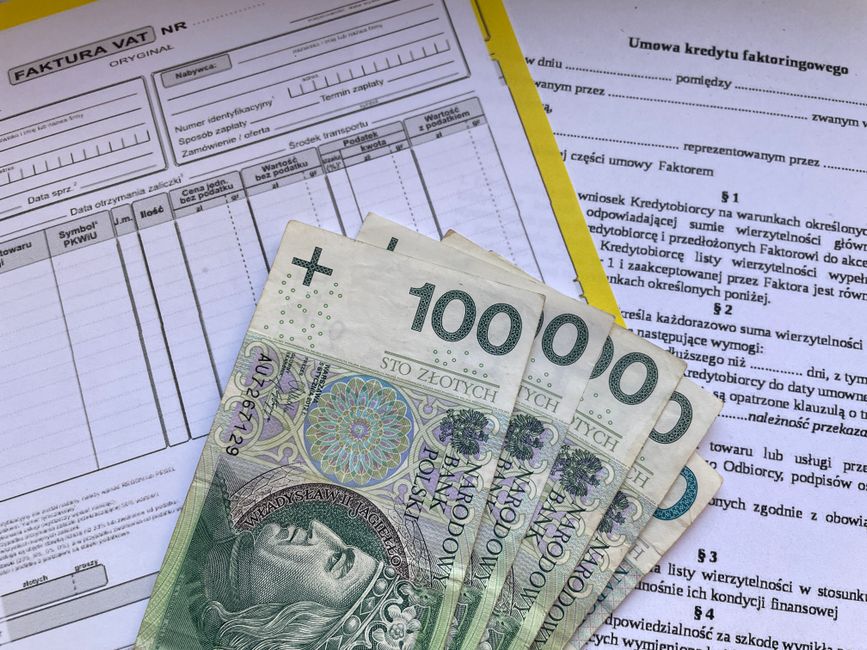
Photo by Niepoddawajsie.pl Luk on Pexels
Even if all elements are present, a contract can be invalidated if certain factors are present:
- Misrepresentation: A false statement of fact made before the contract, which induces the other party to enter it.
- Mistake: A fundamental error about a crucial aspect of the contract.
- Duress: One party is forced into the contract by threats or violence.
- Undue Influence: One party uses their position of power over another to secure a contract.
2.8 Discharge of Contract
A contract can end in several ways:
- Performance: Both parties fulfill their obligations.
- Agreement: Both parties agree to end the contract.
- Breach: One party fails to perform their obligations. This can lead to remedies.
- Frustration: An unforeseen event makes performance impossible or radically different from what was agreed (e.g., a venue burns down).
2.9 Remedies for Breach
If a contract is breached, the innocent party can seek remedies:
- Damages: Monetary compensation to put the innocent party in the position they would have been in had the contract been performed.
- Specific Performance: A court order compelling the breaching party to perform their contractual obligations (rare, usually for unique goods or land).
- Injunction: A court order prohibiting a party from doing something.
3. Worked Example
You run a small web design business. A new client, "Bright Future Ltd," emails you asking for a quote for a new website. You reply with a detailed proposal: "I offer to design, develop, and host a new e-commerce website for Bright Future Ltd for £5,000, payable upon completion, with delivery within 8 weeks. This offer is open for 7 days."
Bright Future Ltd replies three days later: "We accept your offer for £5,000, but we need the website delivered in 6 weeks, not 8."
Analysis:
1. Offer: Your email was a clear offer, specifying price, service, and delivery time.
2. Acceptance: Bright Future Ltd's reply is not an acceptance. By changing the delivery time, they have made a counter-offer. A counter-offer effectively kills the original offer.
3. Consideration: Had they accepted, your consideration would be the website design/hosting; theirs would be the £5,000.
4. Intention: This is a commercial agreement, so there's a strong presumption of intention to create legal relations.
Outcome: At this point, no contract exists. You are now free to accept or reject their counter-offer of a 6-week delivery time. If you agree to 6 weeks, then a contract is formed on those new terms.
4. Key Takeaways
- A valid contract needs an offer, acceptance, consideration, and an intention to create legal relations.
- An offer must be clear and distinct from an "invitation to treat," which is merely an invitation to negotiate.
- Acceptance must be unconditional and communicated; a counter-offer destroys the original offer.
- Consideration is "what each party gives up" and must be sufficient (have some value), though not necessarily adequate (fair value).
- Be aware of "vitiating factors" like misrepresentation or duress, which can make an otherwise valid contract unenforceable.
- Breach of contract can lead to remedies like damages, specific performance, or injunctions.
Common Mistakes to Avoid:
- Assuming an "agreement to agree" is a contract; terms must be reasonably certain.
- Not getting important terms in writing, especially for significant commercial agreements.
- Confusing an inquiry or negotiation with a firm offer or acceptance.
- Ignoring the need for consideration; promises without it are generally not enforceable.
5. Now Try It
Imagine your friend offers to sell you their used textbook for £20. You reply, "I'll take it for £15." Your friend says, "No, £20." Then you say, "Okay, I'll pay £20." Your friend then tells you they've already sold it to someone else.
Exercise: Using the principles of offer and acceptance, decide if a contract was formed between you and your friend. Explain your reasoning step-by-step, identifying each offer, counter-offer, or rejection.
Success looks like: You can clearly explain why your friend was or wasn't obligated to sell you the book, based on whether a valid offer and acceptance ever fully aligned before the book was sold.
Frequently asked about Law of Contract
Study this next
Get the full Business Law curriculum
Clone the complete plan to your dashboard for unlimited AI-generated notes, practice quizzes, and a personalised revision schedule.
Save this course free