IGCSE Physics: Electricity, Magnetism and Atomic Physics
From the IGCSE Prep curriculum
TL;DR
This topic covers how electricity works, the forces magnets create, and the basic structure and behaviour of atoms. You'll learn about circuits, electrical safety, the electromagnetic spectrum, and radioactivity. Understanding these concepts is crucial for explaining many everyday phenomena and modern technologies.
1. The Mental Model
Think of electricity as water flowing in pipes, where voltage is the pressure and current is the flow rate. Magnetism is like an invisible force field around certain objects, pulling or pushing. Atoms are tiny building blocks, each with a nucleus and orbiting electrons, some of which are unstable and release energy.
2. The Core Material
Electricity: The Flow of Charge
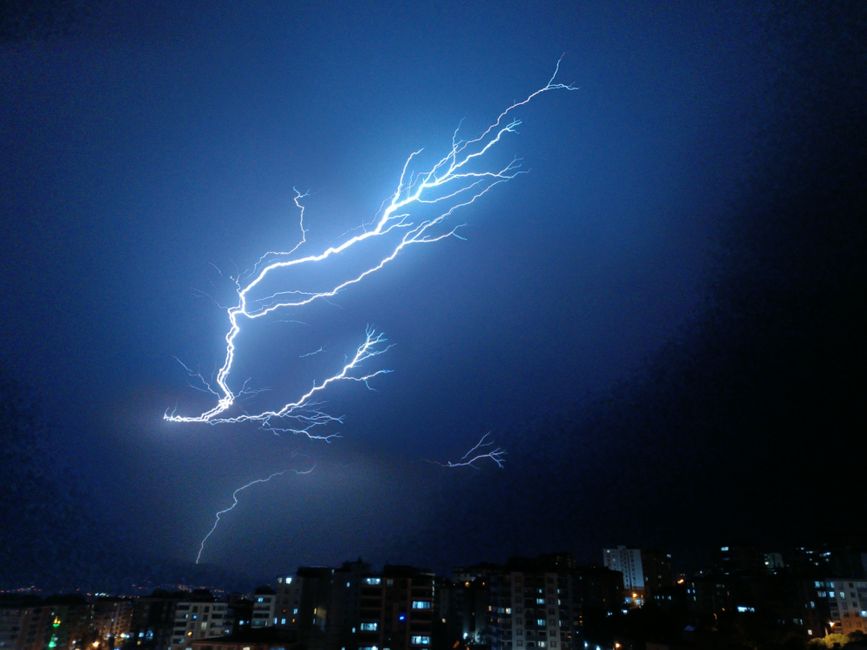
Photo by Emrehan Çolak on Pexels
Electricity is all about the movement of electrons, which are tiny negatively charged particles.
* Current (I): The rate of flow of charge. Measured in Amperes (A). Imagine how many electrons pass a point per second.
* Voltage (V): Also called Potential Difference. It's the "push" or "energy" per unit charge that makes electrons move. Measured in Volts (V).
* Resistance (R): How much a material opposes the flow of current. Measured in Ohms (Ω). Think of it as friction in the pipes.
Ohm's Law: This fundamental relationship connects these three: V = I × R.
If you increase voltage, current increases (for fixed resistance). If you increase resistance, current decreases (for fixed voltage).
Circuits:
* Series Circuit: Components are connected one after another.
* Current is the same everywhere.
* Total voltage is the sum of voltages across each component.
* Total resistance is the sum of individual resistances (R_total = R1 + R2 + ...).
* Parallel Circuit: Components are connected across the same two points, creating alternative paths.
* Voltage is the same across each parallel branch.
* Total current is the sum of currents in each branch.
* Total resistance is less than the smallest individual resistance (1/R_total = 1/R1 + 1/R2 + ...).
Electrical Safety:
* Fuses & Circuit Breakers: Devices that automatically break a circuit if current gets too high, preventing overheating and fires.
* Earth Wire: A safety wire connected to the metal casing of appliances. If a live wire touches the casing, the earth wire provides a low-resistance path for current to flow to the ground, blowing the fuse and making the appliance safe.
* Double Insulation: Appliances with a non-conductive casing don't need an earth wire as there's no risk of electric shock from the casing.
Power (P): The rate at which energy is transferred. Measured in Watts (W).
* P = V × I
* P = I² × R
* P = V² / R
Magnetism & Electromagnetism

Photo by Nicola Narracci on Pexels
- Permanent Magnets: Materials like iron, nickel, cobalt that produce their own persistent magnetic field. They have a North and South pole.
- Unlike poles attract, like poles repel.
- Magnetic field lines go from North to South outside the magnet.
- Electromagnetism: A current-carrying wire produces a magnetic field around it.
- Right-Hand Grip Rule: For a straight wire, point your right thumb in the direction of current; your curled fingers show the direction of the magnetic field. For a solenoid (coil), curl fingers in current direction, thumb points to North pole.
- Electromagnets: Coils of wire wrapped around an iron core. They are temporary magnets, switched on/off with the current. Used in relays, circuit breakers, scrapyard cranes.
- Motor Effect: A current-carrying conductor placed in a magnetic field experiences a force.
- Fleming's Left-Hand Rule:
- Thumb: Force (Motion)
- Forefinger: Field (North to South)
- Middle Finger: Current (Positive to Negative)
- This is the principle behind electric motors.
- Fleming's Left-Hand Rule:
- Electromagnetic Induction: Moving a conductor through a magnetic field, or changing the magnetic field around a conductor, induces a voltage (and hence current if the circuit is closed).
- Generators: Convert mechanical energy into electrical energy using induction.
- Transformers: Change AC voltage levels using two coils linked by an iron core (mutual induction). Step-up transformers increase voltage, step-down decrease it.
Here's how electricity and magnetism are linked in transformers:
graph TD
    A["AC Voltage Input (Primary Coil)"] --> B["Changing Current in Primary Coil"]
    B --> C["Changing Magnetic Field in Iron Core"]
    C --> D["Induced Voltage in Secondary Coil"]
    D --> E["AC Voltage Output (Secondary Coil)"]
Atomic Physics

Photo by Steve A Johnson on Pexels
- Atomic Structure:
- Nucleus: At the center, containing protons (positive charge) and neutrons (no charge). These are collectively called nucleons.
- Electrons: Negatively charged, orbit the nucleus in shells.
- An atom is usually electrically neutral (number of protons = number of electrons).
- Isotopes: Atoms of the same element (same number of protons) but with different numbers of neutrons.
- Radioactivity: The process where unstable atomic nuclei spontaneously decay, emitting radiation to become more stable.
- Alpha (α) particles: 2 protons + 2 neutrons (like a helium nucleus). Heavy, highly ionising, poor penetration (stopped by paper).
- Beta (β) particles: High-speed electrons. Lighter, moderately ionising, moderate penetration (stopped by a few mm of aluminium).
- Gamma (γ) rays: High-energy electromagnetic waves. No mass or charge, weakly ionising, high penetration (stopped by thick lead or concrete).
- Half-life: The time taken for half of the radioactive nuclei in a sample to decay. It's a constant for a given isotope.
- Background Radiation: Natural radiation from rocks, cosmic rays, and some food.
- Uses of Radioisotopes:
- Medical tracers (short half-life, easily detectable).
- Sterilisation of equipment/food (gamma rays).
- Carbon dating (carbon-14).
- Smoke detectors (alpha source).
- Hazards of Radioactivity: Ionising radiation can cause cell damage, mutations, and cancer. Requires careful handling and shielding.
3. Worked Example
Let's say you have a 12V battery connected to a series circuit with two resistors: R1 = 4Ω and R2 = 8Ω.
-
Calculate the total resistance (R_total):
In a series circuit, R_total = R1 + R2 = 4Ω + 8Ω = 12Ω. -
Calculate the total current (I_total) flowing from the battery:
Using Ohm's Law, I_total = V / R_total = 12V / 12Ω = 1A.
Since it's a series circuit, this 1A current flows through both R1 and R2. -
Calculate the voltage across each resistor (V1 and V2):
- V1 = I_total × R1 = 1A × 4Ω = 4V.
- V2 = I_total × R2 = 1A × 8Ω = 8V.
Notice that V1 + V2 = 4V + 8V = 12V, which is the total voltage of the battery, as expected for a series circuit.
4. Key Takeaways
- Electricity is the flow of charge, governed by the relationship between voltage, current, and resistance (Ohm's Law).
- Series circuits share current but divide voltage, while parallel circuits share voltage but divide current.
- Fuses, circuit breakers, and earth wires are crucial safety features in electrical systems.
- Magnetic fields are created by moving charges (currents), and these fields can exert forces on other moving charges.
- Electromagnetic induction is the principle behind generators and transformers, enabling electricity generation and voltage control.
- Atoms consist of a nucleus (protons, neutrons) and orbiting electrons; isotopes have different numbers of neutrons.
- Radioactive decay releases alpha, beta, or gamma radiation, each with different penetrating and ionising powers.
- Half-life describes the decay rate of radioactive isotopes, which have both useful applications and potential hazards.
Common Mistakes to Avoid:
- Confusing series and parallel circuit rules, especially for total resistance and current/voltage division.
- Misapplying Fleming's Left-Hand Rule (Motor) vs. Right-Hand Rule (Generator/Induction) or the Right-Hand Grip Rule for field direction.
- Mixing up the properties (mass, charge, penetration, ionisation) of alpha, beta, and gamma radiation.
- Forgetting that the earth wire is a safety feature that only carries current during a fault, not during normal operation.
- Not understanding that radioactivity is a random process but half-life is a constant statistical average.
5. Now Try It
Imagine you have a transformer with a primary coil of 200 turns and you connect it to a 240V AC mains supply. You want to power a device that needs 12V.
- Calculate the required number of turns in the secondary coil to achieve this step-down in voltage.
- Explain what type of transformer this is (step-up or step-down) and why it must use AC (alternating current) rather than DC (direct current) to function.
Success looks like:
- A correctly calculated number of secondary turns using the transformer turns ratio formula (Vp/Vs = Np/Ns).
- A clear identification of the transformer type.
- A concise explanation of why changing magnetic fields (created by AC) are essential for electromagnetic induction in a transformer.
Frequently asked about IGCSE Physics: Electricity, Magnetism and Atomic Physics
More from IGCSE Prep
Get the full IGCSE Prep curriculum
Clone the complete plan to your dashboard for unlimited AI-generated notes, practice quizzes, and a personalised revision schedule.
Save this course free