Review
From the Effective Study Habits for Exams curriculum
TL;DR
Reviewing isn't just re-reading; it's actively recalling and consolidating what you've learned to strengthen your memory. Effective review involves spaced repetition and varied methods to make information stick. Regular, focused review sessions will significantly boost your retention and exam performance.
1. The Mental Model
Think of your brain like a library. When you learn something new, you're placing a book on a shelf. Reviewing is like taking that book out, flipping through it, and putting it back in a slightly better, more memorable spot, making it easier to find next time you need it.
2. The Core Material
Review is crucial because it helps move information from your short-term memory to your long-term memory. It's not about cramming, but about consistent, active engagement with the material over time.
Active Recall

Photo by Natalia Sevruk on Pexels
This is the most powerful review technique. Instead of passively re-reading your notes, you actively try to retrieve information from your memory.
* Flashcards: Create flashcards with a question on one side and the answer on the other. Test yourself regularly.
* Self-quizzing: After reading a section, close your book or notes and try to explain the key concepts in your own words.
* Practice questions: Work through past exam papers or textbook problems.
Spaced Repetition

Photo by Jakub Grygier on Pexels
This technique involves reviewing material at increasing intervals over time. You review new information relatively quickly (e.g., the next day), then a few days later, then a week later, then two weeks later, and so on. This leverages how your brain naturally forgets things; by re-exposing yourself to the material just as you're about to forget it, you strengthen the memory connection.
graph TD
    A["Learn New Material"] --> B["Review (Day 1)"]
    B --> C["Review (Day 3)"]
    C --> D["Review (Day 7)"]
    D --> E["Review (Day 14)"]
    E --> F["Review (Day 30+)"]
Elaboration and Interleaving

Photo by Mathias Reding on Pexels
- Elaboration: Connect new information to what you already know. Ask "how" and "why" questions. Try to explain concepts to someone else (or even an imaginary person).
- Interleaving: Instead of studying one topic for a long period, switch between different subjects or topics during a single study session. This helps you notice connections and differences between topics and improves your ability to retrieve information.
Review Schedule
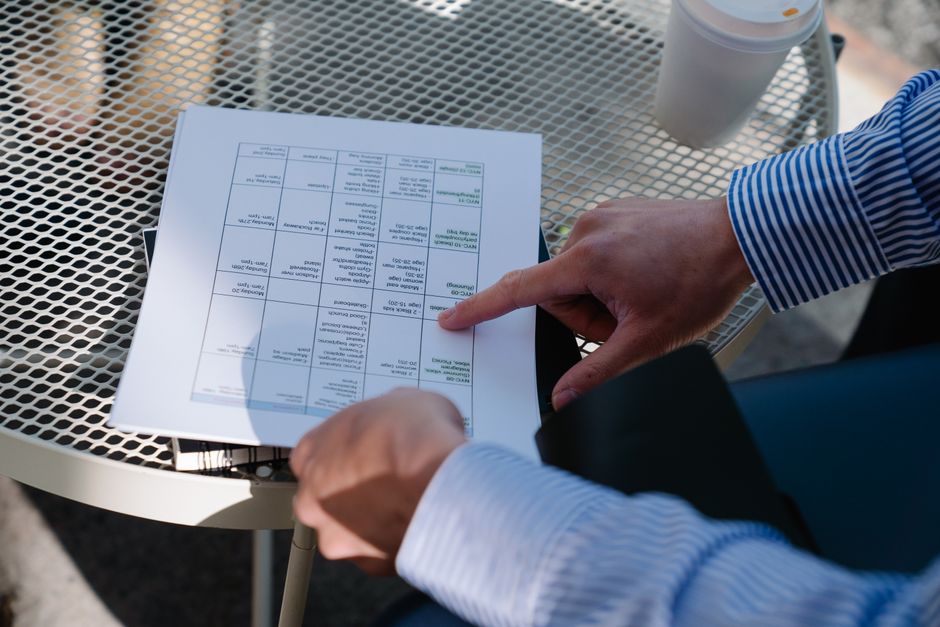
Photo by Felicity Tai on Pexels
A good review schedule integrates these techniques. For instance:
1. Daily Review: Spend 10-15 minutes at the end of each study day reviewing what you covered that day.
2. Weekly Review: Dedicate an hour or two each week to review material from the entire week, focusing on active recall.
3. Monthly/Cumulative Review: Before exams, conduct broader reviews, revisiting older material, often using practice tests.
3. Worked Example
Let's say you just learned about the three main types of rocks: igneous, sedimentary, and metamorphic.
Initial learning: You read your textbook and notes on each type, maybe drawing a diagram.
Active Recall (Daily Review): The next day, you take out a blank sheet of paper and try to write down everything you remember about igneous rocks, then sedimentary, then metamorphic. What are their characteristics? How are they formed? What are examples? Then, you check your notes to fill in any gaps.
Spaced Repetition (Weekly Review): Three days later, you create flashcards. One card might say "How are sedimentary rocks formed?" and the back would have the answer. Another might say "Give examples of igneous rocks." You go through these flashcards, putting the ones you get wrong aside to re-test yourself later in the session.
Elaboration/Interleaving (Monthly Review): A week before your exam, you try to explain the rock cycle to a friend, integrating how each rock type transforms into another. You also switch between reviewing rocks, then maybe a bit of plate tectonics, then back to rocks, to see how the concepts link together and to prevent burnout from one topic.
4. Key Takeaways
- Active recall, not passive re-reading, is the most effective way to review.
- Spaced repetition helps embed information into your long-term memory by reviewing at increasing intervals.
- Connecting new information to existing knowledge (elaboration) deepens your understanding.
- Switching between different topics (interleaving) improves your ability to recall and differentiate information.
- Regular, scheduled review sessions are more effective than cramming before an exam.
- Use tools like flashcards, self-quizzing, and practice questions to facilitate active recall.
- Reviewing helps you identify what you don't know before the exam, giving you time to address weaknesses.
5. Now Try It
Choose a topic you've studied recently (ideally within the last 24-48 hours). Spend 15 minutes reviewing it using active recall. First, close your notes and write down everything you remember about the topic on a blank piece of paper. Then, open your notes and identify any gaps or inaccuracies. Finally, create 3-5 flashcards for the most challenging concepts or facts you missed. Success looks like being able to explain the core ideas of the topic and creating useful flashcards for future review.
Frequently asked about Review
Study this next
Get the full Effective Study Habits for Exams curriculum
Clone the complete plan to your dashboard for unlimited AI-generated notes, practice quizzes, and a personalised revision schedule.
Save this course free