Introduction to Quadratic Expressions and Equations
From the Math-Quadratics (solving by factoring and completing the root) curriculum
Introduction to Quadratic Expressions and Equations
TL;DR
Quadratic expressions are polynomial expressions where the highest power of the variable is 2. A quadratic equation sets a quadratic expression equal to something, often zero, and you solve it by finding the variable's values that make the equation true. Being able to recognize and understand these forms is the first step to solving them.
1. The Mental Model
Think of quadratics as expressions that have a "squared" term, like $x^2$. When you set one of these expressions equal to something else, you get an equation, and your goal is to find what numbers the variable could be to make it true.
2. The Core Material
What is a Quadratic Expression?
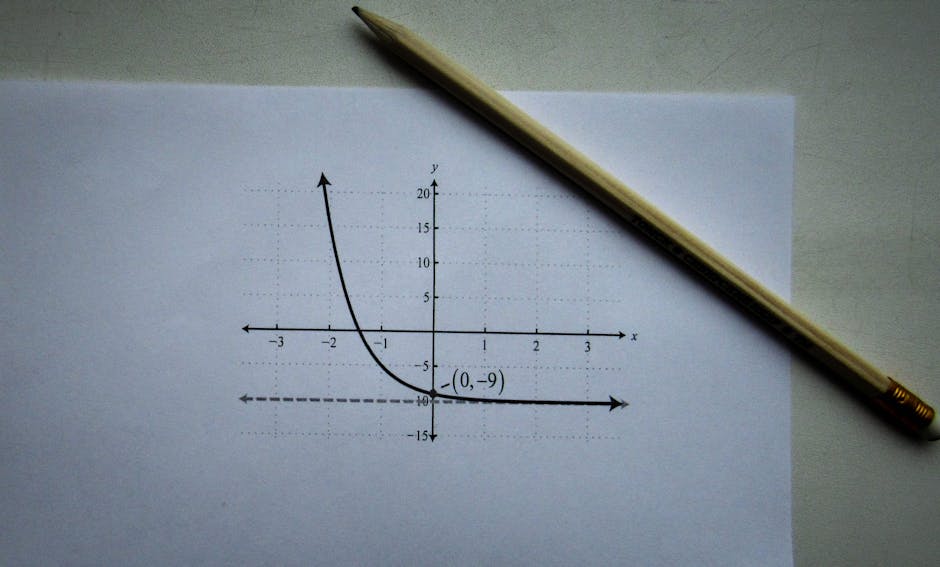
Photo by Sergey Meshkov on Pexels
An expression is just a mathematical phrase, not a full sentence (no equals sign). A quadratic expression is a polynomial where the highest exponent of the variable is 2. It usually looks like $ax^2 + bx + c$.
- $a$, $b$, and $c$ are just numbers (constants).
- $x$ is the variable.
- The $ax^2$ term is the "quadratic term."
- The $bx$ term is the "linear term."
- The $c$ term is the "constant term."
Important: The number 'a' cannot be zero. If $a=0$, then the $x^2$ term disappears, and you're just left with $bx + c$, which is a linear expression, not a quadratic. The numbers 'b' and 'c' can be zero.
Examples of Quadratic Expressions:
- $3x^2 + 5x - 2$ (Here, $a=3, b=5, c=-2$)
- $x^2 - 4$ (Here, $a=1, b=0, c=-4$)
- $-2x^2 + 7x$ (Here, $a=-2, b=7, c=0$)
- $x^2$ (Here, $a=1, b=0, c=0$)
What is a Quadratic Equation?
Photo by Sergey Meshkov on Pexels
A quadratic equation is formed when you set a quadratic expression equal to some value, often zero. The most common form you'll work with is the standard form: $ax^2 + bx + c = 0$.
When you're asked to "solve" a quadratic equation, you're looking for the values of $x$ (called the roots or solutions) that make the entire equation true. A quadratic equation can have two, one, or zero real solutions.
Examples of Quadratic Equations:
- $x^2 - 5x + 6 = 0$
- $2x^2 = 8$ (You'd rearrange this to $2x^2 - 8 = 0$ to get standard form)
- $-x^2 + 3x = 10$ (Rearrange to $-x^2 + 3x - 10 = 0$)
Why $ax^2 + bx + c = 0$?

Photo by Ann H on Pexels
This specific form is super useful because many methods for solving quadratics (like factoring, the quadratic formula, and completing the square) work directly with it. If your equation isn't in this form, your first step is usually to rearrange it.
graph TD
    A["Start with an equation"] --> B{Is it quadratic? (Highest power of x is 2)};
    B -- Yes --> C{Is it in standard form: ax² + bx + c = 0?};
    B -- No --> D["It's not a quadratic equation (e.g., linear, cubic)"];
    C -- No --> E["Rearrange it to ax² + bx + c = 0"];
    C -- Yes --> F["Ready to solve (e.g., by factoring, formula)"];
    E --> F;
3. Worked Example
Let's identify the components and standard form for a given equation.
Problem: Identify $a, b, c$ and write the equation in standard form for $5x - 7 = 3x^2$.
Step 1: Understand the Goal
We need to get all terms on one side of the equation, with zero on the other, making sure the $x^2$ term is positive if possible (it's often easier to work with).
Step 2: Move all terms to one side.
It's usually best to keep the $x^2$ term positive if possible. Here, $3x^2$ is already positive on the right, so let's move the $5x$ and $-7$ to the right side.
Original: $5x - 7 = 3x^2$
Subtract $5x$ from both sides: $-7 = 3x^2 - 5x$
Add $7$ to both sides: $0 = 3x^2 - 5x + 7$
Step 3: Identify $a, b, c$.
Now that it's in the form $ax^2 + bx + c = 0$, we can easily see:
$a = 3$
$b = -5$
$c = 7$
So, the equation in standard form is $3x^2 - 5x + 7 = 0$.
4. Key Takeaways
- A quadratic expression has a variable raised to the power of 2 as its highest exponent.
- A quadratic equation sets a quadratic expression equal to some value, most often 0 in standard form.
- The standard form for a quadratic equation is $ax^2 + bx + c = 0$, where $a \neq 0$.
- $a$, $b$, and $c$ are coefficients (numbers) that define the specific quadratic.
- Solving a quadratic equation means finding the value(s) of $x$ that make the equation true.
- Always try to rearrange an equation into standard form before attempting to solve it.
Common Mistakes to Avoid:
- Forgetting that $a$ cannot be zero; if it is, it's a linear equation.
- Not combining like terms or rearranging correctly to get standard form.
- Confusing $b$ or $c$ with the variable $x$. They are just numbers!
- Missing the signs (positive/negative) of $a, b, c$ when identifying them from an equation.
5. Now Try It
Take these three equations and for each, write it in standard form ($ax^2 + bx + c = 0$) and then identify the values of $a$, $b$, and $c$:
1. $x^2 - 2x = 8$
2. $4x = 5 - x^2$
3. $7 - x^2 = 0$
You'll know you've got it when you can confidently write each equation in the $ax^2 + bx + c = 0$ format and correctly list the $a, b, c$ values for each.
Frequently asked about Introduction to Quadratic Expressions and Equations
Study this next
Get the full Math-Quadratics (solving by factoring and completing the root) curriculum
Clone the complete plan to your dashboard for unlimited AI-generated notes, practice quizzes, and a personalised revision schedule.
Create Free Account