Routes of Administration, Total Volume, and Amount
From the dosage 5 curriculum
Routes of Administration, Total Volume, and Amount
TL;DR
Understanding how medication gets into the body (route), how much liquid it's in (total volume), and the actual drug quantity (amount) are crucial for safe dosage. These three concepts are tightly linked and directly impact how you calculate and administer medicine. Always double-check these details to ensure the correct dose reaches the patient.
1. The Mental Model
Think of administering medication like delivering a package: the route is the delivery method (mail, hand delivery), the total volume is the size of the box, and the amount is the actual item inside the box. All three must be right for the package to arrive correctly and be useful.
2. The Core Material
When you're dealing with medication, especially liquids, three terms come up all the time: Route of Administration, Total Volume, and Amount. Getting these straight is fundamental to accurate dosing.
Routes of Administration

Photo by Pavel Danilyuk on Pexels
The route of administration is simply how a drug enters the body. It's super important because it affects how fast the drug works, how much of it gets absorbed, and what side effects might happen. You'll encounter many routes, but here are some common ones:
- Oral (PO): By mouth. Tablets, capsules, liquids. Slower absorption, convenient.
- Intravenous (IV): Directly into a vein. Fastest absorption, precise control, used for emergencies or when oral isn't possible.
- Intramuscular (IM): Into a muscle. Moderate absorption, good for vaccines or drugs that need to last longer.
- Subcutaneous (SubQ/SC): Under the skin. Slower absorption than IM, good for insulin or some hormones.
- Topical: Applied to the skin. Local effect, like creams or patches.
- Rectal (PR): Into the rectum. Used when oral isn't possible, or for local effects.
- Sublingual (SL): Under the tongue. Rapid absorption directly into the bloodstream, bypassing digestion.
Choosing the right route is a clinical decision, but you'll need to know it to prepare and administer the drug correctly.
Total Volume
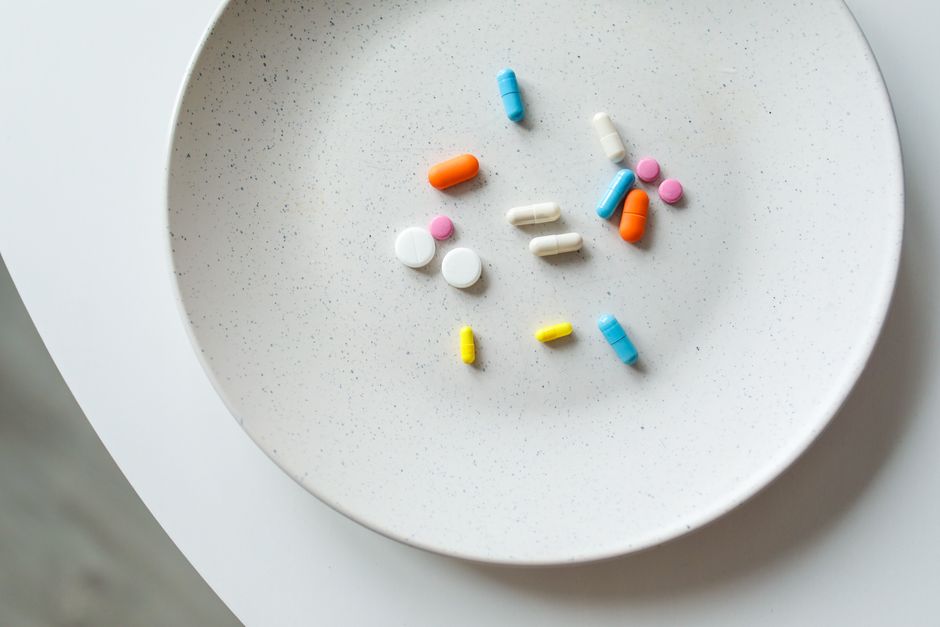
Photo by Polina Tankilevitch on Pexels
The total volume is the entire quantity of liquid a medication is dissolved or suspended in. For example, if you have a syringe with 5 mL of solution, 5 mL is the total volume. It's not necessarily how much drug is in there, but the container size or the total liquid you're giving.
Think of it like a soda can: the can holds 355 mL (total volume), but the amount of sugar inside is much less.
Amount (of drug)

Photo by Towfiqu barbhuiya on Pexels
The amount refers to the actual quantity of the active drug present in the total volume, usually expressed in units like milligrams (mg), grams (g), micrograms (mcg), or units (U). This is the "active ingredient" you're trying to give.
For example, if you have a vial that says "250 mg in 5 mL," then:
* Amount: 250 mg (the actual drug)
* Total Volume: 5 mL (the liquid it's dissolved in)
Knowing both the amount and the total volume lets you figure out the drug concentration (e.g., 250 mg / 5 mL = 50 mg/mL). This concentration is vital for calculating dosages.
Here's how these concepts link together:
graph LR
    A["Prescription Order"] --> B{"Choose Route (e.g., IV, PO)"}
    B --> C["Identify Drug Concentration"]
    C --> D["Extract 'Amount of Drug' (e.g., mg, mcg)"]
    C --> E["Identify 'Total Volume' (e.g., mL, L)"]
    D & E --> F["Calculate Dose Volume Needed (mL)"]
    F --> G["Prepare & Administer via Chosen Route"]
3. Worked Example
A doctor orders "Amoxicillin 250 mg PO, TID." The available medication is a liquid suspension labeled "Amoxicillin 125 mg / 5 mL."
- Route of Administration: PO (oral). This tells you to give it by mouth.
- Ordered Amount: 250 mg (this is how much drug the patient needs per dose).
- Available Concentration: 125 mg / 5 mL.
- Amount (available): 125 mg
- Total Volume (containing that amount): 5 mL
Now, you need to calculate the volume to administer for one dose:
- You need 250 mg.
- You have 125 mg in every 5 mL.
Using dimensional analysis:
$(250 \text{ mg}) \times \frac{5 \text{ mL}}{125 \text{ mg}} = \frac{250 \times 5}{125} \text{ mL} = \frac{1250}{125} \text{ mL} = 10 \text{ mL}$
So, you'd administer 10 mL orally for each dose.
4. Key Takeaways
- The route of administration dictates how and where you'll give the medication.
- Total volume is the entire liquid quantity, not necessarily the drug itself.
- The amount is the actual quantity of the active drug (e.g., mg, mcg).
- Always consider the route first, as it impacts drug preparation and administration.
- Understanding the relationship between amount and total volume (concentration) is crucial for dose calculations.
- Always double-check the physician's order against the drug label for consistency.
5. Now Try It
You're asked to give "Morphine 4 mg IM now." The medication available is "Morphine 10 mg / mL in a multi-dose vial."
What is the route of administration? What is the ordered amount? What is the total volume that contains the ordered amount? How many mL will you administer?
Success looks like clearly identifying each piece of information and calculating the final volume to administer correctly, stating the units for each answer.
Frequently asked about Routes of Administration, Total Volume, and Amount
More from dosage 5
Get the full dosage 5 curriculum
Clone the complete plan to your dashboard for unlimited AI-generated notes, practice quizzes, and a personalised revision schedule.
Create Free Account