Pecahan, Perpuluhan, dan Peratus
From the matematik ujian akhir sesi akedemik tahun 6 curriculum
Pecahan, Perpuluhan, dan Peratus
TL;DR
You'll learn how pecahan (fractions), perpuluhan (decimals), and peratus (percentages) are just different ways to show parts of a whole. Understanding their relationships helps you solve many math problems easily. We'll cover how to convert between them and do basic operations.
1. The Mental Model
Think of these as different languages to describe "a piece of something bigger." Whether you say "half a pizza," "0.5 of a pizza," or "50% of a pizza," you're talking about the exact same amount.
2. The Core Material
These three concepts are all about representing parts of a whole. Let's break down how they relate and how to convert between them.
Pecahan (Fractions)
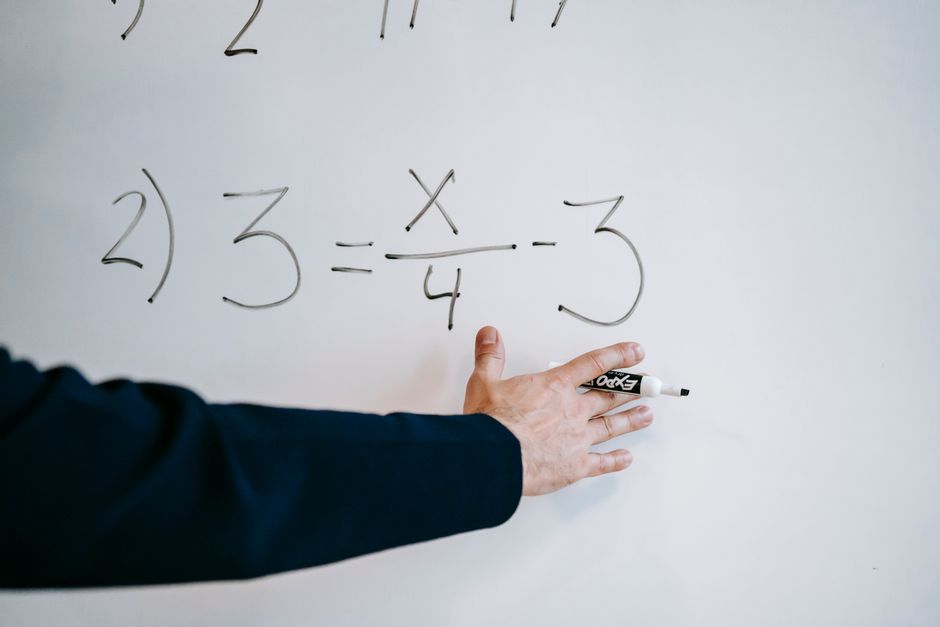
Photo by Vanessa Garcia on Pexels
Pecahan shows a part of a whole as a ratio of two numbers: pengangka (numerator) over penyebut (denominator).
* Contoh: $\frac{1}{2}$ (satu perdua) bermaksud 1 bahagian daripada 2 bahagian keseluruhan.
* Pecahan wajar: Pengangka lebih kecil daripada penyebut (contoh: $\frac{3}{4}$).
* Pecahan tak wajar: Pengangka sama atau lebih besar daripada penyebut (contoh: $\frac{5}{4}$).
* Nombor bercampur: Gabungan nombor bulat dan pecahan wajar (contoh: $1\frac{1}{4}$).
Perpuluhan (Decimals)
Photo by Roman Friptuleac on Pexels
Perpuluhan represents parts of a whole using a base-10 system, indicated by a titik perpuluhan (decimal point).
* Setiap digit selepas titik perpuluhan mewakili persepuluh, perseratus, perseribu, dan seterusnya.
* Contoh: 0.5 (sifar perpuluhan lima) bermaksud 5 persepuluh.
* Contoh: 0.75 (sifar perpuluhan tujuh lima) bermaksud 75 perseratus.
Peratus (Percentages)

Photo by Towfiqu barbhuiya on Pexels
Peratus means "per seratus" atau "out of one hundred." It's a fraction where the denominator is always 100, represented by the % symbol.
* Contoh: 50% bermaksud $\frac{50}{100}$.
* Contoh: 25% bermaksud $\frac{25}{100}$.
Penukaran antara Pecahan, Perpuluhan, dan Peratus

Photo by Vanessa Garcia on Pexels
Knowing how to switch between these forms is super important.
graph TD
    A["Pecahan (e.g., 1/2)"] -->|Pembahagian| B["Perpuluhan (e.g., 0.5)"];
    B -->|Darab 100%| C["Peratus (e.g., 50%)"];
    C -->|Bahagi 100| B;
    B -->|Tulis sebagai pecahan dengan penyebut 10, 100, 1000... kemudian permudahkan| A;
    A -->|Jadikan penyebut 100| C;
- Pecahan ke Perpuluhan: Bahagikan pengangka dengan penyebut.
- Contoh: $\frac{3}{4} = 3 \div 4 = 0.75$
- Perpuluhan ke Peratus: Darabkan perpuluhan dengan 100%.
- Contoh: $0.75 \times 100\% = 75\%$
- Peratus ke Perpuluhan: Bahagikan peratus dengan 100.
- Contoh: $75\% \div 100 = 0.75$
- Perpuluhan ke Pecahan: Tulis nombor perpuluhan sebagai pecahan dengan penyebut 10, 100, 1000, bergantung kepada bilangan tempat perpuluhan, kemudian permudahkan.
- Contoh: $0.75 = \frac{75}{100} = \frac{3}{4}$ (bahagi atas dan bawah dengan 25)
- Pecahan ke Peratus: Jadikan penyebut 100 (jika boleh) atau tukar ke perpuluhan dahulu, kemudian darab 100%.
- Contoh: $\frac{3}{4} = \frac{3 \times 25}{4 \times 25} = \frac{75}{100} = 75\%$
Operasi Asas
- Menambah/Menolak Pecahan: Pastikan penyebut sama. Jika tidak, samakan dahulu.
- Contoh: $\frac{1}{4} + \frac{1}{2} = \frac{1}{4} + \frac{2}{4} = \frac{3}{4}$
- Mendarab Pecahan: Darab pengangka dengan pengangka, penyebut dengan penyebut.
- Contoh: $\frac{1}{2} \times \frac{3}{4} = \frac{1 \times 3}{2 \times 4} = \frac{3}{8}$
- Membahagi Pecahan: Darab dengan salingan (reciprocal) pecahan kedua.
- Contoh: $\frac{1}{2} \div \frac{3}{4} = \frac{1}{2} \times \frac{4}{3} = \frac{4}{6} = \frac{2}{3}$
- Operasi Perpuluhan: Susun titik perpuluhan sebaris untuk tambah/tolak. Untuk darab/bahagi, kira tempat perpuluhan.
- Operasi Peratus: Biasanya tukar ke perpuluhan atau pecahan dahulu sebelum melakukan operasi.
- Contoh: $25\%$ daripada 80 bermaksud $0.25 \times 80 = 20$
3. Worked Example
Katakan ada 20 biji guli. 5 biji guli berwarna biru, 8 biji guli berwarna merah, dan selebihnya berwarna hijau.
-
Cari pecahan guli hijau:
- Jumlah guli biru dan merah = $5 + 8 = 13$ biji.
- Jumlah guli hijau = $20 - 13 = 7$ biji.
- Pecahan guli hijau = $\frac{7}{20}$.
-
Tukar pecahan guli hijau kepada perpuluhan:
- $\frac{7}{20} = 7 \div 20 = 0.35$.
-
Tukar pecahan guli hijau kepada peratus:
- Cara 1 (melalui perpuluhan): $0.35 \times 100\% = 35\%$.
- Cara 2 (samakan penyebut): $\frac{7}{20} = \frac{7 \times 5}{20 \times 5} = \frac{35}{100} = 35\%$.
Jadi, 7 daripada 20 biji guli berwarna hijau, yang bersamaan dengan 0.35 atau 35% daripada keseluruhan guli.
4. Key Takeaways
- Pecahan, perpuluhan, dan peratus adalah cara berbeza untuk mewakili sebahagian daripada keseluruhan.
- Penukaran antara ketiga-tiga bentuk ini adalah kemahiran asas yang penting.
- Untuk pecahan, pastikan penyebut sama sebelum menambah atau menolak.
- Peratus bermaksud "per seratus," jadi sentiasa boleh ditulis sebagai pecahan dengan penyebut 100.
- Memahami konsep ini membantu dalam kehidupan seharian, seperti mengira diskaun atau saiz hidangan.
Common Mistakes to Avoid
- Lupa menyamakan penyebut sebelum menambah atau menolak pecahan.
- Salah letak titik perpuluhan semasa operasi perpuluhan.
- Tidak menukar peratus kepada perpuluhan atau pecahan sebelum mengira jumlah.
- Membahagi pengangka dengan penyebut secara terbalik apabila menukar pecahan ke perpuluhan.
- Mengabaikan permudahan pecahan kepada bentuk termudah.
5. Now Try It
Ambil sebarang tiga pecahan (contohnya, $\frac{1}{5}$, $\frac{3}{8}$, $\frac{7}{10}$). Untuk setiap pecahan, tukarkannya kepada perpuluhan, dan kemudian kepada peratus. Kemudian, pilih satu daripada perpuluhan yang anda dapat dan tukarkannya kembali kepada pecahan dalam bentuk termudah.
What success looks like: You should be able to smoothly convert each number through all three forms, ending up with the correct values and a simplified fraction when converting back. For example, if you start with $\frac{1}{5}$, you should get $0.2$, then $20\%$, and converting $0.2$ back should give you $\frac{1}{5}$.
Frequently asked about Pecahan, Perpuluhan, dan Peratus
More from matematik ujian akhir sesi akedemik tahun 6
Get the full matematik ujian akhir sesi akedemik tahun 6 curriculum
Clone the complete plan to your dashboard for unlimited AI-generated notes, practice quizzes, and a personalised revision schedule.
Create Free Account