Understanding Numbers and Their Properties
From the NUMBER PLAY curriculum
Understanding Numbers and Their Properties
TL;DR
Numbers aren't just symbols; they have special traits like being even or odd, positive or negative, and prime or composite. Knowing these properties helps you understand how numbers behave and interact. We'll explore these basic classifications and how to recognize them.
1. The Mental Model
Think of numbers like different types of food: some are sweet, some are savory, some are crunchy, some are soft. Each number has its own "flavor" or set of characteristics that make it unique and behave in certain ways.
2. The Core Material
Numbers are the basic building blocks of math, and they come with several key properties you'll want to know.
Even and Odd Numbers
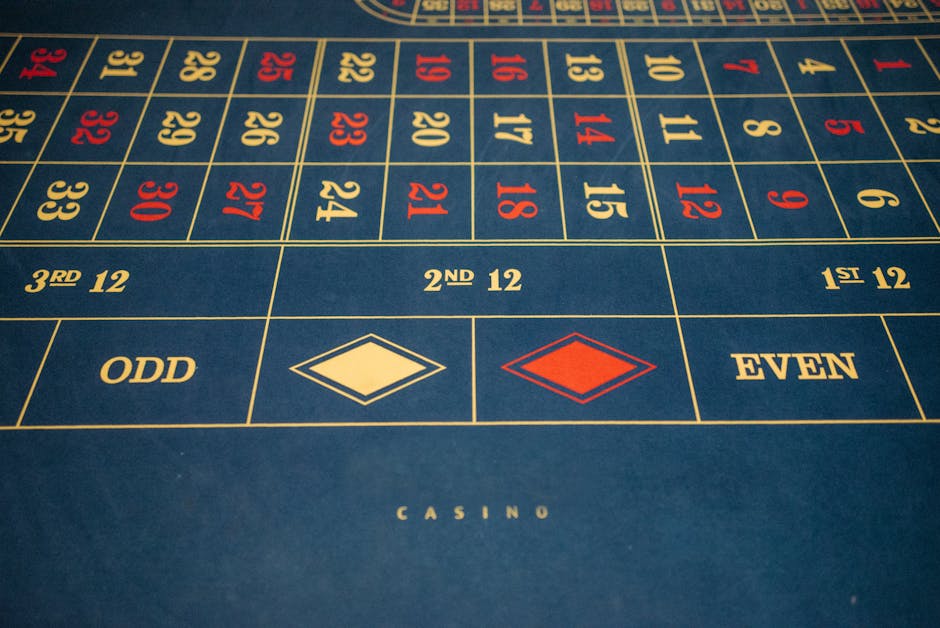
Photo by Pavel Danilyuk on Pexels
An even number is any integer that can be divided by 2 without a remainder. Think of them as coming in pairs.
* Examples: -4, 0, 2, 8, 100
An odd number is any integer that, when divided by 2, always leaves a remainder of 1. They always have one left over.
* Examples: -3, 1, 5, 17, 99
You can quickly tell if a number is even or odd by looking at its last digit:
* Even numbers end in 0, 2, 4, 6, or 8.
* Odd numbers end in 1, 3, 5, 7, or 9.
Positive and Negative Numbers

Photo by Katerina Holmes on Pexels
Numbers can also be either positive or negative, telling you their direction or value relative to zero.
- Positive numbers are greater than zero. They are usually written without a sign, like 5, or with a plus sign, like +5.
- Negative numbers are less than zero. They always have a minus sign in front of them, like -5.
- Zero itself is neither positive nor negative. It's the point where positive and negative meet.
Prime and Composite Numbers
Photo by Magda Ehlers on Pexels
This property only applies to whole numbers greater than 1.
A prime number is a whole number greater than 1 that has exactly two distinct positive divisors: 1 and itself. Think of them as unbreakable blocks.
* Examples: 2, 3, 5, 7, 11, 13 (2 is the only even prime number!)
A composite number is a whole number greater than 1 that has more than two positive divisors (it can be divided evenly by numbers other than 1 and itself). Think of them as blocks made from smaller blocks.
* Examples: 4 (divisors: 1, 2, 4), 6 (divisors: 1, 2, 3, 6), 9 (divisors: 1, 3, 9)
Important Exceptions:
* 0 and 1 are neither prime nor composite.
* 0 has infinitely many divisors.
* 1 only has one divisor (itself).
Here's a quick way to categorize numbers based on these ideas:
graph TD
    A["Number"] --> B{"Is it an integer?"}
    B -- Yes --> C{"Is it greater than 1?"}
    B -- No --> D["Decimal or Not an Integer"]

    C -- Yes --> E{"Can it be divided evenly by 2?"}
    C -- No --> F{"Is it 0 or 1?"}

    E -- Yes --> G["Even Number"]
    E -- No --> H["Odd Number"]

    G --> I{"Has only 1 and itself as divisors?"}
    H --> J{"Has only 1 and itself as divisors?"}

    I -- Yes --> K["Prime (e.g., 2)"]
    I -- No --> L["Composite (e.g., 4, 6, 8, 10...)"]

    J -- Yes --> M["Prime (e.g., 3, 5, 7, 11...)"]
    J -- No --> N["Composite (e.g., 9, 15, 21...)"]

    F -- Yes --> O["Neither Prime Nor Composite"]
    F -- No --> P["Negative Integer (e.g., -5, -2)"]

    O --> Q{"Is it greater than 0?"}
    Q -- Yes --> R["Positive (e.g., 1)"]
    Q -- No --> S["Zero"]
3. Worked Example
Let's take the number 17 and apply what we've learned.
- Is it even or odd? Its last digit is 7, which is an odd number. So, 17 is odd.
- Is it positive or negative? There's no minus sign, and it's greater than 0. So, 17 is positive.
- Is it prime or composite? (Since 17 is a whole number greater than 1).
- Can it be divided by 2? No (it's odd).
- Can it be divided by 3? No (17 / 3 = 5 with remainder 2).
- Can it be divided by 4? No.
- Can it be divided by 5? No.
- Can it be divided by 6? No.
- We only need to check divisors up to the square root of 17 (which is about 4.12). Since 17 can only be divided by 1 and 17, it has exactly two divisors. Therefore, 17 is a prime number.
So, 17 is an odd, positive, prime number.
4. Key Takeaways
- Even numbers are perfectly divisible by 2; odd numbers aren't.
- Positive numbers are greater than zero, negative numbers are less than zero.
- Zero is a unique integer, neither positive nor negative, and even.
- Prime numbers (greater than 1) only have two divisors: 1 and themselves.
- Composite numbers (greater than 1) have more than two divisors.
- The numbers 0 and 1 are special; they're neither prime nor composite.
Common Mistakes to Avoid:
- Don't confuse "odd" with "negative" or "prime" with "large."
- Forgetting that 2 is the only even prime number.
- Thinking 1 is a prime number (it only has one factor).
- Assuming all odd numbers are prime (e.g., 9 is odd but composite).
5. Now Try It
Pick five different numbers, including at least one negative number, one two-digit number, and one single-digit number (don't pick 0 or 1 for this exercise). For each number, identify if it's:
1. Even or Odd
2. Positive or Negative
3. Prime or Composite
Success looks like: For each of your five numbers, you've correctly identified all three properties. For example, if you chose -6, you'd say: "Even, Negative, Composite."
Frequently asked about Understanding Numbers and Their Properties
More from NUMBER PLAY
Get the full NUMBER PLAY curriculum
Clone the complete plan to your dashboard for unlimited AI-generated notes, practice quizzes, and a personalised revision schedule.
Create Free Account