Lipids: Structure, Properties, and Chemical Testing
From the Biology Lab curriculum
Lipids: Structure, Properties, and Chemical Testing
TL;DR
Lipids are a diverse group of organic molecules like fats and oils, characterized by their insolubility in water. Their nonpolar nature dictates their function in energy storage, insulation, and cell membrane formation. We'll use specific chemical tests to identify the presence of these hydrophobic molecules in the lab.
1. The Mental Model
Think of lipids as the "oily" stuff of life. They don't mix with water because they lack the charged parts that water molecules are attracted to, making them great for barriers and long-term energy storage.
2. The Core Material
Lipids are a broad category of organic compounds that are insoluble in water but soluble in organic solvents. This defining characteristic comes from their largely nonpolar hydrocarbon chains. They're essential for many biological functions, including energy storage, structural components of cell membranes, and signaling.
Types of Lipids
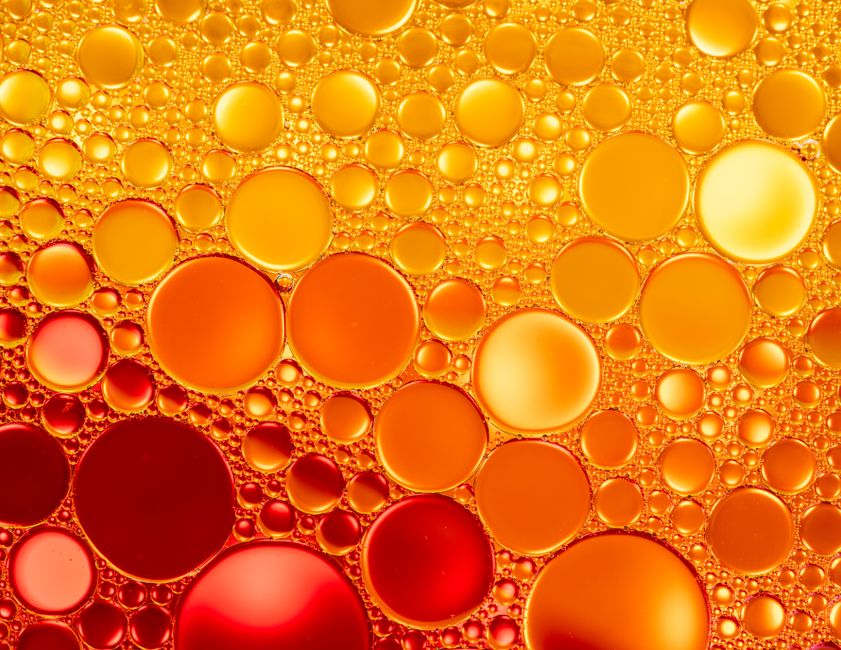
Photo by Skyler Ewing on Pexels
You'll mainly encounter a few key types:
- Triglycerides (Fats and Oils): These are the most common type. They consist of a glycerol molecule linked to three fatty acid chains. The fatty acids can be saturated (no double bonds, solid at room temp like butter) or unsaturated (one or more double bonds, liquid at room temp like olive oil).
- Phospholipids: Similar to triglycerides, but one fatty acid is replaced by a phosphate group. This makes one end of the molecule polar (hydrophilic) and the other end nonpolar (hydrophobic). This dual nature is crucial for forming cell membranes.
- Steroids: These have a characteristic four-ring carbon structure. Cholesterol is a well-known steroid, important in cell membranes and as a precursor for hormones.
Properties of Lipids

Photo by Tara Winstead on Pexels
The primary property to remember is hydrophobicity (water-fearing) and lipophilicity (fat-loving). This means lipids:
* Don't dissolve in water.
* Do dissolve in organic solvents like ether, chloroform, or alcohol.
* Are less dense than water (which is why oil floats on water).
Chemical Tests for Lipids
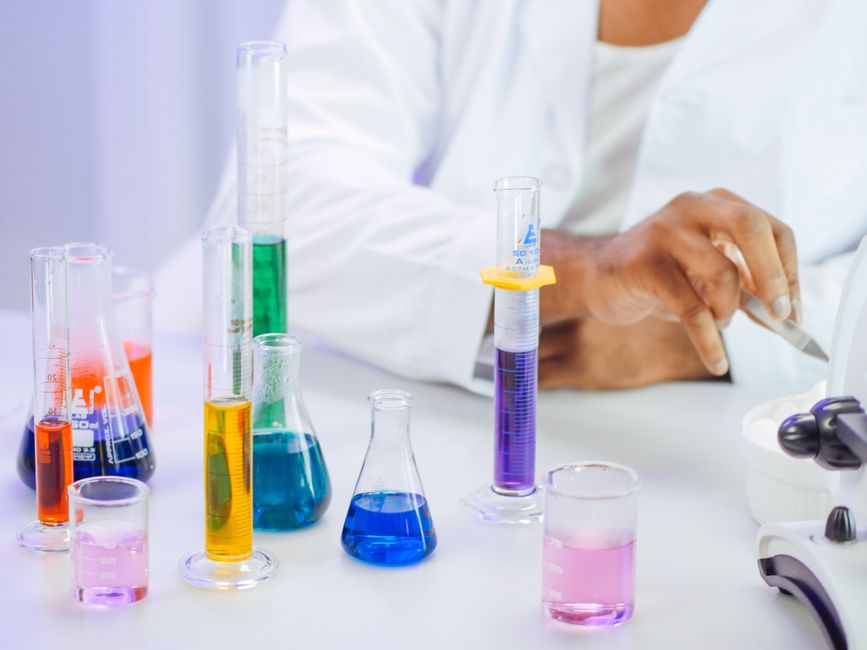
Photo by Kindel Media on Pexels
We'll use a couple of simple tests to detect lipids in the lab.
2.1. Sudan IV Test (or Sudan III/Oil Red O)
This test detects the presence of fats and oils (triglycerides). Sudan dyes are fat-soluble dyes. They're nonpolar and will dissolve directly into any lipid present, staining it a visible color (red for Sudan IV, orange for Sudan III). Water-based solutions won't pick up the dye.
graph TD
    A["Add Sudan IV solution to sample"] --> B{"Is lipid present?"}
    B -- Yes --> C["Lipid layer stains red"]
    B -- No --> D["Solution remains mostly clear/light pink (dye might clump)"]
2.2. Emulsification Test (Solubility Test)
This test demonstrates the solubility properties of lipids and how they can be dispersed in water using an emulsifier. Lipids don't dissolve in water, but if you shake them vigorously with a solvent like ethanol, they can briefly mix. When you then add water, if lipids were present, they'll form tiny droplets dispersed throughout the water, creating a cloudy, milky appearance called an emulsion. Emulsifiers (like detergent) help stabilize these droplets, preventing them from coalescing back into a separate layer.
Why these properties matter

Photo by Jakub Zerdzicki on Pexels
Lipids' insolubility in water is fundamental. It allows them to form barriers like cell membranes (phospholipids) and store energy efficiently without affecting the water potential inside cells (triglycerides).
3. Worked Example
Let's say you have three unknown samples: Sample A (vegetable oil), Sample B (sugar solution), and Sample C (unknown liquid). You want to test for the presence of lipids.
Step 1: Sudan IV Test
* Add a few drops of Sudan IV solution to each sample.
* Sample A (Vegetable Oil): The oil layer turns a distinct bright red. This indicates a positive test for lipids.
* Sample B (Sugar Solution): The solution remains clear, perhaps with a few tiny red specks of undissolved dye. This indicates a negative test.
* Sample C (Unknown): Suppose Sample C also turns red. This suggests it contains lipids.
Step 2: Emulsification Test (for Sample C, if positive for Sudan IV)
* Take 2 mL of Sample C and add 2 mL of ethanol. Shake vigorously for 30 seconds. The sample should appear clear as the lipid dissolves in the ethanol.
* Carefully add 2 mL of distilled water to the ethanol/Sample C mixture.
* Sample C: If an emulsion forms (the solution turns cloudy or milky white), it confirms the presence of lipids. If it remains clear or separates into two distinct clear layers, it might not be a lipid or the concentration is too low.
This two-pronged approach helps confirm the presence of lipids based on their characteristic solubility and staining properties.
4. Key Takeaways
- Lipids are biomolecules that are insoluble in water due to their nonpolar nature.
- Triglycerides (fats/oils), phospholipids, and steroids are major types of lipids.
- The Sudan IV test detects lipids because the dye dissolves directly into them, staining them red.
- The emulsification test shows lipids forming a cloudy mixture (emulsion) when dissolved in alcohol and then mixed with water.
- Lipids are crucial for energy storage, insulation, and forming cell membranes.
- Their hydrophobic nature drives their biological functions, like forming barriers.
Common Mistakes to Avoid:
* Confusing solubility: Don't expect lipids to dissolve in water; they won't. They dissolve in organic solvents.
* Misinterpreting Sudan IV: If the dye just floats or clumps in a water solution without coloring it, it's not a positive lipid test. It must dissolve into the substance.
* Skipping the ethanol step in emulsification: You need to dissolve the lipid in alcohol first before adding water to see the emulsion clearly.
* Not shaking enough: For the emulsification test, thorough shaking is critical to disperse the lipid.
5. Now Try It
Gather three clear liquids: vegetable oil, water, and milk. Design an experiment using Sudan IV and the emulsification test to correctly identify which liquid is which, based purely on your results. Record your observations for each test and explain how those observations lead to your conclusions for each sample. What success looks like: You correctly identify all three liquids with clear, descriptive observations for both tests.
Frequently asked about Lipids: Structure, Properties, and Chemical Testing
More from Biology Lab
Get the full Biology Lab curriculum
Clone the complete plan to your dashboard for unlimited AI-generated notes, practice quizzes, and a personalised revision schedule.
Create Free Account