Carbohydrates: Structure, Function, and Chemical Testing
From the Biology Lab curriculum
Carbohydrates: Structure, Function, and Chemical Testing
TL;DR
Carbohydrates are essential biomolecules that provide energy and structural support. We'll explore their basic structures, from simple sugars to complex starches, and learn how to identify them using specific chemical tests. Understanding carbs is key to understanding how living things get and use energy.
1. The Mental Model
Think of carbohydrates as LEGOs: simple sugars are single bricks, and you can link them together to build bigger, more complex structures like chains (starches) or intricate frameworks (cellulose). Each structure has a different job, but they all start from those basic sugar bricks.
2. The Core Material
Carbohydrates are organic compounds made of carbon, hydrogen, and oxygen, usually in a ratio of 1:2:1 (like glucose, C₆H₁₂O₆). They're broadly classified into three main types based on their size and complexity.
Monosaccharides (Simple Sugars)
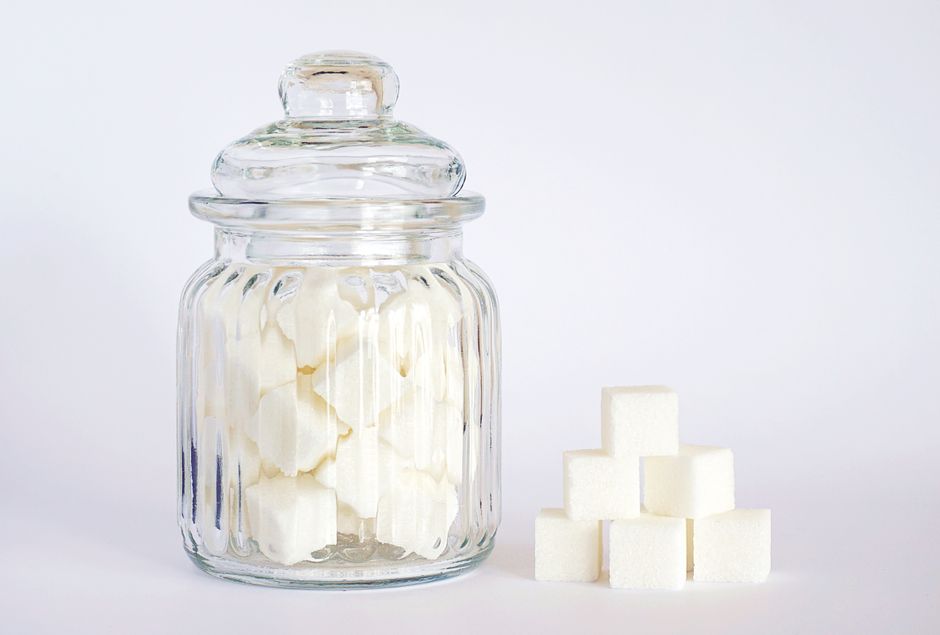
Photo by Suzy Hazelwood on Pexels
These are the simplest carbohydrates and are often called "single sugars." They can't be broken down further into smaller sugar units. They're typically sweet, water-soluble, and are direct sources of energy for cells.
* Examples: Glucose (your body's main energy source), Fructose (fruit sugar), Galactose (found in milk).
* Structure: They usually form rings in solution.
Disaccharides (Double Sugars)

Photo by Doğu Tuncer on Pexels
Disaccharides are formed when two monosaccharides join together through a glycosidic bond, releasing a molecule of water (a dehydration reaction).
* Examples: Sucrose (table sugar = glucose + fructose), Lactose (milk sugar = glucose + galactose), Maltose (malt sugar = glucose + glucose).
* Breakdown: Your body breaks disaccharides back into monosaccharides for energy.
Polysaccharides (Complex Carbohydrates)
Photo by Polina Tankilevitch on Pexels
These are long chains of many monosaccharide units linked together. They can be hundreds or thousands of sugar units long and can be linear or branched. They serve as energy storage or structural components.
* Energy Storage:
* Starch (in plants): A major energy reserve, like in potatoes and grains. It's a mix of amylose (linear) and amylopectin (branched) glucose chains.
* Glycogen (in animals): The primary energy storage in animals, found in your liver and muscles. It's highly branched.
* Structural:
* Cellulose (in plants): Makes up plant cell walls, providing rigidity. It's a long, unbranched chain of glucose units that you can't digest.
* Chitin (in fungi and insects): Forms the exoskeletons of insects and crustaceans and fungal cell walls.
Chemical Tests for Carbohydrates
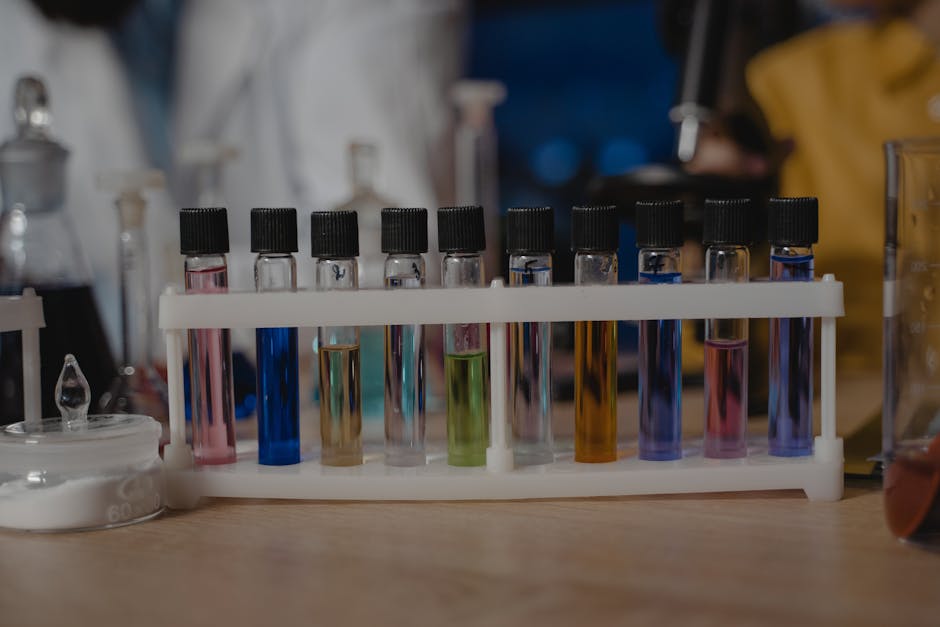
Photo by Tima Miroshnichenko on Pexels
We use specific chemical reactions to identify different types of carbohydrates. These tests often involve color changes.
graph TD
    A["Begin Carbohydrate Test"] --> B{Add Benedict's Reagent & Heat?};
    B -- Yes --> C{Color Change to Green/Orange/Red?};
    C -- Yes --> D["Reducing Sugars Present (Mono- & some Disaccharides)"];
    C -- No --> E["No Reducing Sugars"];
    B -- No --> F{Add Lugol's Iodine Solution?};
    F -- Yes --> G{Color Change to Blue/Black?};
    G -- Yes --> H["Starch Present (Polysaccharide)"];
    G -- No --> I["No Starch"];
-
Benedict's Test (for Reducing Sugars):
- Purpose: Detects the presence of "reducing sugars" – sugars that have a free aldehyde or ketone group, which can donate electrons. Most monosaccharides (glucose, fructose, galactose) and some disaccharides (lactose, maltose) are reducing sugars. Sucrose is not a reducing sugar.
- Procedure: Add Benedict's reagent to the sample and heat it in a boiling water bath for a few minutes.
- Positive Result: Color changes from blue to green, yellow, orange, or brick-red precipitate. The color intensity indicates the concentration – more sugar, more red.
- Negative Result: Remains blue.
-
Lugol's Iodine Test (for Starch):
- Purpose: Detects the presence of starch (a polysaccharide). Iodine molecules get trapped within the coiled structure of starch molecules.
- Procedure: Add a few drops of Lugol's iodine solution directly to the sample.
- Positive Result: Color changes from yellow-brown to dark blue or black.
- Negative Result: Remains yellow-brown.
3. Worked Example
Let's say you have three unknown solutions, labeled A, B, and C, and you want to identify which contains glucose, which contains starch, and which is just water.
Step 1: Benedict's Test
* Take 2 mL of solution A, B, and C into separate test tubes.
* Add 1 mL of Benedict's reagent to each.
* Heat all three test tubes in a boiling water bath for 5 minutes.
* Observation:
* Tube A turns brick-red.
* Tube B remains blue.
* Tube C remains blue.
* Conclusion: Solution A contains a reducing sugar (like glucose). Solutions B and C do not.
Step 2: Lugol's Iodine Test
* Take 2 mL of solution B and C into separate clean test tubes (since A tested positive for reducing sugar, we don't need to test it for starch if we assume only one type of carb per solution).
* Add 3 drops of Lugol's iodine solution to each.
* Observation:
* Tube B turns dark blue/black.
* Tube C remains yellow-brown.
* Conclusion: Solution B contains starch. Solution C contains neither a reducing sugar nor starch, so it's likely water.
Final Identification:
* Solution A: Glucose
* Solution B: Starch
* Solution C: Water
4. Key Takeaways
- Carbohydrates are classified into monosaccharides, disaccharides, and polysaccharides based on their complexity.
- Monosaccharides (like glucose) are single sugar units, disaccharides (like sucrose) are two units, and polysaccharides (like starch) are many units.
- Carbohydrates are vital for energy storage and structural support in living organisms.
- Benedict's test identifies reducing sugars (most monosaccharides and some disaccharides) by a color change from blue to green/orange/red upon heating.
- Lugol's iodine test identifies starch by a color change from yellow-brown to dark blue/black.
- Not all carbohydrates are sweet; polysaccharides like cellulose are not.
- Your body cannot digest all types of carbohydrates (e.g., cellulose).
Common Mistakes to Avoid:
- Forgetting to heat the samples for Benedict's test; you won't get a positive result without heat.
- Confusing the colors: remember blue for negative Benedict's, yellow-brown for negative iodine.
- Assuming all sugars are reducing sugars; sucrose is a common exception.
- Using Lugol's iodine for simple sugars or Benedict's for starch; they're specific tests.
5. Now Try It
Imagine you have an unknown food sample, like a piece of apple. Design an experimental plan to determine if it contains reducing sugars and/or starch. List the materials you'd need, the step-by-step procedure for each test, and what you'd expect to observe if both are present in the apple. What would a positive result for each test look like for an apple?
Frequently asked about Carbohydrates: Structure, Function, and Chemical Testing
More from Biology Lab
Get the full Biology Lab curriculum
Clone the complete plan to your dashboard for unlimited AI-generated notes, practice quizzes, and a personalised revision schedule.
Create Free Account