Introduction to Options Contracts
From the Options, derivatives, futures and forwards curriculum
TL;DR
Options contracts give you the right, but not the obligation, to buy or sell an underlying asset at a specific price by a certain date. You pay a premium for this flexibility, which can be a powerful tool for speculation or hedging. Understanding calls and puts is crucial to grasping how options work.
1. The Mental Model
Think of an option like a reservation. You pay a small fee to reserve the right to buy or sell something valuable later at a set price, but you don't have to go through with it if the price isn't right. This reservation expires if you don't use it.
2. The Core Material
Options are financial derivatives whose value is derived from an underlying asset, like a stock, commodity, or index. They're contracts between two parties: a buyer and a seller.
What are Call Options?
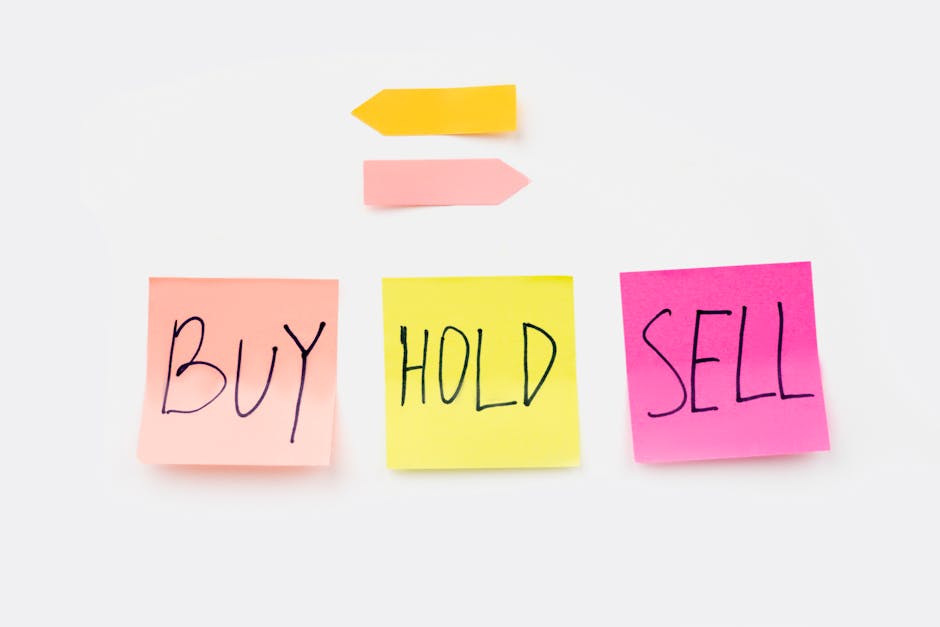
Photo by Hanna Pad on Pexels
A call option gives the buyer the right to buy the underlying asset at a pre-determined price (called the strike price) on or before a specific date (the expiration date). The buyer pays a fee, called the premium, to the seller (or "writer") for this right.
- Why buy a call? You buy a call if you believe the underlying asset's price will go up significantly.
- Why sell (write) a call? You sell a call if you believe the asset's price will stay flat or go down, or if you want to earn income from the premium.
What are Put Options?
Photo by Hanna Pad on Pexels
A put option gives the buyer the right to sell the underlying asset at the strike price on or before the expiration date. Again, the buyer pays a premium to the seller for this right.
- Why buy a put? You buy a put if you believe the underlying asset's price will go down significantly. Puts are often used for hedging against price drops.
- Why sell (write) a put? You sell a put if you believe the asset's price will stay flat or go up, or if you want to earn income from the premium.
Key Terms You'll See
Photo by RDNE Stock project on Pexels
- Underlying Asset: The stock, commodity, or index that the option contract is based on (e.g., Apple stock, crude oil).
- Strike Price: The fixed price at which the underlying asset can be bought (for a call) or sold (for a put).
- Expiration Date: The date after which the option contract is no longer valid. Options can be American-style (exercisable any time before or on expiration) or European-style (exercisable only on the expiration date). Most stock options are American-style.
- Premium: The price you pay (as a buyer) or receive (as a seller) for the option contract. This is determined by factors like the underlying price, strike price, time to expiration, and volatility.
- In the Money (ITM):
- For a call: Underlying price > Strike price.
- For a put: Underlying price < Strike price.
- Out of the Money (OTM):
- For a call: Underlying price < Strike price.
- For a put: Underlying price > Strike price.
- At the Money (ATM): Underlying price ≈ Strike price.
Here's a breakdown of the core mechanics:
graph TD
    A["Options Contract"] --> B{Type of Option?};
    B -- "Call Option" --> C["Right to BUY"];
    C --> D["At Strike Price"];
    D --> E["By Expiration Date"];
    E --> F["You pay a Premium (Buyer)"];
    E --> G["You receive a Premium (Seller)"];

    B -- "Put Option" --> H["Right to SELL"];
    H --> D;
    D --> E;
    E --> F;
    E --> G;

    F --> I["(Buyer's potential unlimited gain, limited loss)"];
    G --> J["(Seller's limited gain, potential unlimited loss)"];
3. Worked Example
Let's say you're looking at Tesla (TSLA) stock, currently trading at \$200.
You believe TSLA is going to jump soon. You decide to buy a call option.
- Underlying Asset: TSLA
- Current Stock Price: \$200
- Call Option Details:
- Strike Price: \$210
- Expiration Date: 1 month from now
- Premium: \$5.00 per share (remember, one option contract usually represents 100 shares, so the total cost is \$5.00 * 100 = \$500).
Scenario 1: TSLA stock goes up to \$230 by expiration.
- Your call option is in the money (\$230 > \$210 strike).
- You can exercise your right to buy 100 shares of TSLA for \$210 each, then immediately sell them in the market for \$230 each.
- Profit from exercise: (\$230 - \$210) * 100 shares = \$2,000.
- Net profit: \$2,000 (gain) - \$500 (premium paid) = \$1,500.
- Alternatively, you could just sell the call option itself before expiration for its higher value, capturing the profit without buying shares.
Scenario 2: TSLA stock stays at \$200 or goes down to \$190 by expiration.
- Your call option is out of the money (\$200 or \$190 < \$210 strike).
- It doesn't make sense to exercise your right to buy TSLA for \$210 when you can buy it cheaper (or at the same price) in the open market.
- Your option expires worthless.
- Your loss: The premium you paid, \$500. This is your maximum possible loss when buying an option.
4. Key Takeaways
- Options give you the right, but not the obligation, to act on an underlying asset.
- Buying a call option is a bet that the asset price will increase.
- Buying a put option is a bet that the asset price will decrease.
- The premium is the cost of buying an option and represents your maximum loss as an option buyer.
- Options contracts have a strike price and an expiration date that define their terms.
- Options sellers (writers) receive the premium but face potentially unlimited risk, especially when writing naked (uncovered) calls.
Common Mistakes to Avoid:
- Not understanding leverage: Options offer high leverage, meaning small price movements in the underlying can lead to large percentage gains or losses in the option's value.
- Ignoring time decay: Options lose value as they approach expiration, a concept called "theta decay," which works against option buyers.
- Overlooking volatility: High volatility increases option premiums, making them more expensive to buy and potentially more profitable to sell.
- Trading without a clear strategy: Don't just buy options hoping for a big move; have a specific reason (speculation, hedging) and a defined risk/reward.
5. Now Try It
Find a publicly traded company you're familiar with and look up its current stock price. Then, using an online options chain (most brokerage websites or financial news sites have them, e.g., Yahoo Finance, Google Finance), find an "in-the-money" call option and an "out-of-the-money" put option for that company, both expiring next month. Note down their strike prices and premiums.
What success looks like: You can clearly identify why the call is ITM (stock price > strike) and why the put is OTM (stock price > strike) based on the current stock price. You'll also understand the cost of buying each option (the premium).
Frequently asked about Introduction to Options Contracts
Study this next
Get the full Options, derivatives, futures and forwards curriculum
Clone the complete plan to your dashboard for unlimited AI-generated notes, practice quizzes, and a personalised revision schedule.
Save this course free