Introduction to Derivatives and Financial Markets
From the Options, derivatives, futures and forwards curriculum
TL;DR
Derivatives are financial contracts whose value comes from an underlying asset, allowing you to speculate on or hedge against future price movements. They're traded in financial markets, which provide the platforms and rules for buying and selling assets. Understanding these basics is crucial for navigating the world of options, futures, and forwards.
1. The Mental Model
Think of a derivative as a side bet or an insurance policy on something else. You're not directly buying the "thing," but rather a contract related to its future price. Financial markets are simply the organized playgrounds where these bets and policies are made.
2. The Core Material
Financial markets are places where financial assets can be bought and sold. They're essential for the global economy, providing liquidity, price discovery, and a way for businesses to raise capital and for individuals to invest.
Types of Financial Markets
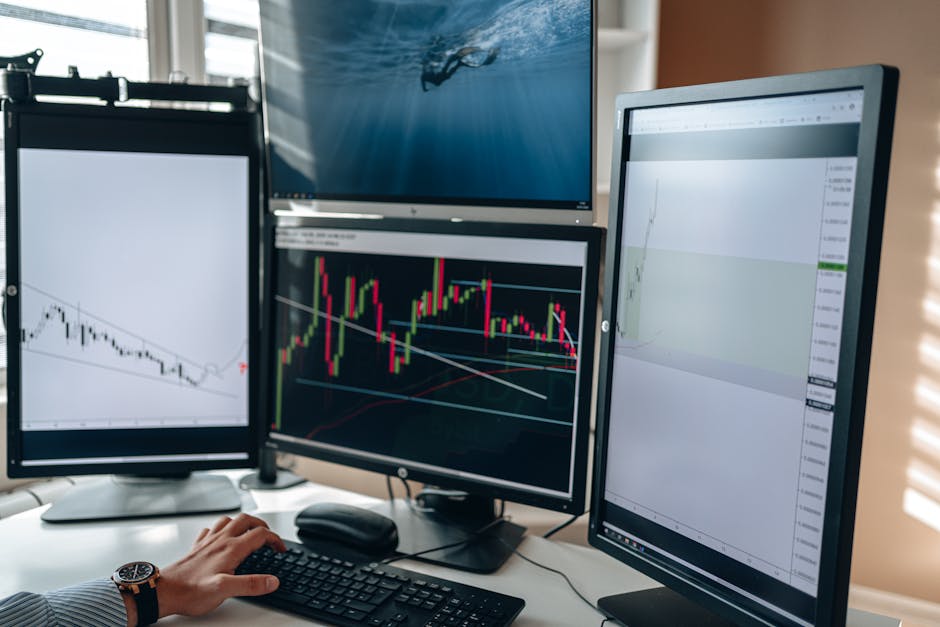
Photo by AlphaTradeZone on Pexels
You'll encounter several types of markets:
- Stock Markets: Where company shares (equities) are traded.
- Bond Markets: Where debt securities (bonds) are traded.
- Commodity Markets: For raw materials like oil, gold, and agricultural products.
- Foreign Exchange (Forex) Markets: For trading currencies.
- Derivatives Markets: Our focus here, where derivatives contracts are traded.
What are Derivatives?

Photo by Rômulo Queiroz on Pexels
A derivative is a financial contract that gets its value from an underlying asset or group of assets. These underlying assets can be stocks, bonds, commodities, currencies, interest rates, or even market indexes. You don't own the underlying asset itself; you own a contract that obligates or gives you the right to buy or sell that asset at a specific price on or before a certain date.
The main reasons people use derivatives are:
- Hedging: To reduce risk. For example, a farmer might use a derivative to lock in a price for their crop to protect against future price drops.
- Speculation: To profit from anticipated price movements. If you think a stock price will go up, you might buy a derivative that gains value when the stock goes up.
Key Characteristics of Derivatives
Photo by Rômulo Queiroz on Pexels
- Underlying Asset: The asset from which the derivative's value is derived.
- Expiration Date: The date when the contract ceases to exist or must be exercised.
- Strike Price (or Exercise Price): The predetermined price at which the underlying asset can be bought or sold.
- Leverage: Derivatives often involve leverage, meaning a small price movement in the underlying asset can lead to a much larger percentage gain or loss in the derivative contract. This can amplify both profits and losses.
Here's how the flow of a derivative's value generally works:
graph TD
    A["Underlying Asset (e.g., Stock Price)"] --> B["External Market Factors (e.g., Interest Rates, Volatility)"]
    B --> C["Derivative Contract Valuation Model"]
    A --> C
    C --> D["Derivative Contract Price"]
    D --> E["Market Trading (Buy/Sell)"]
    E --> F["Profit/Loss for Trader"]
Common Types of Derivatives
Photo by Rômulo Queiroz on Pexels
While we'll dive deeper later, here are the main categories:
- Forwards: A customized contract between two parties to buy or sell an asset at a specified price on a future date. They are over-the-counter (OTC), meaning they're not traded on an exchange.
- Futures: Similar to forwards but standardized and traded on an exchange. This means they have greater liquidity and less counterparty risk.
- Options: Give the buyer the right, but not the obligation, to buy (call option) or sell (put option) an underlying asset at a specified price on or before a certain date. The seller of the option has the obligation.
- Swaps: Contracts to exchange cash flows between two parties. Common types include interest rate swaps and currency swaps.
Financial Market Participants
Many different players interact in financial markets:
- Investors: Individuals or institutions buying assets with the expectation of future returns.
- Speculators: Take on higher risk hoping for significant returns, often over shorter timeframes.
- Hedgers: Use financial instruments to reduce their exposure to risk.
- Arbitrageurs: Seek to profit from price differences of the same asset in different markets.
- Brokers: Facilitate trades between buyers and sellers.
- Exchanges: Provide regulated platforms for trading.
3. Worked Example
Let's imagine you're a coffee shop owner, "Café Calm," and you're worried about the price of coffee beans rising dramatically in six months. You need 1,000 pounds of beans.
Scenario: Today, coffee beans cost \$2.00 per pound. You're afraid they might go up to \$3.00 or even \$4.00 per pound by the time you need to buy them.
Derivative Solution: You decide to enter into a forward contract with a coffee supplier.
- Underlying Asset: Coffee beans
- Quantity: 1,000 pounds
- Forward Price (Strike Price): \$2.10 per pound
- Delivery Date (Expiration Date): Six months from now
Outcome in Six Months:
-
Case 1: Coffee beans are selling for \$2.50 per pound in the spot market.
You still pay \$2.10 per pound to your supplier because of the forward contract. You save \$0.40 per pound compared to the market price (\$2.50 - \$2.10). Total savings: \$0.40/lb * 1,000 lbs = \$400. You successfully hedged against the price increase. -
Case 2: Coffee beans are selling for \$1.80 per pound in the spot market.
You still pay \$2.10 per pound because of the forward contract. You effectively pay \$0.30 per pound more than the market price (\$2.10 - \$1.80). Total "loss" (or cost of hedging): \$0.30/lb * 1,000 lbs = \$300. In this case, your hedge protected you from a potential loss but also prevented you from benefiting from the price drop. This is the "cost" of your price certainty.
This simple forward contract allowed you to lock in your future cost for coffee beans, providing certainty for your business's budgeting.
4. Key Takeaways
- Derivatives are contracts whose value is derived from an underlying asset.
- They are primarily used for hedging (reducing risk) or speculation (profiting from price movements).
- Financial markets provide the infrastructure for trading various assets, including derivatives.
- Forwards are customized, OTC contracts, while futures are standardized and exchange-traded.
- Options give the buyer the right, but not the obligation, to act on the underlying asset.
- Leverage is a key characteristic of derivatives, amplifying both gains and losses.
Common Mistakes to Avoid:
- Don't confuse owning a derivative with owning the underlying asset itself.
- Never underestimate the impact of leverage; it can lead to rapid and significant losses.
- Don't use derivatives for speculation without thoroughly understanding the risks involved.
- Don't forget that derivatives have expiration dates; their value changes as time passes.
5. Now Try It
Think of a real-world company or individual that might use a derivative. Describe the underlying asset, the risk they face, and which type of derivative (forward, future, or option) they might use and why. What would be the benefit to them? (15 minutes max)
Frequently asked about Introduction to Derivatives and Financial Markets
Study this next
Get the full Options, derivatives, futures and forwards curriculum
Clone the complete plan to your dashboard for unlimited AI-generated notes, practice quizzes, and a personalised revision schedule.
Save this course free