Membrana Plasmática y Pared Celular
From the CELULA EUCARIOTA curriculum
Membrana Plasmática y Pared Celular
TL;DR
The plasma membrane is a flexible, selective barrier controlling what enters and exits the cell. It's mainly made of lipids and proteins that give it structure and function. Plant, fungi, and bacteria cells also have a rigid cell wall outside the membrane for protection and support.
1. The Mental Model
Think of your cell as a house. The plasma membrane is like the walls and doors, deciding who gets in and out. If your house is in a tough neighborhood, it might also have a strong fence or security gate outside – that's the cell wall.
2. The Core Material
Every eukaryotic cell has a plasma membrane, a super important structure that separates the inside of the cell from its environment. It's not just a simple boundary; it's an active participant in many cellular processes.
The plasma membrane is described by the fluid mosaic model. Imagine a sea of lipids (fats) where various proteins are floating, some embedded, some spanning the whole thing, and some just attached to the surface. This "fluid" nature means components can move around, and the "mosaic" refers to the pattern of proteins within the lipid bilayer.
Composition of the Plasma Membrane

Photo by Monstera Production on Pexels
-
Lípidos (Lipids): The main component. They form a bilayer, meaning two layers arranged tail-to-tail.
- Fosfolípidos (Phospholipids): These are the most abundant. They have a "hydrophilic" (water-loving) head and "hydrophobic" (water-fearing) tails. In the bilayer, the heads face outward towards the watery environment (inside and outside the cell), and the tails face inward, avoiding water. This arrangement forms a barrier.
- Colesterol (Cholesterol): Found only in animal cells, it helps maintain the membrane's fluidity and stability, preventing it from becoming too rigid or too fluid at different temperatures.
- Glucolípidos (Glycolipids): Lipids with attached sugar chains, important for cell recognition.
-
Proteínas (Proteins): These are the workhorses of the membrane, giving it most of its functions.
- Proteínas Integrales (Integral Proteins): These are embedded within the lipid bilayer, sometimes even spanning the entire membrane (transmembrane proteins). They're involved in transport, signaling, and adhesion.
- Proteínas Periféricas (Peripheral Proteins): These are loosely attached to the surface of the membrane, either on the inside or outside. They often participate in cell signaling or act as enzymes.
-
Carbohidratos (Carbohydrates): Often found attached to proteins (glycoproteins) or lipids (glycolipids) on the outer surface of the plasma membrane. They form the glucocálix (glycocalyx), which is crucial for cell-cell recognition, adhesion, and protection.
Functions of the Plasma Membrane
Photo by Monstera Production on Pexels
- Barrera Selectiva (Selective Barrier): It controls what goes in and out of the cell. Small, nonpolar molecules (like O2, CO2) can pass directly, while larger or charged molecules need help.
- Comunicación Celular (Cell Communication): Receptors on the membrane bind to signaling molecules, allowing cells to talk to each other.
- Adhesión Celular (Cell Adhesion): Helps cells stick together to form tissues.
- Transporte (Transport): Moves substances across the membrane.
graph LR
    A["Membrana Plasmática"] --> B["Composición"]
    B --> B1["Lípidos"]
    B1 --> B1a["Fosfolípidos (bilayer)"]
    B1 --> B1b["Colesterol (animales)"]
    B1 --> B1c["Glucolípidos"]
    B --> B2["Proteínas"]
    B2 --> B2a["Integrales (transmembrana)"]
    B2 --> B2b["Periféricas"]
    B --> B3["Carbohidratos (Glucocálix)"]

    A --> C["Funciones"]
    C --> C1["Barrera Selectiva"]
    C --> C2["Comunicación Celular"]
    C --> C3["Adhesión Celular"]
    C --> C4["Transporte"]
Pared Celular (Cell Wall)
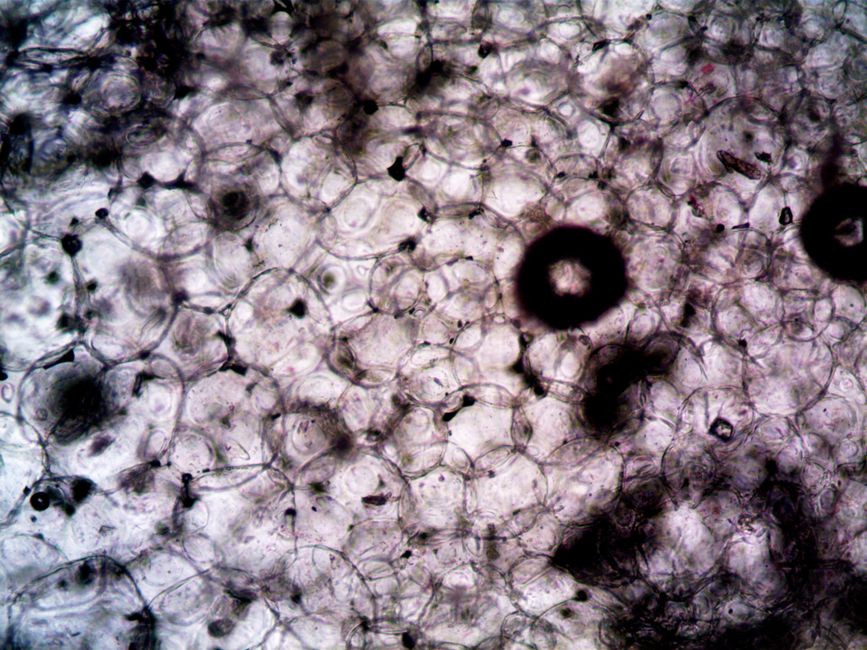
Photo by turek on Pexels
While all eukaryotic cells have a plasma membrane, only some (plants, fungi, and some protists) also have a cell wall. This is an additional, rigid layer located outside the plasma membrane. It's not found in animal cells.
Composition of the Cell Wall
Photo by turek on Pexels
- Plantas (Plants): Primarily made of celulosa (cellulose), a complex carbohydrate. This gives plant cells their incredible strength and structure.
- Hongos (Fungi): Mainly composed of quitina (chitin), another strong polysaccharide.
- Bacterias (Bacteria): Made of peptidoglicano (peptidoglycan). (Remember, bacteria are prokaryotes, but it's useful to know their cell wall component too!)
Functions of the Cell Wall
- Soporte Estructural (Structural Support): Provides rigidity, helping the cell maintain its shape.
- Protección (Protection): Shields the cell from physical stress and pathogens.
- Evita Lisis (Prevents Lysis): Stops the cell from bursting when it takes in too much water (osmotic lysis).
3. Worked Example
Imagine a plant cell in a very watery environment. The plasma membrane allows water to enter due to osmosis. Without a cell wall, the cell would swell and eventually burst (lyse), like an overfilled balloon. However, the rigid cellulose cell wall acts like a strong outer casing. It prevents the plasma membrane from expanding too much, pushing back against the incoming water and maintaining the cell's turgor pressure. This pressure is what keeps plants firm and upright. If a plant cell were in a very salty environment, water would leave the cell, and the plasma membrane would pull away from the cell wall, causing the plant to wilt. The wall still maintains the overall shape, but the internal pressure is lost.
4. Key Takeaways
- The plasma membrane is a fluid mosaic of phospholipids, cholesterol, proteins, and carbohydrates.
- Phospholipids form a bilayer with hydrophilic heads and hydrophobic tails.
- Proteins in the membrane carry out most of its specific functions like transport and signaling.
- The glycocalyx (carbohydrates on the outer surface) is vital for cell recognition.
- The plasma membrane acts as a selective barrier, controlling what enters and leaves the cell.
- A cell wall is an external, rigid layer found in plants (cellulose) and fungi (chitin).
- The cell wall provides structural support, protection, and prevents lysis.
Common Mistakes to Avoid:
- Confusing the cell wall with the plasma membrane; they are distinct layers.
- Assuming all cells have a cell wall (animal cells don't).
- Thinking the plasma membrane is a static, rigid structure; it's fluid!
- Forgetting that cholesterol is only in animal cell membranes.
5. Now Try It
Draw a simple diagram of a plant cell, clearly labeling the plasma membrane and the cell wall. Then, describe in 2-3 sentences how these two structures work together to allow the plant cell to absorb water without bursting.
Success looks like: A diagram showing the cell wall as an outer, rigid layer and the plasma membrane as an inner, flexible layer. Your description should mention the plasma membrane's selective permeability for water and the cell wall's role in providing structural support to counteract osmotic pressure.
Frequently asked about Membrana Plasmática y Pared Celular
Study this next
Get the full CELULA EUCARIOTA curriculum
Clone the complete plan to your dashboard for unlimited AI-generated notes, practice quizzes, and a personalised revision schedule.
Create Free Account