Introduction to the Skeletal System: Bone Classification and Anatomy
From the A&P Exam 3 curriculum
TL;DR
Your skeletal system provides crucial support, protection, and allows for movement. Bones are categorized into five main types based on their shape. Each bone has specific anatomical features that are important for its function.
1. The Mental Model
Think of your skeleton as your body's internal scaffolding. It gives you shape, shields delicate organs, and acts as leverage for your muscles to move you around. Understanding bone types and parts helps you see how these functions are achieved.
2. The Core Material
When we talk about your bones, it's helpful to categorize them first. We classify bones into five main types based on their shape. This classification helps us understand their general function.
Bone Classification
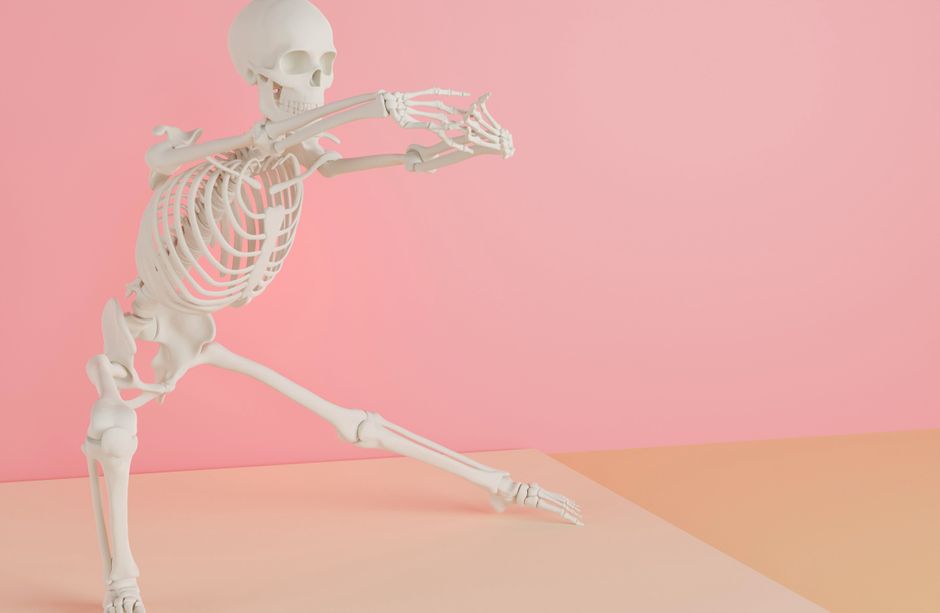
Photo by dada _design on Pexels
- Long Bones: These are longer than they are wide. They have a shaft (diaphysis) and two ends (epiphyses). They're primarily involved in movement and support.
- Examples: Femur (thigh bone), humerus (upper arm bone), phalanges (finger and toe bones).
- Short Bones: Roughly cube-shaped, having equal length, width, and thickness. They provide stability and some movement.
- Examples: Carpals (wrist bones), tarsals (ankle bones).
- Flat Bones: Thin, flattened, and usually a bit curved. They offer protection and broad surfaces for muscle attachment.
- Examples: Cranial bones (skull), scapulae (shoulder blades), sternum (breastbone), ribs.
- Irregular Bones: Don't fit into the other categories due to their complex shapes. They often perform specialized functions like protection or support.
- Examples: Vertebrae (spinal bones), sacrum, hip bones.
- Sesamoid Bones: Small, round bones embedded within tendons. They reduce friction and modify the direction of pull of a tendon. They vary in number between people.
- Examples: Patella (kneecap) – the largest sesamoid bone.
graph TD
    A["Bone Classification"] --> B["Long Bones"]
    A --> C["Short Bones"]
    A --> D["Flat Bones"]
    A --> E["Irregular Bones"]
    A --> F["Sesamoid Bones"]

    B --> B1["Longer than wide"]
    B --> B2["Shaft & two ends"]
    B --> B3["Movement, Support"]
    B1 --- B3
    B2 --- B3

    C --> C1["Cube-shaped"]
    C --> C2["Stability, Limited Movement"]

    D --> D1["Thin, Flat, Curved"]
    D --> D2["Protection, Muscle Attachment"]

    E --> E1["Complex, Varied Shape"]
    E --> E2["Specialized Functions"]

    F --> F1["Small, Round, in Tendons"]
    F --> F2["Reduce Friction, Modify Tendon Pull"]
Gross Anatomy of a Long Bone

Photo by cottonbro studio on Pexels
Let's look at a typical long bone, like the femur, to understand common anatomical terms:
- Diaphysis: This is the main, long shaft of the bone. It's made of compact bone and surrounds the medullary cavity.
- Epiphysis (plural: epiphyses): These are the two ends of the bone. Each epiphysis is covered with articular cartilage for joint movement and is primarily made of spongy bone.
- Epiphyseal Plate (Growth Plate): In growing bones, this is a disc of hyaline cartilage between the diaphysis and epiphysis. It's where longitudinal bone growth occurs. Once you're done growing, it becomes the epiphyseal line.
- Articular Cartilage: A thin layer of hyaline cartilage covering the joint surface of each epiphysis. It reduces friction and absorbs shock.
- Periosteum: A tough, fibrous membrane covering the outer surface of the diaphysis and parts of the epiphyses not covered by articular cartilage. It contains blood vessels, nerves, and bone-forming cells (osteoblasts). It's crucial for bone growth, repair, and nutrition.
- Endosteum: A thin membrane lining the internal surfaces of the bone, including the medullary cavity. It also contains osteoblasts and osteoclasts (bone-resorbing cells).
- Medullary Cavity (Marrow Cavity): The hollow cylindrical space within the diaphysis. In adults, it contains yellow bone marrow (fat storage). In children, it contains red bone marrow (blood cell formation).
- Compact Bone: Dense, hard bone tissue found in the diaphysis and forming the outer layer of all bones. It provides strength and protection.
- Spongy Bone (Cancellous Bone): Lighter, less dense bone tissue found in the epiphyses and within flat, short, and irregular bones. It contains trabeculae (tiny bone spicules) and houses red bone marrow.
3. Worked Example
Imagine you're handed a bone and asked to identify its classification and two key features.
Let's say it's a vertebra.
- Classification: You notice its very complex, irregular shape with several processes and arches. It definitely doesn't fit the long, short, or flat categories. This makes it an irregular bone.
- Key Features:
- You can clearly see a large opening in the middle, the vertebral foramen, which houses the spinal cord. This is a common feature in irregular bones to protect vital structures.
- You also observe surfaces covered with cartilage where it would articulate with other vertebrae, indicating articular processes that form part of spinal joints.
4. Key Takeaways
- Bones are classified into five main types: long, short, flat, irregular, and sesamoid.
- Long bones have a diaphysis (shaft) and epiphyses (ends), playing a key role in movement.
- The periosteum is an outer membrane vital for bone growth and repair, while the endosteum lines internal cavities.
- The medullary cavity of long bones stores marrow, either yellow (fat) or red (blood cell production).
- Articular cartilage covers joint surfaces to reduce friction and absorb shock.
Common mistakes to avoid:
- Don't confuse the epiphyseal plate (growth plate) with the epiphyseal line (adult remnant).
- Remember the patella is a sesamoid bone, not a short bone, because it's embedded within a tendon.
- Don't think all bones contain red marrow; in adults, it's concentrated in specific areas like flat bones and epiphyses of some long bones.
- Avoid thinking compact bone is only for strength; it also forms the outer protective layer of all bones.
5. Now Try It
Pick up an everyday object (like a ruler for a long bone, a dice for a short bone, or a plate for a flat bone). Now, imagine that object is a real bone. Point to where you would expect to find the periosteum, epiphyseal ends (if applicable), and where the medullary cavity would be. Think about what forces that "bone" would experience and how its shape helps it. Success means you can correctly identify at least two anatomical features on each imagined bone type.
Frequently asked about Introduction to the Skeletal System: Bone Classification and Anatomy
Study this next
Get the full A&P Exam 3 curriculum
Clone the complete plan to your dashboard for unlimited AI-generated notes, practice quizzes, and a personalised revision schedule.
Save this course free