Introduction to the Skeletal System: Bone Classification and Gross Anatomy
TL;DR
Your skeletal system provides crucial support, protection, and allows for movement. Bones are categorized into five main types based on their shape. Each bone has specific anatomical features that are important for its function.
1. The Mental Model
Think of your skeleton as your body's internal scaffolding. It gives you shape, shields delicate organs, and acts as leverage for your muscles to move you around. Understanding bone types and parts helps you see how these functions are achieved.
2. The Core Material
When we talk about your bones, it's helpful to categorize them first. We classify bones into five main types based on their shape. This classification helps us understand their general function.
Bone Classification

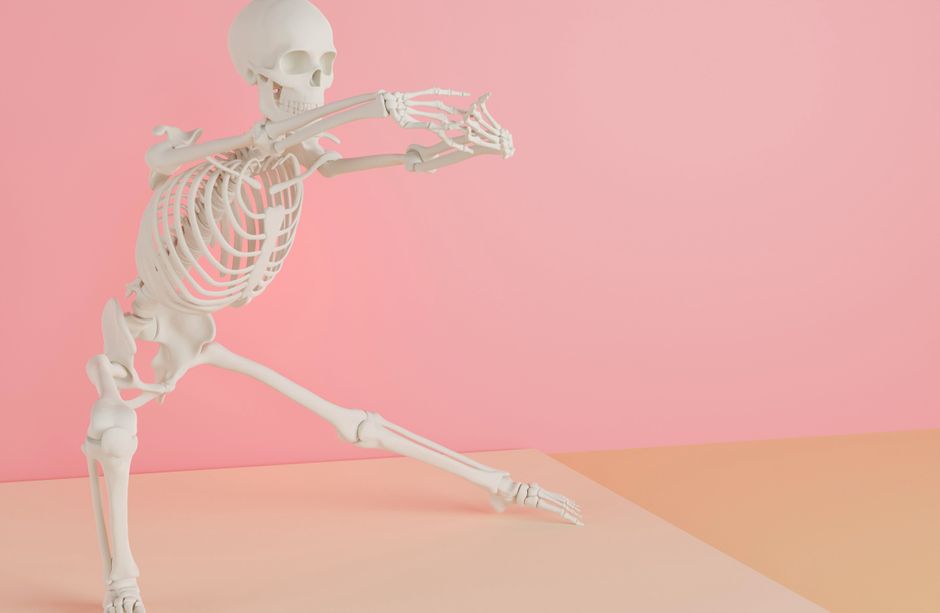
Photo by dada _design on Pexels
- Long Bones: These are longer than they are wide. They have a shaft (diaphysis) and two ends (epiphyses). They're primarily involved in movement and support.
- Examples: Femur (thigh bone), humerus (upper arm bone), phalanges (finger and toe bones).
- Short Bones: Roughly cube-shaped, having equal length, width, and thickness. They provide stability and some movement.
- Examples: Carpals (wrist bones), tarsals (ankle bones).
- Flat Bones: Thin, flattened, and usually a bit curved. They offer protection and broad surfaces for muscle attachment.
- Examples: Cranial bones (skull), scapulae (shoulder blades), sternum (breastbone), ribs.
- Irregular Bones: Don't fit into the other categories due to their complex shapes. They often perform specialized functions like protection or support.
- Examples: Vertebrae (spinal bones), sacrum, hip bones.
- Sesamoid Bones: Small, round bones embedded within tendons. They reduce friction and modify the direction of pull of a tendon. They vary in number between people.
- Examples: Patella (kneecap) – the largest sesamoid bone.
```mermaid
graph TD
A["Bone Classification"] --> B["Long Bones"]
A --> C["Short Bones"]
A --> D["Flat Bones"]
A -