Grammar Foundations & Verb Tenses Review
From the French curriculum
Grammar Foundations & Verb Tenses Review
TL;DR
French grammar builds on understanding word types and how they relate to each other in sentences. Verbs are the action words, and their endings change based on who is doing the action and when it happens. Mastering the most common tenses lets you express when things occur accurately.
1. The Mental Model
Think of French grammar as a set of LEGO bricks. Nouns, verbs, adjectives, and pronouns are the different shapes. Tenses are how you snap the verb bricks together to show "when" an action happens, changing their form to fit the sentence's meaning.
2. The Core Material
French, like English, relies on different parts of speech working together.
Identifying Parts of Speech
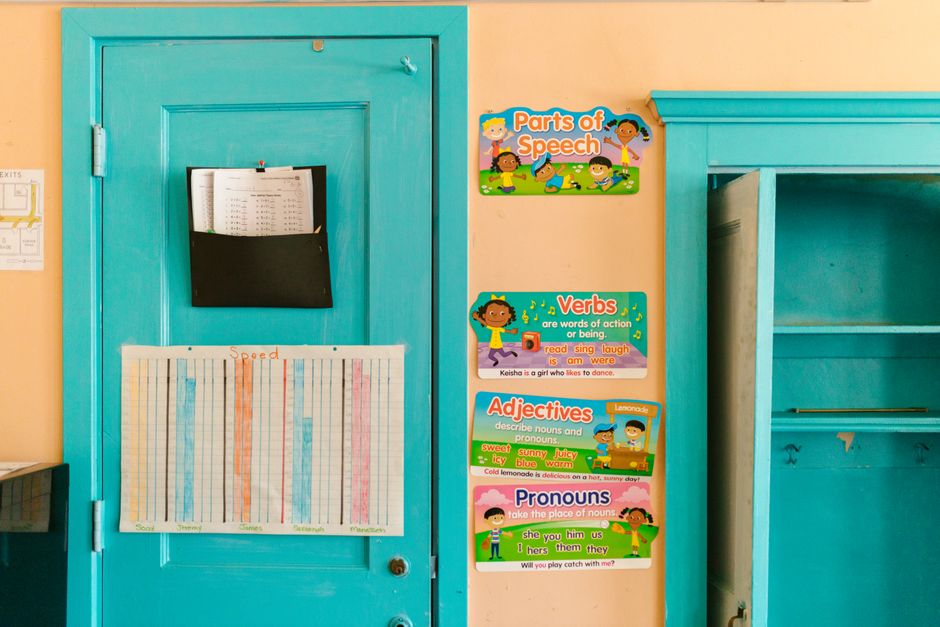
Photo by RDNE Stock project on Pexels
- Nouns (Noms): People, places, things, ideas (e.g., le livre - the book, Paris - Paris). They often have a gender (masculine/feminine) and a number (singular/plural).
- Articles (Articles): Little words that go with nouns (e.g., un/une - a/an, le/la/les - the). They match the noun's gender and number.
- Adjectives (Adjectifs): Describe nouns (e.g., grand - tall, belle - beautiful). They also agree in gender and number with the noun they describe.
- Pronouns (Pronoms): Replace nouns (e.g., je - I, il - he, elle - she, nous - we, vous - you, ils/elles - they).
- Verbs (Verbes): Express actions or states of being (e.g., parler - to speak, être - to be, avoir - to have). This is where conjugation comes in.
Verb Conjugation Basics

Photo by Brett Jordan on Pexels
Verbs change their endings based on:
1. Subject Pronoun: Who is doing the action (e.g., je, tu, il/elle/on, nous, vous, ils/elles).
2. Tense: When the action happens (e.g., present, past, future).
Let's look at the most common tenses you'll use:
graph TD
    Start["Verb (Infinitive)"] --> TenseChoice{{"Choose Tense"}}
    TenseChoice --> Present[Present Tense]
    TenseChoice --> PasséComposé[Passé Composé (Past)]
    TenseChoice --> FuturSimple[Futur Simple (Future)]
    TenseChoice --> Imparfait[Imparfait (Ongoing Past)]

    Present --> RegularPresent[Regular (-er, -ir, -re) Rules]
    Present --> IrregularPresent[Irregular Verb Conjugations]

    PasséComposé --> AuxVerb[Auxiliary Verb (avoir/être) in Present]
    PasséComposé --> PastParticiple[Past Participle of Main Verb]
    AuxVerb & PastParticiple --> PCFormation["Subject + Aux Verb + Past Participle"]
    PastParticiple --> AgreementRule{"Past Participle Agreement (with être)"}

    FuturSimple --> InfinitiveStem[Infinitive (or Irregular Stem)]
    FuturSimple --> FutureEndings[Future Endings (ai, as, a, ons, ez, ont)]
    InfinitiveStem & FutureEndings --> FSFormation["Subject + Stem + Endings"]

    Imparfait --> NousForm[Take 'nous' form of Present Tense]
    Imparfait --> DropONS[Drop '-ons' ending]
    Imparfait --> ImparfaitEndings[Add Imparfait Endings (ais, ais, ait, ions, iez, aient)]
    NousForm & DropONS & ImparfaitEndings --> IMFormation["Subject + Stem + Endings"]

    PCFormation --> End
    FSFormation --> End
    IMFormation --> End
    RegularPresent --> End
    IrregularPresent --> End
Key Tenses Explained:

Photo by Thirdman on Pexels
a) Le Présent (The Present Tense)
Used for actions happening now, habits, or general truths.
* -er verbs (e.g., parler - to speak):
* je parle
* tu parl**es
* il/elle/on parle
* nous parl**ons
* vous parlez
* ils/elles parl**ent
* -ir verbs (e.g., finir - to finish):
* je finis
* tu fin**is
* il/elle/on finit
* nous fin**issons
* vous finissez
* ils/elles fin**issent
* -re verbs (e.g., vendre - to sell):
* je vends
* tu vend**s
* il/elle/on vend
* nous vend**ons
* vous vendez
* ils/elles vend**ent
* Irregular Verbs: Être (to be) and Avoir (to have) are crucial:
* Être: je suis, tu es, il est, nous sommes, vous êtes, ils sont
* Avoir: j'ai, tu as, il a, nous avons, vous avez, ils ont
b) Le Passé Composé (The Past Tense - "Compound Past")
Used for completed actions in the past. It's like "I have eaten" or "I ate."
It's formed with an auxiliary verb (avoir or être) in the present tense + the main verb's past participle.
- Most verbs use avoir:
- J'ai parlé. (I spoke / I have spoken.)
- Tu as mangé. (You ate / You have eaten.)
- Verbs of movement/state of being use être (e.g., aller - to go, venir - to come, partir - to leave):
- Je suis allé(e). (I went / I have gone.)
- Crucial: When être is used, the past participle agrees in gender and number with the subject.
- Elle est allée** (She went)
- Nous sommes allés** (We went - if all male or mixed group)
- Elles sont allées** (They went - if all female)
c) L'Imparfait (The Imperfect Tense - "Ongoing Past")
Used for descriptions, habits, or ongoing actions in the past (e.g., "I used to play," "I was reading").
Formed by taking the "nous" form of the present tense, dropping the -ons, and adding these endings: -ais, -ais, -ait, -ions, -iez, -aient.
- Parler (nous parlons): je parlais, tu parl**ais, il parlait, nous parl**ions, vous parliez, ils parl**aient.
- Finir (nous finissons): je finissais**, etc.
- Vendre (nous vendons): je vendais**, etc.
d) Le Futur Simple (The Simple Future Tense)
Used for actions that will happen in the future.
Formed by taking the infinitive of the verb (or an irregular stem) and adding future endings: -ai, -as, -a, -ons, -ez, -ont.
- -er verbs (e.g., parler): je parlerai, tu parler**as, il parlera, nous parler**ons, vous parlerez, ils parler**ont.
- -ir verbs (e.g., finir): je finirai**, etc.
- -re verbs (e.g., vendre - drop the 'e'): je vendrai**, etc.
- Irregular Stems: être → ser- (je serai), avoir → aur- (j'aurai), aller → ir- (j'irai).
3. Worked Example
Let's take the verb "manger" (to eat) and conjugate it across our core tenses.
-
Présent (Present):
- Je mange une pomme. (I eat an apple / I am eating an apple.)
- Nous mangeons de la pizza. (We eat pizza / We are eating pizza.)
-
Passé Composé (Past - completed action):
- J'ai mangé hier soir. (I ate last night / I have eaten last night.)
- Elles ont mangé au restaurant. (They ate at the restaurant / They have eaten at the restaurant.)
-
Imparfait (Ongoing Past - description/habit):
- Quand j'étais petit, je mangeais beaucoup de bonbons. (When I was little, I used to eat a lot of candy.)
- Elle mangeait pendant que je parlais. (She was eating while I was speaking.)
-
Futur Simple (Future):
- Demain, je mangerai une salade. (Tomorrow, I will eat a salad.)
- Nous mangerons ensemble la semaine prochaine. (We will eat together next week.)
4. Key Takeaways
- French verbs change endings based on the subject (who) and the tense (when).
- The Présent tense covers actions happening now, habits, and general truths.
- The Passé Composé is for completed actions in the past, formed with avoir or être + past participle.
- The Imparfait describes ongoing actions, habits, or states in the past.
- The Futur Simple expresses future actions, typically by adding endings to the infinitive.
- Être and Avoir are essential irregular verbs you must know in all tenses.
- Remember past participle agreement when using être as an auxiliary verb in the passé composé.
Common Mistakes to Avoid

Photo by KATRIN BOLOVTSOVA on Pexels
- Forgetting to match article/adjective gender and number with the noun.
-
Confusing when to use avoir vs. être as the auxiliary verb for the passé composé.
Frequently asked about Grammar Foundations & Verb Tenses Review
Study this next
Get the full French curriculum
Clone the complete plan to your dashboard for unlimited AI-generated notes, practice quizzes, and a personalised revision schedule.
Create Free Account