Introduction to Matter and Hazards
From the b curriculum
Introduction to Matter and Hazards
TL;DR
Matter is anything that has mass and takes up space, existing in different states like solids, liquids, and gases. We classify matter to understand its properties and how it behaves. Understanding matter is crucial for identifying and managing its potential hazards, which are risks it poses to health or safety.
1. The Mental Model
Think of matter as "stuff" that's everywhere around you, from the air you breathe to the phone in your hand. We learn to sort this "stuff" by what it is and what it does, especially if it could be dangerous.
2. The Core Material
Matter is simply anything that has mass (how much "stuff" is in it) and volume (how much space it takes up). You can touch it, feel it, or at least detect its presence.
States of Matter
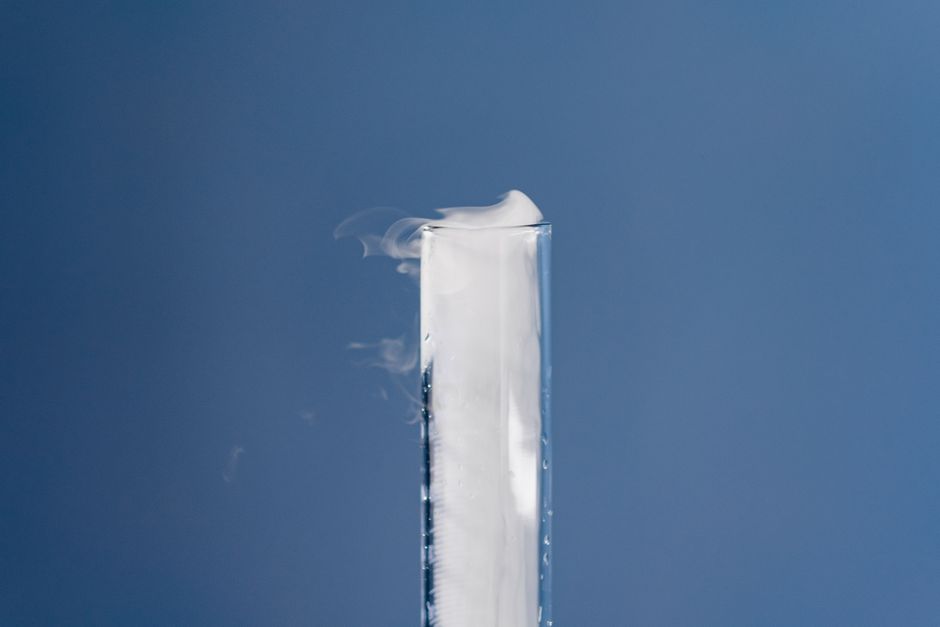
Photo by Ron Lach on Pexels
Matter commonly exists in three states you're probably very familiar with:
- Solids: Have a definite shape and volume. Their particles are tightly packed and vibrate in place (e.g., ice, a rock).
- Liquids: Have a definite volume but take the shape of their container. Their particles are close but can move past each other (e.g., water, oil).
- Gases: Have no definite shape or volume and expand to fill their container. Their particles are far apart and move randomly (e.g., air, steam).
Classifying Matter

Photo by Pixabay on Pexels
We can classify matter in a couple of important ways:
- Pure Substances:
- Elements: The simplest pure substances that can't be broken down further by chemical means (e.g., oxygen, gold).
- Compounds: Formed when two or more elements chemically combine in a fixed ratio (e.g., water (H₂O), salt (NaCl)).
- Mixtures:
- Homogeneous Mixtures: Uniform composition throughout; you can't see the different parts (e.g., saltwater, air).
- Heterogeneous Mixtures: Non-uniform composition; you can see the different parts (e.g., sand and water, salad).
What are Hazards?

Photo by Chris Brown on Pexels
In the context of matter, a hazard is any substance, item, or situation that has the potential to cause harm. It's about what could happen, not what will happen. Hazards can be:
- Physical: Like a flammable liquid that could catch fire.
- Chemical: Like an acid that could burn skin.
- Biological: Like bacteria that could cause illness.
Identifying hazards involves understanding the properties of the matter – for example, if a chemical is corrosive, toxic, or explosive.
graph TD
    A["Matter (Anything with mass & volume)"] --> B["Classification of Matter"]
    B --> C["Pure Substances"]
    B --> D["Mixtures"]
    C --> C1["Elements (e.g., Oxygen, Gold)"]
    C --> C2["Compounds (e.g., Water, Salt)"]
    D --> D1["Homogeneous Mixtures (Uniform; e.g., Air, Saltwater)"]
    D --> D2["Heterogeneous Mixtures (Non-uniform; e.g., Sand & Water)"]
    A --> E["Potential Hazards"]
    E --> E1["Physical Hazards (e.g., Flammability)"]
    E --> E2["Chemical Hazards (e.g., Corrosivity, Toxicity)"]
    E --> E3["Biological Hazards (e.g., Bacteria, Viruses)"]
3. Worked Example
Imagine you're in a lab and pick up a bottle labeled "Ethanol."
- Identify the Matter: Ethanol is a liquid. It's a compound (C₂H₅OH) made of carbon, hydrogen, and oxygen elements.
- Classify it: It's a pure substance, specifically a compound.
- Identify Potential Hazards:
- You notice a "flammable" symbol on the bottle. This means it's a physical hazard because it can easily catch fire.
- You might also know or look up that inhaling too much ethanol vapor can cause dizziness, making it a chemical hazard (toxicity).
- If you spilled it on your skin, it could dry it out, which is another mild chemical hazard (irritant).
By understanding its classification and properties, you've quickly identified several risks associated with handling ethanol.
4. Key Takeaways
- Matter is anything that takes up space and has mass, existing in states like solid, liquid, or gas.
- We classify matter as pure substances (elements, compounds) or mixtures (homogeneous, heterogeneous).
- Elements are the simplest form of matter; compounds are elements chemically combined.
- A hazard is anything that has the potential to cause harm, whether physical, chemical, or biological.
- Understanding matter's properties helps identify potential hazards associated with it.
- Always check labels and safety data sheets for hazard information before handling substances.
- Safe handling of matter depends on knowing its nature and its risks.
Common Mistakes to Avoid:
- Don't confuse "mass" with "weight"; mass is a measure of "stuff," while weight is the force of gravity on that stuff.
- Don't assume something safe just because it looks harmless; many hazards are invisible.
- Don't ignore safety labels or instructions; they're there for a reason.
- Don't mix chemicals without knowing what you're doing; unknown reactions can create new, dangerous hazards.
5. Now Try It
Go to your kitchen and pick two different items (e.g., salt, milk, a wooden spoon, water in a glass). For each item:
1. Describe its state of matter (solid, liquid, gas).
2. Classify it as best you can (element, compound, homogeneous mixture, or heterogeneous mixture).
3. Identify one potential hazard associated with it (e.g., flammability, choking risk, allergic reaction, slipperiness).
Success looks like correctly identifying the state, classification, and at least one plausible hazard for both items.
Frequently asked about Introduction to Matter and Hazards
Get the full b curriculum
Clone the complete plan to your dashboard for unlimited AI-generated notes, practice quizzes, and a personalised revision schedule.
Create Free Account