Introduction to Forces and Their Effects
From the NASK HOOFDSTUK 10 curriculum
Introduction to Forces and Their Effects
TL;DR
Forces are pushes or pulls that can change an object's motion or shape. We can measure forces and represent them with arrows showing their direction and strength. Understanding forces helps us predict how things will move and interact in the world.
1. The Mental Model
Imagine you're moving something. Any time you push, pull, lift, or drop an object, you're applying a force. Forces are invisible, but their effects—like making something speed up, slow down, stop, or change direction—are clear.
2. The Core Material
A force is essentially a push or a pull. It's an interaction that, when unopposed, will change the motion of an object. This change can be:
- Starting motion (e.g., kicking a stationary ball).
- Stopping motion (e.g., catching a moving ball).
- Changing speed (e.g., pressing the accelerator or brake in a car).
- Changing direction (e.g., steering a bicycle).
- Changing shape (e.g., squashing a spring).
Forces have both magnitude (how strong they are, measured in Newtons, N) and direction. Because they have both, we call them vector quantities. We often represent forces with arrows: the length of the arrow shows the magnitude, and the way it points shows the direction.
Types of Forces

Photo by Hobi Photography on Pexels
You'll encounter many types of forces, but some common ones include:
- Gravity (Weight): The force pulling objects towards the center of the Earth. It always acts downwards.
- Normal Force: The support force from a surface, acting perpendicular to that surface (e.g., a table pushing up on a book).
- Friction: A force that opposes motion between surfaces in contact. It acts parallel to the surface.
- Applied Force: Any force you directly exert on an object (e.g., pushing a box).
- Tension: The pulling force transmitted through a string, rope, cable, or wire.
Net Force and Equilibrium

Photo by Jose Manuel Gonzalez Lupiañez Photography on Pexels
Often, multiple forces act on an object at the same time. The net force (or resultant force) is the overall effect of all these individual forces.
* If the net force is zero, the object is in equilibrium. This means it's either stationary or moving at a constant velocity (constant speed in a straight line). Its motion isn't changing.
* If the net force is not zero, the object will accelerate (change its velocity). It will speed up, slow down, or change direction in the direction of the net force.
Here's a simple way to think about how forces lead to changes in motion:
graph TD
    A["Object in Motion?"] --> B{Are Forces Acting?};
    B -- "No" --> C["Motion Stays Constant (or Stays at Rest)"];
    B -- "Yes" --> D{Are Forces Balanced?};
    D -- "Yes (Net Force = 0)" --> E["Motion Stays Constant (Equilibrium)"];
    D -- "No (Net Force ≠ 0)" --> F["Object Accelerates (Changes Motion)"];
    F --> G["Speed Up, Slow Down, or Change Direction"];
Measuring Forces
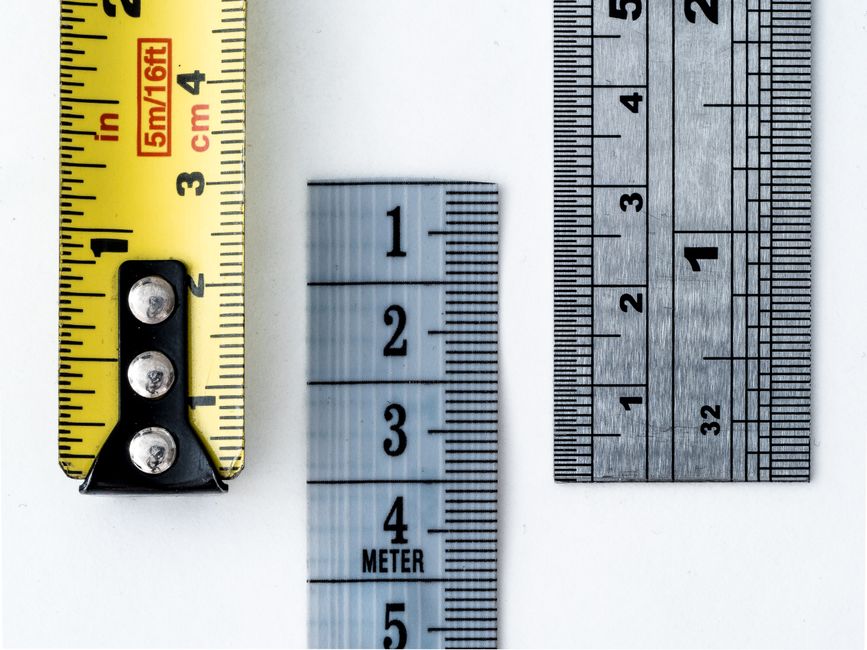
Photo by William Warby on Pexels
Forces are measured in Newtons (N). One Newton is roughly the force needed to give a 1 kg mass an acceleration of 1 meter per second squared (1 m/s²). You can measure forces using a spring balance or a force meter.
3. Worked Example
Let's say you're pushing a box across the floor.
- You push the box with an applied force of 50 N to the right.
- Friction opposes your motion with a force of 20 N to the left.
- Gravity pulls the box down with a force of 100 N.
- The floor pushes up on the box with a normal force of 100 N.
Let's find the net force:
- Vertical forces: Gravity (100 N down) and Normal Force (100 N up). These are equal and opposite, so they cancel out. Net vertical force = 0 N.
- Horizontal forces: Applied Force (50 N right) and Friction (20 N left).
- To find the net horizontal force, we subtract the opposing force: 50 N (right) - 20 N (left) = 30 N (right).
The net force on the box is 30 N to the right. This means the box will accelerate (speed up) in the direction you're pushing it, even though there's friction. If the applied force were equal to friction, the net force would be zero, and the box would move at a constant speed (or stay still if it started that way).
4. Key Takeaways
- Forces are pushes or pulls that can change an object's motion or shape.
- Forces have both magnitude (strength, in Newtons) and direction, making them vector quantities.
- Multiple forces often act on an object; their combined effect is the net force.
- If the net force is zero, the object's motion won't change (it's in equilibrium).
- If the net force is not zero, the object will accelerate (speed up, slow down, or change direction).
- Common forces include gravity, normal force, friction, and applied force.
Common Mistakes to Avoid

Photo by KATRIN BOLOVTSOVA on Pexels
- Confusing mass (amount of matter) with weight (force of gravity).
- Forgetting that friction always opposes motion, not just applied force.
- Thinking that if an object is moving, there must be a net force on it (it could be moving at a constant velocity with zero net force).
- Not considering the direction of forces when calculating the net force.
5. Now Try It
Imagine a car driving at a steady speed on a flat road. List all the main forces acting on the car and describe how they interact to allow the car to maintain a constant velocity. What would happen to the car's motion if the engine suddenly produced more force than needed to overcome air resistance and friction? What if the brakes were applied?
What success looks like: You've identified at least four forces for the steady speed scenario and correctly explained how their balance results in constant velocity. For the changed scenarios, you've predicted the acceleration (speeding up or slowing down) and linked it to an unbalanced net force.
Frequently asked about Introduction to Forces and Their Effects
Get the full NASK HOOFDSTUK 10 curriculum
Clone the complete plan to your dashboard for unlimited AI-generated notes, practice quizzes, and a personalised revision schedule.
Create Free Account