Cell Biology: The Basic Unit of Life
From the bio curriculum
Cell Biology: The Basic Unit of Life
TL;DR
Cells are the fundamental building blocks of all living things, performing all essential life functions. You'll learn about their basic structures and how these parts work together. Understanding cells is key to comprehending how life itself operates.
1. The Mental Model
Think of a cell like a tiny, self-contained city. It has a protective wall, power plants, a control center, and factories, all working together to keep it alive and functioning.
2. The Core Material
You are made of trillions of cells, and so is every other living organism, from bacteria to plants. Cells are the smallest units of life that can replicate independently and carry out all life's processes. There are two main types of cells: prokaryotic and eukaryotic.
Prokaryotic vs. Eukaryotic Cells

Photo by turek on Pexels
Prokaryotic cells are the simplest and oldest type. They don't have a nucleus or other membrane-bound organelles. Think of bacteria and archaea. Their genetic material (DNA) just floats freely in the cytoplasm.
Eukaryotic cells are more complex. They have a true nucleus that houses their DNA, and many specialized structures called organelles, each with a specific job. Animals, plants, fungi, and protists are all made of eukaryotic cells.
Key Eukaryotic Cell Organelles
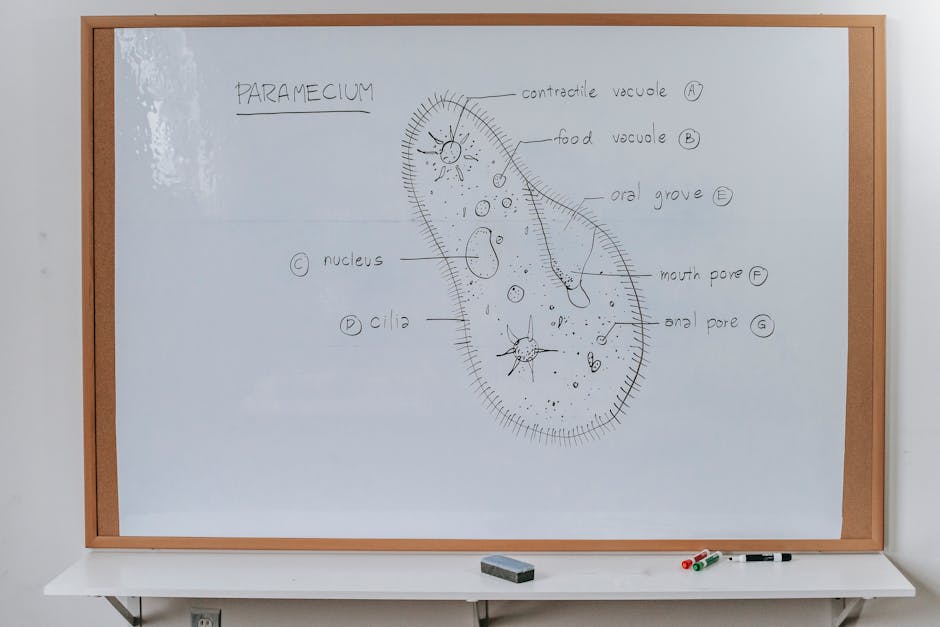
Photo by Katerina Holmes on Pexels
Let's look at the main parts of a typical eukaryotic cell and what they do:
- Cell Membrane: This is the outer boundary, like the city wall. It controls what goes in and out of the cell.
- Cytoplasm: The jelly-like substance filling the cell, where organelles are suspended. It's like the city's air and ground.
- Nucleus: The cell's control center, containing the DNA (genetic instructions). It's the city hall or command center.
- Mitochondria: These are the cell's power plants, producing energy (ATP) through cellular respiration.
- Ribosomes: Small structures that build proteins based on instructions from the nucleus. These are the cell's construction workers.
- Endoplasmic Reticulum (ER): A network of membranes involved in protein and lipid synthesis, and transport. It's like the city's internal road system and factories.
- Rough ER: Has ribosomes attached and makes proteins.
- Smooth ER: No ribosomes, makes lipids and detoxifies.
- Golgi Apparatus: Modifies, sorts, and packages proteins and lipids for secretion or delivery to other organelles. Think of it as the post office or shipping department.
- Lysosomes: (Mainly in animal cells) Contain enzymes to break down waste materials and cellular debris. The city's recycling and waste management.
- Vacuoles: (Prominent in plant cells) Storage sacs for water, nutrients, and waste. In plants, they help maintain turgor (rigidity).
- Cell Wall: (Only in plant, fungal, and some prokaryotic cells) A rigid outer layer providing structural support and protection. An extra strong city wall.
- Chloroplasts: (Only in plant and algal cells) Perform photosynthesis, converting light energy into chemical energy (sugars). These are the solar power plants of plant cells.
Here's a simplified view of how some of these organelles interact for protein production and transport:
graph TD
    A["Nucleus (DNA instructions)"] --> B["Ribosome (Protein Synthesis)"]
    B --> C["Rough ER (Protein Folding/Modification)"]
    C --> D["Transport Vesicle (Buds off ER)"]
    D --> E["Golgi Apparatus (Sorting/Packaging)"]
    E --> F["Secretory Vesicle (Buds off Golgi)"]
    F --> G["Cell Membrane (Exit Cell)"]
    E --> H["Lysosome (Internal Delivery)"]
3. Worked Example
Imagine a factory that produces and ships specialty tools.
- CEO's Office (Nucleus): Contains the blueprints for all tools (DNA).
- Workers (Ribosomes): Read blueprints and assemble tool parts.
- Assembly Line (Rough ER): Workers attach to it, assemble and refine tools. Some tools get modifications here.
- Delivery Van (Transport Vesicle): Carries assembled tools from the assembly line to the packaging department.
- Packaging & Shipping (Golgi Apparatus): Tools are sorted, finished, packaged, and labeled for different destinations.
- Loading Dock (Cell Membrane): Packaged tools are shipped out of the factory.
- Internal Delivery (Lysosome): Some tools might be sent to internal repair shops within the factory for recycling if they're faulty.
This factory model helps you visualize the flow of genetic information into functional products within a cell.
4. Key Takeaways
- Cells are the fundamental units of life, capable of independent function and reproduction.
- There are two main cell types: simpler prokaryotic cells and more complex eukaryotic cells.
- Eukaryotic cells contain specialized organelles, each performing a specific vital function.
- The nucleus stores genetic information, mitochondria generate energy, and ribosomes synthesize proteins.
- The ER and Golgi apparatus work together to process and transport proteins and lipids.
- Plant cells have unique structures like cell walls and chloroplasts for support and photosynthesis.
Common Mistakes to Avoid:
- Don't confuse the cell membrane with the cell wall; the cell wall is an additional outer layer mainly in plants and bacteria.
- Remember that not all organelles are found in every cell type (e.g., chloroplasts only in plants).
- Don't think of organelles as just random parts; they're highly organized and interdependent.
- Don't assume prokaryotic cells are "lesser"; they're incredibly successful and diverse.
5. Now Try It
Take a piece of paper and draw a simple diagram of an animal cell and a plant cell. Label at least 5 key organelles in each, and for each labeled organelle, write a one-sentence description of its function. Focus on the differences and similarities you noticed. What success looks like: You'll have two clearly drawn cells with accurate labels and descriptions for their core functions, highlighting their distinguishing features.
Frequently asked about Cell Biology: The Basic Unit of Life
More from bio
Get the full bio curriculum
Clone the complete plan to your dashboard for unlimited AI-generated notes, practice quizzes, and a personalised revision schedule.
Create Free Account