Understanding Decimal Place Value and Number Properties
From the Dividing decimals curriculum
Understanding Decimal Place Value and Number Properties
TL;DR
Decimals extend our number system to represent parts of a whole, where each digit's position after the decimal point indicates a decreasing power of ten. Understanding place value is key to accurately reading, comparing, and performing operations like division with these numbers. Think of it as breaking down a number into its individual components based on their position.
1. The Mental Model
Imagine you're zooming in on the space between whole numbers. Decimals let you label tiny points on that line. Each digit after the decimal point tells you how far along that zoom you are, with each step getting ten times smaller.
2. The Core Material
When we look at a number like 3.14, we're seeing a whole number part (3) and a fractional part (.14). The decimal point is the separator. Each position to the right of the decimal point has a specific value, which is a fraction with a power of 10 in the denominator.
How Place Value Works (Beyond the Decimal Point)
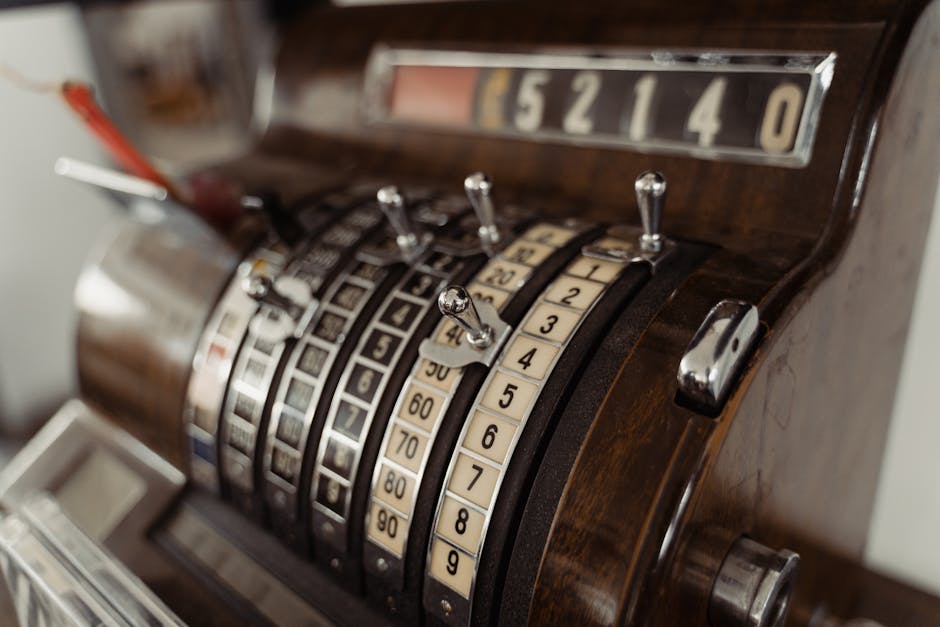
Photo by Tima Miroshnichenko on Pexels
You're already familiar with place value for whole numbers:
* 123 means 1 hundred, 2 tens, and 3 ones.
* That's 100 + 20 + 3.
For decimals, it's a mirror image, but using fractions:
* The first digit after the decimal point is the tenths place (1/10).
* The second digit is the hundredths place (1/100).
* The third digit is the thousandths place (1/1000).
* And so on.
Let's break down 3.145:
graph TD
    A["Number: 3.145"] --> B["Whole Number Part: 3"]
    B --> C["Ones Place: 3"]
    A --> D["Decimal Point"]
    D --> E["Fractional Part: .145"]
    E --> F["Tenths Place: 1 (1/10)"]
    E --> G["Hundredths Place: 4 (4/100)"]
    E --> H["Thousandths Place: 5 (5/1000)"]
So, 3.145 can be thought of as:
3 ones + 1 tenth + 4 hundredths + 5 thousandths
Or, numerically:
3 + (1/10) + (4/100) + (5/1000)
Reading and Writing Decimals
Photo by Roman Friptuleac on Pexels
You read the whole number part first, then say "and" for the decimal point, and then read the fractional part as if it were a whole number, followed by the place value of its last digit.
0.5is "zero and five tenths" or just "five tenths".12.34is "twelve and thirty-four hundredths".0.007is "zero and seven thousandths" or just "seven thousandths".
Equivalent Decimals
Photo by Tima Miroshnichenko on Pexels
Adding or removing zeros at the very end of a decimal doesn't change its value. This is a property you'll use a lot in division.
0.5is the same as0.50(five tenths is equal to fifty hundredths).12.3is the same as12.300.4.0is the same as4.
This works because adding zeros at the end is like saying 5/10 vs 50/100. They're equivalent fractions.
3. Worked Example
Let's write the number 20.035 in expanded form, showing the value of each digit.
- Identify the whole number part:
20 - Identify the decimal part:
.035 - Break down the whole number part by place value:
2is in the tens place, so its value is2 * 10 = 20.0is in the ones place, so its value is0 * 1 = 0.
- Break down the decimal part by place value:
0is in the tenths place, so its value is0 * (1/10) = 0.3is in the hundredths place, so its value is3 * (1/100) = 0.03.5is in the thousandths place, so its value is5 * (1/1000) = 0.005.
So, 20.035 in expanded form is:
20 + 0 + 0.03 + 0.005
Or, simplified:
20 + 0.03 + 0.005
4. Key Takeaways
- Each digit in a decimal has a value determined by its position relative to the decimal point.
- Digits to the right of the decimal point represent fractional parts: tenths, hundredths, thousandths, etc.
- The decimal point is read as "and" when stating the full number.
- Adding or removing zeros at the very end of a decimal doesn't change its value (e.g.,
0.7 = 0.70). - Understanding place value is fundamental for comparing decimals and performing operations like division.
Common Mistakes to Avoid:
- Confusing tenths and tens: Remember "ths" means it's after the decimal point.
- Ignoring leading zeros in the decimal part:
0.05is very different from0.5. - Thinking
0.2is smaller than0.15: Compare them as0.20vs0.15to see0.2is larger. - Reading
1.23as "one point two three": While common in casual talk, formally it's "one and twenty-three hundredths."
5. Now Try It
Take the number 7.904. Write it out in words, and then show its expanded form by breaking down the value of each digit (like in the worked example). What would this number look like if you rounded it to the nearest hundredth? Success looks like having the correct words, the full expanded form, and the correct rounded number.
Frequently asked about Understanding Decimal Place Value and Number Properties
Get the full Dividing decimals curriculum
Clone the complete plan to your dashboard for unlimited AI-generated notes, practice quizzes, and a personalised revision schedule.
Create Free Account