Fluid Statics
From the fluid systems curriculum
Fluid Statics
TL;DR
Fluid statics is about how fluids behave when they're not moving, focusing on pressure and buoyancy. You'll learn how to calculate pressure at different depths and understand why objects float or sink. It's super important for everything from dam design to submarine operation.
1. The Mental Model
Imagine a perfectly still swimming pool. Fluid statics helps you understand the forces within that still water, like how the pressure changes as you dive deeper or why your inflatable raft floats. It's all about balanced forces in a stationary fluid.
2. The Core Material
Fluid statics deals with fluids at rest. The key idea here is that there are no shear stresses in a static fluid, only normal stresses (pressure).
Pressure in a Static Fluid
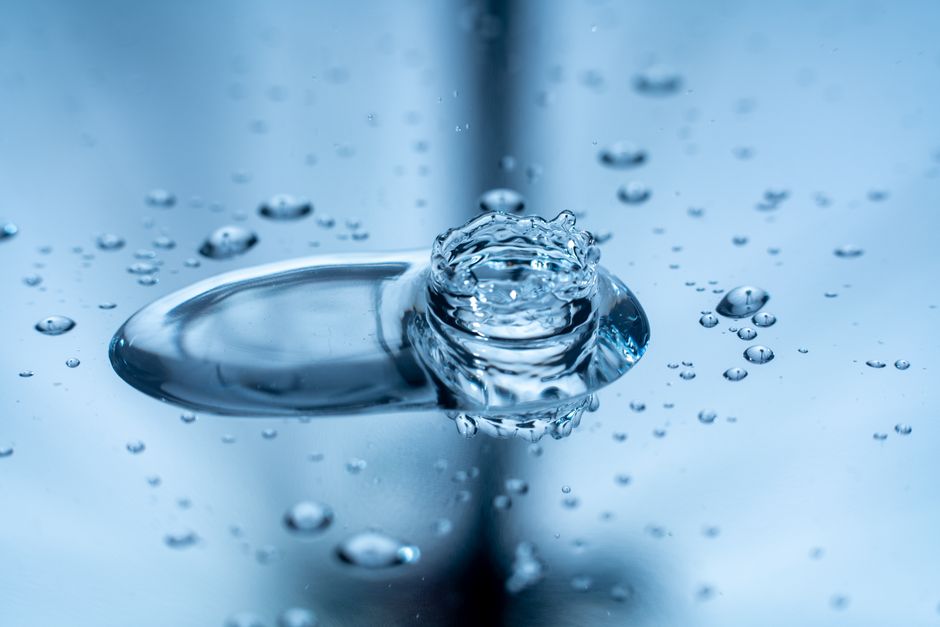
Photo by Vilnis Husko on Pexels
Pressure in a fluid at rest depends on its depth and density. The deeper you go, the more fluid is above you, so the greater the pressure.
The formula for pressure at a certain depth is:
$P = \rho g h + P_0$
Where:
* $P$ is the absolute pressure at the depth.
* $\rho$ (rho) is the fluid density (kg/m$^3$).
* $g$ is the acceleration due to gravity (9.81 m/s$^2$).
* $h$ is the depth from the surface (m).
* $P_0$ is the pressure at the surface (often atmospheric pressure, ~101.3 kPa, if the surface is open to the atmosphere).
Sometimes, you're more interested in gauge pressure, which is the pressure relative to atmospheric pressure. In that case, $P_0$ is usually taken as 0, so $P_{gauge} = \rho g h$.
An important concept is that pressure in a static fluid is the same at all points at the same horizontal level. This is why interconnected tanks of the same fluid will have their fluid levels equalize.
Pascal's Principle

Photo by Vladimir Srajber on Pexels
Pascal's principle states that a pressure change at any point in a confined incompressible fluid is transmitted throughout the fluid such that the same change occurs everywhere. This is the basis for hydraulic systems, where a small force on a small area can create a large force on a large area.
Buoyancy and Archimedes' Principle
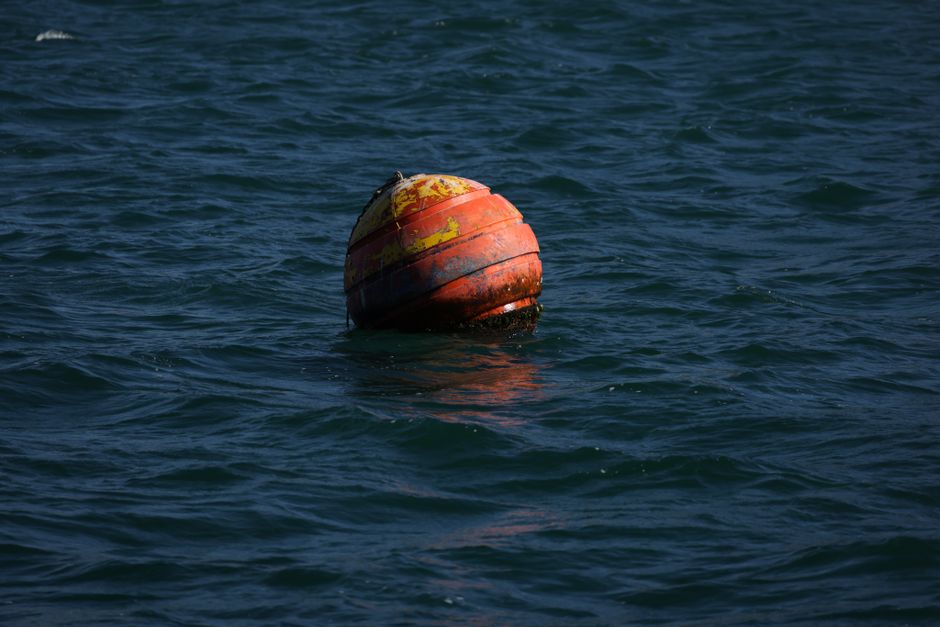
Photo by Magda Ehlers on Pexels
When an object is submerged in a fluid, it experiences an upward force called the buoyant force. This force is due to the pressure difference between the top and bottom of the object – the pressure is greater at the bottom, pushing up.
Archimedes' Principle quantifies this: The buoyant force on a submerged or floating object is equal to the weight of the fluid displaced by the object.
$F_B = \rho_{fluid} g V_{displaced}$
Where:
* $F_B$ is the buoyant force (N).
* $\rho_{fluid}$ is the density of the fluid (kg/m$^3$).
* $g$ is the acceleration due to gravity (9.81 m/s$^2$).
* $V_{displaced}$ is the volume of fluid displaced by the object (m$^3$).
- If $F_B > \text{weight of object}$, the object floats.
- If $F_B < \text{weight of object}$, the object sinks.
- If $F_B = \text{weight of object}$, the object is suspended (neutral buoyancy).
For a floating object, the volume displaced is exactly the volume of the object submerged below the fluid surface.
How Forces Balance in Fluid Statics
Photo by MART PRODUCTION on Pexels
graph LR
    A["Fluid at Rest"] --> B["No Relative Motion"]
    B --> C["No Shear Stresses"]
    C --> D["Forces are Perpendicular to Surfaces"]
    D --> E["Pressure acts Uniformly in all Directions at a Point"]
    E --> F["Pressure Increases with Depth (ρgh)"]
    F --> G["Buoyant Force Counteracts Weight (Archimedes' Principle)"]
    G --> H["Equilibrium: Forces Balance (ΣF=0)"]
3. Worked Example
Let's calculate the gauge pressure at the bottom of a 5-meter deep freshwater swimming pool.
Assume the density of freshwater ($\rho$) is 1000 kg/m$^3$, and $g$ is 9.81 m/s$^2$.
We want gauge pressure, so we'll use $P_{gauge} = \rho g h$.
-
Identify knowns:
- $\rho = 1000$ kg/m$^3$
- $g = 9.81$ m/s$^2$
- $h = 5$ m
-
Apply the formula:
$P_{gauge} = (1000 \text{ kg/m}^3) \times (9.81 \text{ m/s}^2) \times (5 \text{ m})$ -
Calculate:
$P_{gauge} = 49050 \text{ Pa}$
So, the gauge pressure at the bottom of the 5-meter deep pool is 49,050 Pascals (or 49.05 kPa). If you wanted absolute pressure, you'd add atmospheric pressure to this value.
4. Key Takeaways
- Pressure in a static fluid increases linearly with depth due to the weight of the fluid above.
- Pressure at any given depth in a static fluid is the same horizontally, regardless of the container's shape.
- Pascal's principle explains how pressure changes in a confined fluid are transmitted equally throughout.
- The buoyant force on an object is equal to the weight of the fluid it displaces (Archimedes' Principle).
- An object floats if its weight is less than the maximum buoyant force the fluid can provide (i.e., its average density is less than the fluid's density).
Common mistakes you should avoid:
* Forgetting to include atmospheric pressure when asked for absolute pressure.
* Confusing fluid density with object density when calculating buoyant force.
* Using the object's volume instead of the displaced fluid volume for buoyant force (they're only the same if the object is fully submerged).
* Assuming pressure only acts downwards; it acts in all directions at a point.
5. Now Try It
Imagine you're designing a small submersible. You want to know how much buoyant force a spherical air tank (diameter 0.8 m) can provide when fully submerged in seawater.
What to do: Calculate the buoyant force if seawater density is 1025 kg/m$^3$.
What success looks like: You'll have a numerical value for the buoyant force in Newtons. (Hint: Remember the formula for the volume of a sphere: $V = \frac{4}{3}\pi r^3$).
Frequently asked about Fluid Statics
More from fluid systems
Get the full fluid systems curriculum
Clone the complete plan to your dashboard for unlimited AI-generated notes, practice quizzes, and a personalised revision schedule.
Create Free Account