Foundations of Measurement
From the making measurements curriculum
Foundations of Measurement
TL;DR
Measurement is about assigning numbers to observations in a consistent way. You need clear definitions, proper tools, and an understanding of potential errors to get useful data. Good measurements are essential for making informed decisions.
1. The Mental Model
Think of measurement as creating a map for an idea. You're translating something real but abstract (like "how hot is it?") into a concrete number. This number then helps you understand, compare, and predict things.
2. The Core Material
When you measure something, you're doing more than just reading a number off a scale. You're engaging in a process that needs careful thought to be meaningful.
What is Measurement?
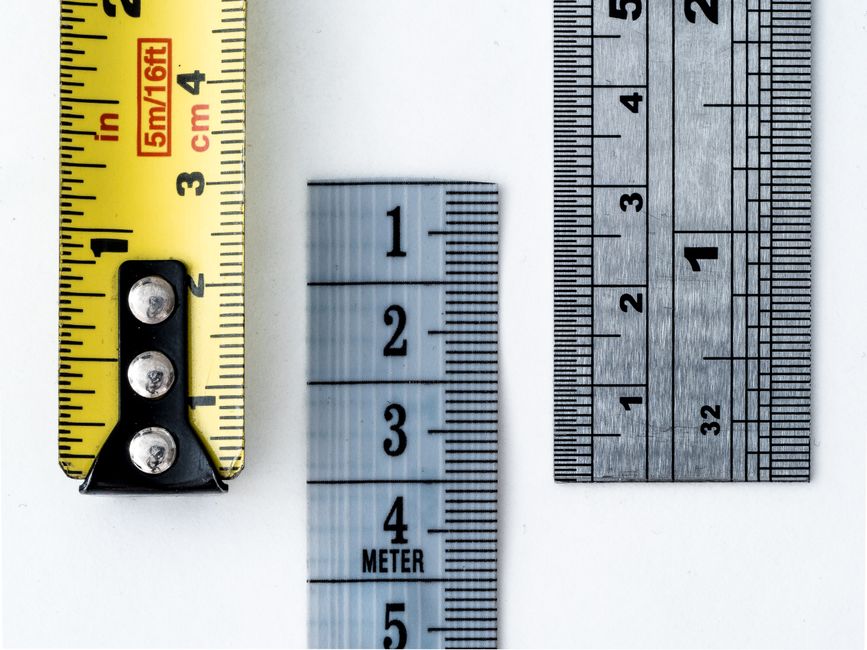
Photo by William Warby on Pexels
At its heart, measurement is assigning numerical values to characteristics of objects or events. It's how we quantify the world around us. For instance, when you say a table is "two meters long," you're assigning the number '2' and the unit 'meters' to its length.
Why Do We Measure?
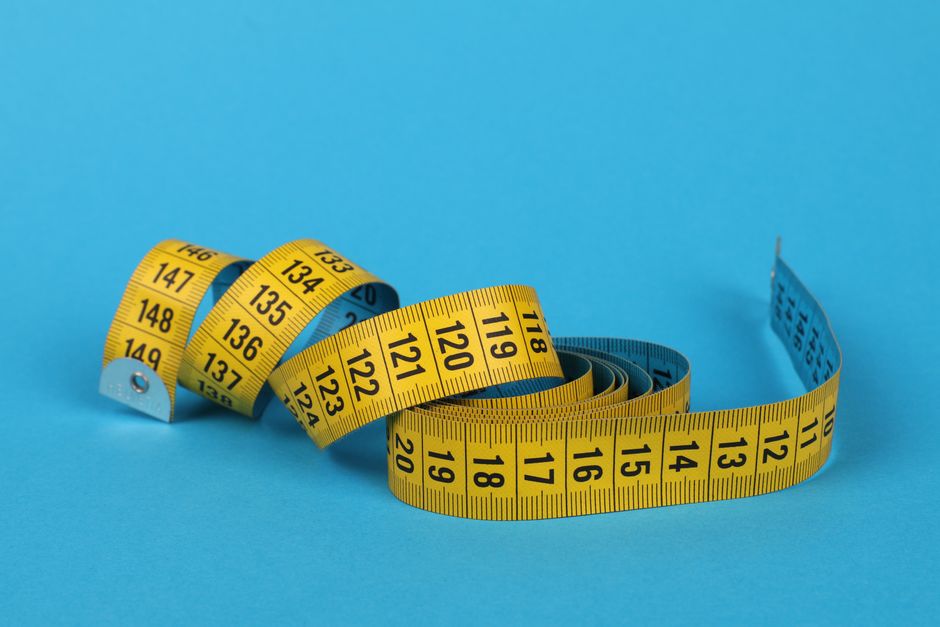
Photo by Ann H on Pexels
We measure to:
* Understand: To gain objective knowledge about things.
* Compare: To see how one thing stacks up against another.
* Decide: To make informed choices (e.g., "Is this engine running too hot?").
* Control: To keep processes within acceptable limits.
* Predict: To forecast future outcomes.
Key Concepts in Measurement

Photo by Nathan Thomas on Pexels
a) Units and Standards
Every measurement needs a unit (like meters, seconds, kilograms). These units are based on agreed-upon standards. Without standard units, comparing measurements is impossible. Imagine trying to compare "a handful" of flour with "a spoon" of flour – it's not very precise.
b) Accuracy vs. Precision
These two terms are often confused, but they mean different things:
* Accuracy: How close your measurement is to the true value. If you weigh yourself and the scale says 150 lbs, but you actually weigh 160 lbs, your measurement is inaccurate.
* Precision: How close repeated measurements are to each other. If you weigh yourself five times and the scale consistently says 150.1 lbs, 150.0 lbs, 150.2 lbs, etc., then your measurements are precise (even if they're all inaccurate because the scale is off).
graph TD
    A["Target (True Value)"]
    subgraph Accuracy
        B["Accurate: Close to Target"] --> A
        C["Inaccurate: Far from Target"] --> A
    end
    subgraph Precision
        D["Precise: Repeatable (tight grouping)"]
        E["Imprecise: Not repeatable (scattered)"]
    end
    A --- B
    A --- C
    D --- E
c) Reliability and Validity
- Reliability: Can you get the same result consistently if you repeat the measurement under the same conditions? A reliable bathroom scale will give you roughly the same weight each time you step on it (assuming you haven't eaten a huge meal in between!).
- Validity: Does your measurement truly capture what you're trying to measure? If you're trying to measure "intelligence" but your test only measures "reading speed," then your test isn't valid for measuring intelligence.
d) Errors in Measurement
No measurement is perfect. There are two main types of errors:
* Systematic Error (Bias): A consistent, repeatable error that pushes measurements in the same direction. An improperly calibrated scale that always reads 5 lbs too low introduces a systematic error. You can often correct for these once identified.
* Random Error: Unpredictable fluctuations that cause measurements to vary slightly around the true value. These are often due to small, uncontrollable factors and tend to average out over many measurements.
The Measurement Process

Photo by Sandin Redzo on Pexels
- Define What to Measure: Be crystal clear about the characteristic you're interested in. "How much liquid is in this cup?" is better than "How full is this cup?"
- Choose a Method and Tool: Select the right instrument (e.g., ruler, thermometer, stopwatch) and the right technique.
- Perform the Measurement: Execute the method carefully, following any specific instructions.
- Record the Result: Write down the numerical value and its unit.
- Interpret and Analyze: Understand what the number means in context and consider potential errors.
3. Worked Example
Let's say you're trying to measure the time it takes for a ball to fall from a 10-meter height.
- Define What to Measure: The time duration from release to impact with the ground.
- Choose a Method and Tool: You decide to use a digital stopwatch and have one person drop the ball and another person operate the stopwatch.
- Perform the Measurement:
- You drop the ball and your friend starts the stopwatch simultaneously.
- Your friend stops the stopwatch the instant the ball hits the ground.
- You repeat this five times to get multiple readings.
- Results: 1.42s, 1.38s, 1.40s, 1.45s, 1.39s.
- Record the Result: You list the times as above, including the unit 's' for seconds.
- Interpret and Analyze:
- The average time is (1.42 + 1.38 + 1.40 + 1.45 + 1.39) / 5 = 1.408 seconds.
- You notice some variation (random error) in the readings. This could be due to human reaction time, slight differences in the drop, or air currents.
- If you consistently got times like 1.00s when you expected around 1.4s (based on physics calculations for free fall), you might suspect a systematic error, like the stopwatch starting late or stopping early due to a delayed reaction.
4. Key Takeaways
- Measurement is assigning numbers to properties in a consistent, meaningful way.
- Always specify the unit when you report a measurement.
- Accuracy is about getting close to the true value; precision is about getting consistent results.
- Reliability means consistent results; validity means measuring what you intend to measure.
- Systematic errors bias all your measurements in one direction, while random errors cause unpredictable scatter.
- Careful definition and execution are crucial for good measurements.
- Measurements are never perfect; always consider the potential for error.
5. Now Try It
Think about something you do every day that involves measurement, like cooking, checking the weather, or timing your run. Identify one specific measurement you take. Write down:
1. What exactly are you trying to measure? (e.g., "the weight of flour," "the current outdoor temperature")
2. What tool do you use?
3. What's one potential systematic error that could affect your measurement?
4. What's one potential random error?
Success looks like clearly identifying the target, tool, and two distinct types of errors for your chosen everyday measurement.
Frequently asked about Foundations of Measurement
Get the full making measurements curriculum
Clone the complete plan to your dashboard for unlimited AI-generated notes, practice quizzes, and a personalised revision schedule.
Create Free Account