Foundations of Neuroscience: The Neuron
From the Psychology curriculum
Foundations of Neuroscience: The Neuron
TL;DR
Neurons are the fundamental building blocks of your nervous system, transmitting information through electrical and chemical signals. They have specific parts—dendrites, a cell body, and an axon—that work together to send and receive these messages. This communication is essential for everything you think, feel, and do.
1. The Mental Model
Think of a neuron as a tiny, specialized messenger that carries information throughout your body. It picks up signals, processes them, and then passes them on to other messengers, creating a vast communication network.
2. The Core Material
Your brain, spinal cord, and nerves are all made up of billions of these microscopic cells called neurons. They're responsible for transmitting all the information that allows you to see, hear, think, move, and feel.
Parts of a Neuron
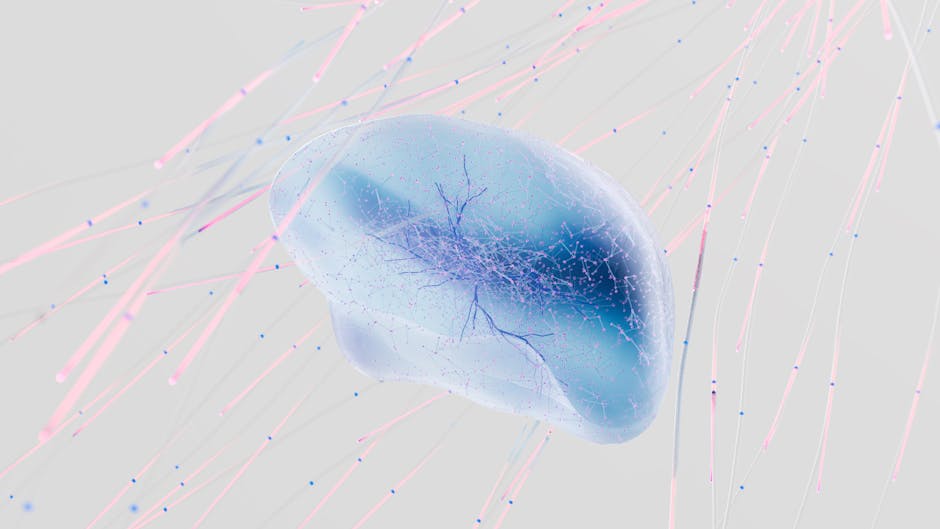
Photo by Google DeepMind on Pexels
Neurons have three main parts, each with a specific job:
- Dendrites: These are like little antennae that extend from the cell body. Their primary job is to receive signals (neurotransmitters) from other neurons. Think of them as the neuron's inbox.
- Cell Body (Soma): This is the main part of the neuron, containing the nucleus and other organelles. It processes the incoming signals from the dendrites. If enough signals are received, it decides whether to send its own signal.
- Axon: This is a long, slender extension that carries the electrical signal (action potential) away from the cell body towards other neurons, muscles, or glands. It's like the neuron's outgoing mail chute. Many axons are covered in a fatty layer called the myelin sheath, which acts like insulation, speeding up the electrical signal.
- Axon Terminals (Terminal Buttons): At the end of the axon, these small branches release chemical messengers called neurotransmitters into the synapse.
How Neurons Communicate: The Electrochemical Process
Photo by Google DeepMind on Pexels
Neuron communication is often described as an electrochemical process:
- Electrical Signal (Action Potential): When a neuron receives enough stimulation from its dendrites, it generates an electrical impulse called an action potential. This is a brief, rapid reversal of the electrical charge across the neuron's membrane, which travels down the axon. It's an "all-or-nothing" event—either it fires, or it doesn't.
- Chemical Signal (Neurotransmitters): When the action potential reaches the axon terminals, it triggers the release of neurotransmitters into the synapse. The synapse is the tiny gap between the axon terminal of one neuron and the dendrite of another.
- Reception: These neurotransmitters then bind to specific receptor sites on the dendrites of the neighboring neuron, potentially exciting or inhibiting that neuron. This process then restarts in the next neuron.
Here's a simplified flow of how a signal moves through a neuron:
graph TD
    A["Dendrites (Receive Neurotransmitters)"] --> B["Cell Body (Integrates Signals)"];
    B --> C{{"Threshold Reached?"}};
    C -- Yes --> D["Axon (Action Potential Generated & Transmitted)"];
    C -- No --> B;
    D --> E["Axon Terminals (Release Neurotransmitters)"];
    E --> F["Synapse (Gap Between Neurons)"];
    F --> A;
3. Worked Example
Imagine you touch a hot stove. Here's how neurons communicate that message:
- Sensory Neuron Activation: Specialized sensory neurons in your fingertip have dendrites that detect the heat.
- Signal Integration: If the heat is intense enough, the cell body of that sensory neuron initiates an action potential.
- Transmission: This electrical signal races down the axon of the sensory neuron towards your spinal cord.
- Synaptic Transmission (Spinal Cord): At the axon terminal in your spinal cord, neurotransmitters are released into a synapse.
- Interneuron/Motor Neuron Activation: These neurotransmitters bind to receptors on an interneuron (which might connect to a motor neuron) or directly onto a motor neuron. This causes the motor neuron to generate its own action potential.
- Muscle Contraction: The motor neuron's action potential travels down its axon to the muscles in your hand and arm, releasing neurotransmitters that cause those muscles to contract, pulling your hand away from the stove. All of this happens incredibly fast!
4. Key Takeaways
- Neurons are the basic units of the nervous system, responsible for communication.
- Dendrites receive signals, the cell body processes them, and the axon transmits signals.
- The action potential is an all-or-nothing electrical impulse traveling down the axon.
- Neurotransmitters are chemical messengers released into the synapse to communicate with other neurons.
- The myelin sheath speeds up signal transmission along the axon.
- This electrochemical process underlies all brain activity and body functions.
Common Mistakes to Avoid:
- Don't confuse dendrites (receivers) with axons (transmitters).
- Remember that the signal within a neuron is electrical (action potential), but between neurons it's chemical (neurotransmitters).
- Don't think of the signal as traveling across the synapse; neurotransmitters are released into the synapse.
- Avoid thinking neurons touch; there's always a tiny gap (synapse).
5. Now Try It
Draw a simple diagram of two neurons communicating. Label the dendrites, cell body, axon, myelin sheath, axon terminals, and the synapse. Briefly describe in your own words what happens at each labeled part as a signal travels from the first neuron to the second. What would happen if the myelin sheath were damaged? (Success means you can accurately label the parts and describe the flow of information, including the roles of both electrical and chemical signals.)
Frequently asked about Foundations of Neuroscience: The Neuron
Get the full Psychology curriculum
Clone the complete plan to your dashboard for unlimited AI-generated notes, practice quizzes, and a personalised revision schedule.
Create Free Account