Fundamentals of Metallic Structure and Properties
From the metal curriculum
Fundamentals of Metallic Structure and Properties
TL;DR
You'll learn how the arrangement of atoms in metals dictates their properties, focusing on common crystal structures and their defects. Understanding these structures helps explain why metals are strong, ductile, and conductive. We'll explore how modifying these structures can significantly alter a metal's performance for different applications.
1. The Mental Model
Think of metal atoms as tiny building blocks that like to stack together in very specific, repeating patterns. How they stack (their crystal structure) and any imperfections in that stacking (defects) determine almost everything about how the metal behaves, from its strength to how easily it can be shaped.
2. The Core Material
Metals are unique because their atoms share electrons freely, forming a "sea" of electrons. This metallic bonding is why metals are good conductors of heat and electricity, and also gives them their characteristic luster. However, the arrangement of the metal atoms themselves in a solid state, known as their crystal structure, is what really defines many of their mechanical properties.
2.1 Common Crystal Structures
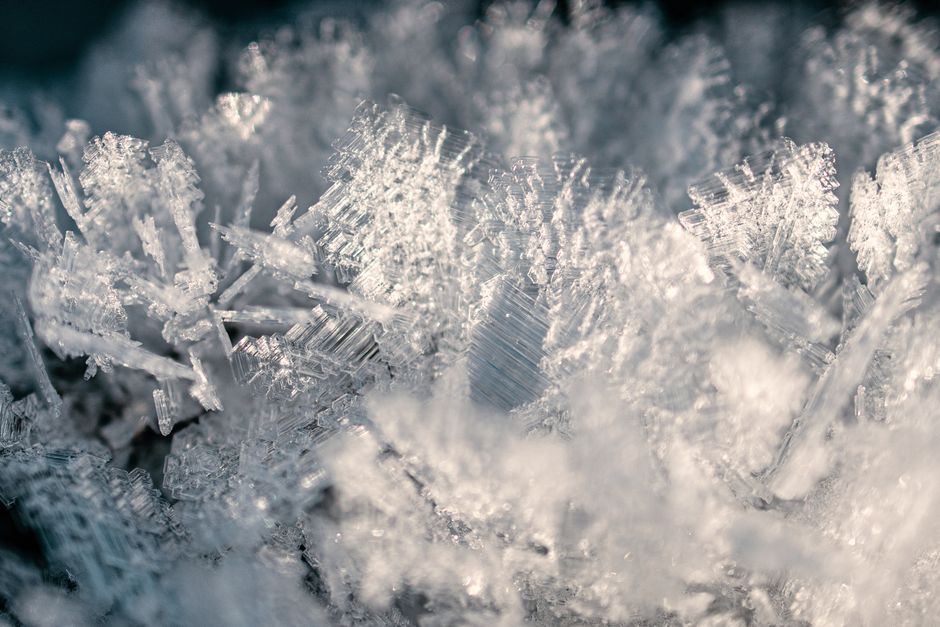
Photo by Choice on Pexels
Most metals solidify into one of three primary crystal structures:
- Face-Centered Cubic (FCC): Imagine a cube with an atom at each corner and one atom in the center of each face. Examples include aluminum, copper, nickel, and gold. FCC metals are generally ductile (can be stretched into wires) and malleable (can be hammered into sheets) because their atoms can slide past each other relatively easily along many planes.
- Body-Centered Cubic (BCC): This structure is a cube with an atom at each corner and one atom exactly in the center of the cube. Examples include iron (at room temperature), chromium, and tungsten. BCC metals are typically stronger and less ductile than FCC metals, often exhibiting a clear yield point during deformation.
- Hexagonal Close-Packed (HCP): This isn't a cube; it's a hexagonal prism with atoms at the corners and centers of the top and bottom faces, plus three additional atoms in the mid-plane. Examples include titanium, magnesium, and zinc. HCP metals are often brittle and have limited ductility at room temperature because they have fewer slip planes for atoms to move on.
The way atoms are packed in these structures is often described by their atomic packing factor (APF), which is the fraction of space occupied by atoms. FCC and HCP structures have the highest APF (0.74), meaning they are "closely packed," while BCC has a slightly lower APF (0.68).
2.2 Crystal Imperfections (Defects)
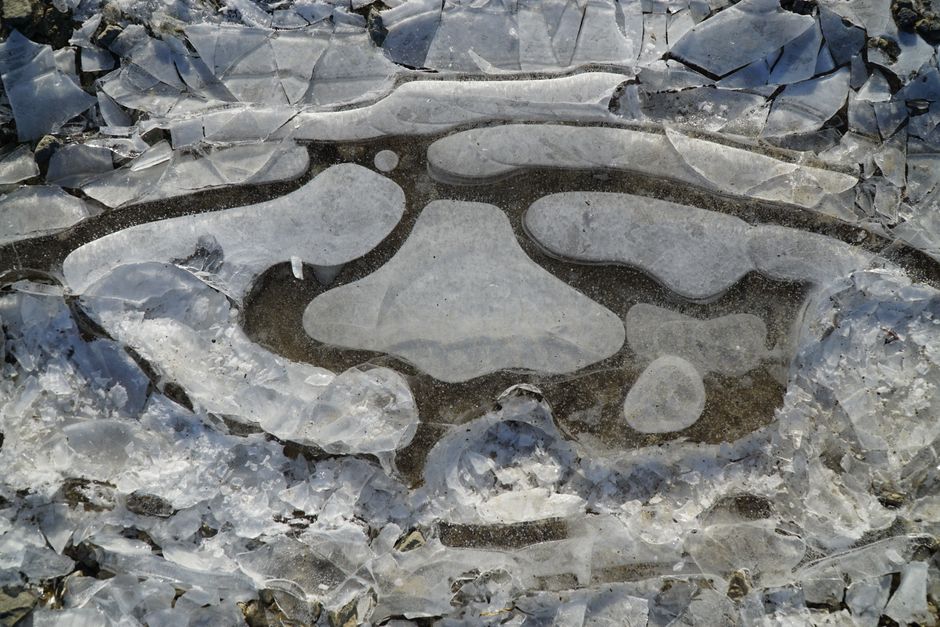
Photo by Michael on Pexels
No crystal is perfect; defects are what make materials interesting and useful! These imperfections significantly influence mechanical properties.
- Point Defects: These are localized disruptions involving one or two atoms.
- Vacancy: A missing atom from a lattice site. Vacancies make it easier for atoms to move, affecting diffusion and high-temperature deformation.
- Interstitial Atom: An extra atom squeezed into a small space between regular lattice atoms.
- Substitutional Atom: An impurity atom replacing a host atom in the lattice.
- Line Defects (Dislocations): These are one-dimensional defects that are crucial for understanding plastic deformation (permanent shaping).
- Edge Dislocation: An extra half-plane of atoms inserted into the crystal lattice. Movement of edge dislocations allows planes of atoms to slide past each other.
- Screw Dislocation: A spiral ramp structure within the lattice.
- The movement of dislocations under stress is what enables a metal to deform without breaking. When dislocations are blocked, the metal becomes stronger (e.g., through work hardening or alloying).
- Planar Defects: These are two-dimensional defects.
- Grain Boundaries: The interfaces between different crystal orientations (grains) in a polycrystalline metal. Grain boundaries impede dislocation motion, so smaller grains generally mean a stronger metal (Hall-Petch effect).
- Twin Boundaries: A specific type of grain boundary where the crystal lattice on one side is a mirror image of the other.
graph TD
    A["Metallic Structure"] --> B["Crystal Structures"]
    A --> C["Crystal Imperfections"]

    B --> B1["Face-Centered Cubic (FCC)"]
    B --> B2["Body-Centered Cubic (BCC)"]
    B --> B3["Hexagonal Close-Packed (HCP)"]

    C --> C1["Point Defects"]
    C --> C2["Line Defects (Dislocations)"]
    C --> C3["Planar Defects"]

    C1 --> C1a["Vacancy"]
    C1 --> C1b["Interstitial Atom"]
    C1 --> C1c["Substitutional Atom"]

    C2 --> C2a["Edge Dislocation"]
    C2 --> C2b["Screw Dislocation"]

    C3 --> C3a["Grain Boundary"]
    C3 --> C3b["Twin Boundary"]

    B1 -- "Ductile, Malleable" --> Properties["Key Properties"]
    B2 -- "Strong, Less Ductile" --> Properties
    B3 -- "Brittle, Limited Ductility" --> Properties

    C2a -- "Enables Plastic Deformation" --> Properties
    C3a -- "Strengthens (smaller grains)" --> Properties
3. Worked Example
Let's consider why pure copper (an FCC metal) is so good for electrical wiring, while an alloy like tool steel (primarily BCC iron with carbon and other elements) is used for cutting tools.
Pure copper's FCC structure means its atoms are closely packed and have many "slip planes" – directions where dislocations can move easily. This high mobility of dislocations makes copper very ductile; you can draw it into thin wires without it breaking. It's also an excellent electrical conductor due to its metallic bonding.
Tool steel, on the other hand, is designed to be very hard and strong. Its primary component, iron, is BCC at room temperature, which is inherently stronger than FCC due to fewer slip systems. More importantly, carbon atoms are intentionally added to steel. These small carbon atoms act as interstitial atoms within the iron lattice, distorting the lattice and effectively "pinning" the dislocations. When dislocations are pinned, they can't move easily, which means the material resists plastic deformation, making it hard and strong, perfect for a cutting edge.
4. Key Takeaways
- The arrangement of atoms (crystal structure) largely determines a metal's mechanical properties.
- FCC metals (e.g., copper) are generally ductile and malleable due to many easy slip planes.
- BCC metals (e.g., iron) are typically stronger and harder but less ductile than FCC metals.
- HCP metals (e.g., titanium) often exhibit limited ductility at room temperature.
- Crystal defects, especially dislocations, are critical for plastic deformation; blocking them makes a metal stronger.
- Grain boundaries impede dislocation motion; smaller grains generally mean a stronger material.
Common Mistakes to Avoid

Photo by KATRIN BOLOVTSOVA on Pexels
- Don't confuse ductility (can be drawn into a wire) with strength (resistance to breaking).
- Assuming all metals have the same crystal structure; their structure is specific to the element and temperature.
- Thinking defects are always "bad"; controlled defects are essential for many desired properties (e.g., strengthening).
- Forgetting that metallic bonding (sea of electrons) is separate from crystal structure but both contribute to overall properties.
5. Now Try It
Imagine you need to choose a metal for two different applications: a beverage can that needs to be easily formed and then remain light, and a high-strength bolt that needs to resist stretching and shearing. Based on what you've learned, what general crystal structure (FCC, BCC, or HCP) would you recommend for each, and why? What's one key defect you'd want to manage for the bolt's strength? What would success look like?
Success means you've correctly identified the most suitable crystal structure for each application and given a brief, accurate reason based on their typical properties. For the bolt, you should mention a defect that directly contributes to strengthening.
Frequently asked about Fundamentals of Metallic Structure and Properties
Get the full metal curriculum
Clone the complete plan to your dashboard for unlimited AI-generated notes, practice quizzes, and a personalised revision schedule.
Create Free Account